Housing Price Outlook Index Declines for 5 Consecutive Months
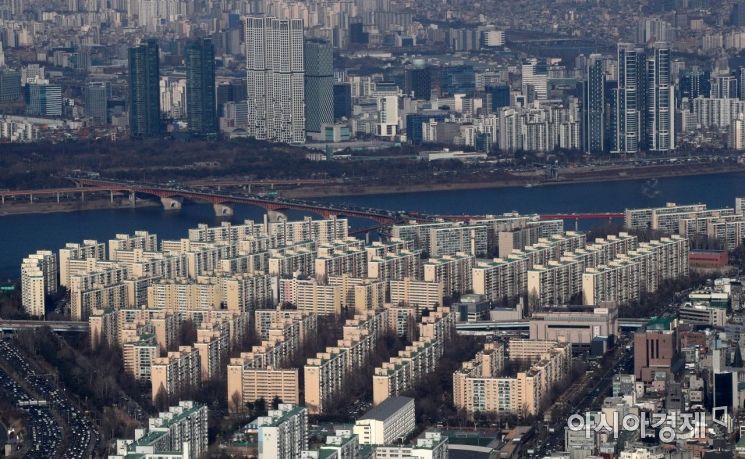
[Asia Economy Reporter Seo So-jung] The average interest rate on mortgage loans in the banking sector soared to its highest level in 7 years and 7 months last December. This was due to the rise in the Cost of Funds Index (COFIX), which serves as the benchmark for calculating mortgage loan interest rates, following two base rate hikes in the second half of last year. With government loan regulations and increasing interest burdens, demand for home purchases has sharply declined.
According to the "Weighted Average Interest Rate of Financial Institutions" statistics announced by the Bank of Korea on the 28th of last month, the average interest rate on mortgage loans at commercial banks in December last year (based on new loan amounts) was 3.63% per annum, up 0.12 percentage points from the previous month. This is the highest figure since May 2014, when it was also 3.63% per annum.
Recently, mortgage loan interest rates have been rising rapidly. When the Bank of Korea raised the base rate to 0.75% in August last year, the mortgage loan interest rate rose to 3.01% per annum in September. Subsequently, the loan interest rates increased sequentially to 3.26% (October), 3.51% (November), and 3.63% (December) per annum.
As the government strengthened loan regulations citing household debt management and interest rates sharply increased, there are forecasts that housing prices will continue to show a weak trend. The combined effects of government household loan regulations, base rate hikes, and the asset market's "ice age" are adding weight to expectations of a decline in real estate prices.
According to the "January Consumer Sentiment Survey Results" released by the Bank of Korea, the housing price expectation index also fell by 7 points from the previous month to 100, marking a decline for five consecutive months. This is the lowest level in 1 year and 8 months since it recorded 96 in May 2020. It means that the proportion of respondents expecting housing prices to rise has significantly decreased compared to the previous month.
In the housing market, demand for home purchases is also decreasing. The Seoul apartment sales supply-demand index has been declining for 10 consecutive weeks since falling below the baseline (100) on November 15 last year.
Ko Jong-wan, head of the Korea Asset Management Research Institute, said, "The long-term upward trend in real estate prices is breaking," adding, "The rapid rise in housing prices in 2019 was due to interest rate cuts and liquidity expansion, but now the opposite situation is occurring. With continued interest rate hikes ahead, it seems that the transition to a real estate downturn is imminent."
© The Asia Business Daily(www.asiae.co.kr). All rights reserved.

















