[Asia Economy Reporter Junho Hwang] Starting next month, the path to enjoy overseas travel without quarantine is being paved, causing airline stocks to take flight. The government has announced that it will open the door for quarantine-free overseas travel upon vaccination only for countries within the Travel Bubble, raising expectations for securing performance. Attention is focused on whether the Travel Bubble will be the key to overcoming the COVID-19 shock that has hit the air transportation industry.
◆ Airline Stocks Stirred by Travel Bubble
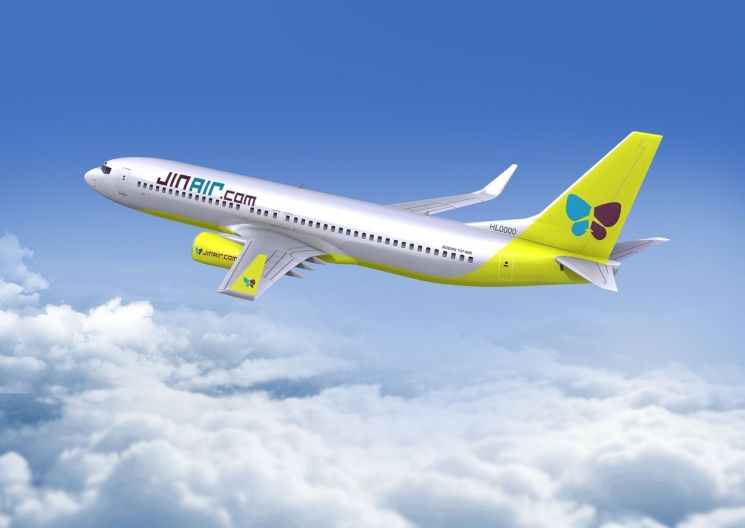
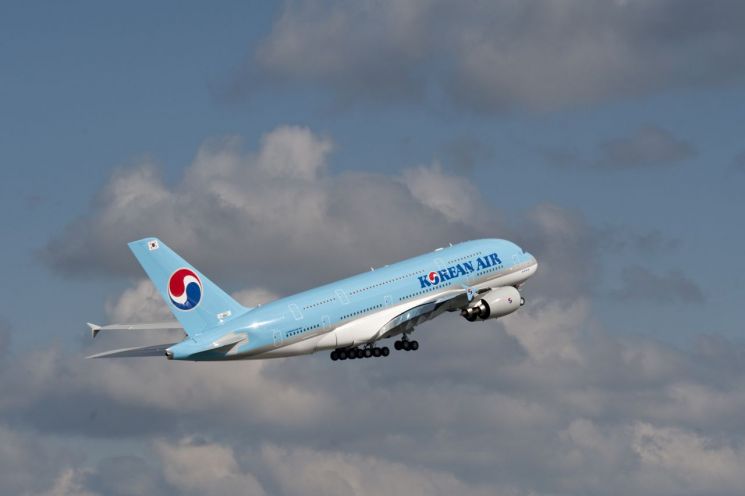
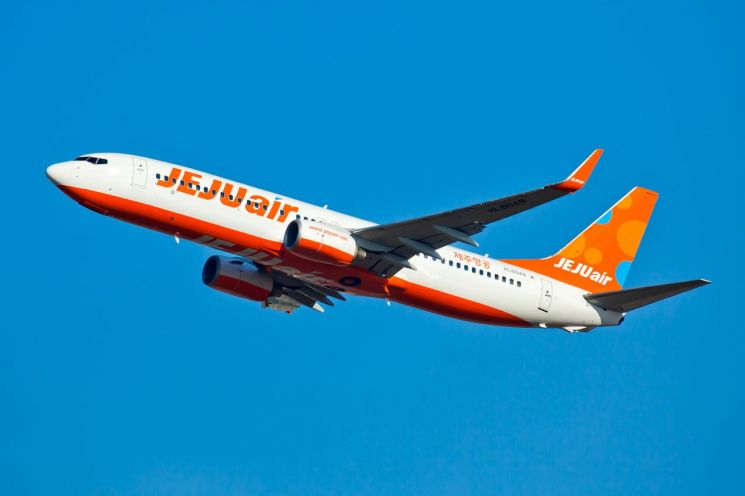
This month, the KRX Transportation Index rose by 3.14%. Among the large airlines included in this index, Korean Air, which is currently tradable, increased by 6.94% during the same period. Low-cost carriers have been on an upward trend for three consecutive trading days since the Travel Bubble news was announced. Among them, T'way Air surged 46.82% this month, with increases of 21.30% and 19.25% on the 2nd and 9th, respectively. Jeju Air rose 13.05%, and Jin Air increased by 7.06%.
In the case of Asiana Airlines and Air Busan, stock trading has been suspended since the Seoul Central District Prosecutors' Office indicted former Kumho Asiana Group Chairman Park Sam-gu on charges of embezzlement and breach of trust on the 26th of last month. Once trading resumes, there is a high possibility that their stock prices will rise like other airlines.
This upward trend has been gaining momentum since the government announced on the 9th that it would implement the Travel Bubble only for Singapore, Taiwan, Thailand, Guam, and Saipan. The opening of overseas travel routes has revived investor sentiment.
Airlines are also actively preparing. Jeju Air started operating the Incheon?Saipan route on the 9th. Asiana Airlines has applied for permission to operate the same route, and T'way Air is in the process of obtaining route approval for Saipan and Guam. Jin Air is operating the Incheon?Guam route, and Korean Air has started selling tickets for the Incheon?Guam route in November.
Following the resumption of route operations, once the Travel Bubble is implemented, it is expected that each airline will be able to operate 1 to 2 flights per week on the relevant routes. If about 60% of the seats are filled per flight, approximately 200 passengers will board each aircraft. This marks the beginning of a full-scale recovery of international passengers. In the United States, where the vaccination rate is higher than in Korea, air travel demand has recovered up to 40% compared to pre-COVID-19 levels. China’s demand has risen to about 54% of pre-pandemic levels. In contrast, Korea’s international passenger numbers have dropped from over 1.5 million per week to around 50,000.
◆ Travel Bubble Effect Expected in Q3 at the Earliest
However, the airline industry expects that the Travel Bubble will reflect in the actual performance of air transport companies only after the third quarter. Since the Travel Bubble is limited to group travelers through travel agencies, preparations such as travel agencies’ IT systems and dispatching local Korean guides must be completed before practical products can be offered.
Choi Go-woon, a researcher at Korea Investment & Securities, said, "Despite COVID-19, Korean Air maintained profitability through cargo transportation and solidified its position as the number one national airline through the acquisition of Asiana Airlines," adding, "A re-rating due to the premium of being number one is expected."
Um Kyung-ha, a researcher at Shin Young Securities, named Asiana Airlines as the top preferred airline stock, stating, "Although there is a long way to go with corporate merger approval, Korean Air’s third-party designated capital increase, and the formation of an integrated LCC, there is a possibility of a reduction in the number of shares depending on how the existing major shareholder’s stake is handled." He added, "The reason for Asiana’s low profitability is that it used the service costs of a full-service carrier (FSC) while maintaining the pricing of a low-cost carrier (LCC). Knowing the cause means the improvement plan is clear," he analyzed.
© The Asia Business Daily(www.asiae.co.kr). All rights reserved.



















