<기사제목>Ministry of Science and ICT Signs 'Artemis' Agreement on the 24th as Follow-up to Korea-US Summit
 On the 24th, Lim Hye-sook, Minister of Science and ICT, signed the Artemis Accords for the international lunar exploration project and pledged participation. This agreement includes commitments not only for humanity's second manned lunar landing in 2024 but also for the development of a manned lunar base and the peaceful use of space, including space debris management. Photo by Ministry of Science and ICT
[Asia Economy Reporter Kim Bong-su] South Korea has become the 10th official participating country in the lunar exploration project 'Artemis,' which involves major countries including the United States. This is a follow-up measure agreed upon during the recent South Korea-US summit. Although South Korea will not participate in humanity's second moon landing scheduled for 2024, it is explained that the country can expand its role in subsequent programs.
On the 27th, the Ministry of Science and ICT announced that Minister Lim Hye-sook signed an additional participation agreement for the Artemis Accords with NASA on the 24th, and released footage of NASA Administrator Bill Nelson signing on the US side.
Artemis is a project the United States is preparing to send astronauts to the moon for the first time in over 50 years since the Apollo project in the 1970s. Besides the US, nine countries including Japan, the United Kingdom, Italy, Australia, Canada, Luxembourg, the United Arab Emirates (UAE), and Ukraine are participating. With this agreement signing, South Korea became the 10th participating country. It is the first under the Biden administration.
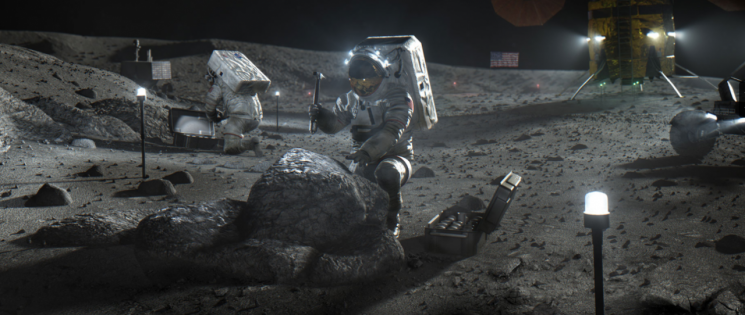
This agreement contains principles that participating countries in the Artemis program must observe regarding peaceful exploration and utilization of the moon, Mars, comets, and asteroids. Specifically, these include ▲peaceful exploration ▲transparent mission operations ▲interoperability among exploration systems ▲support in emergencies ▲registration of space objects ▲disclosure of scientific data obtained during space exploration ▲protection of historical heritage such as Apollo lunar landing sites ▲basic principles on space resource utilization ▲prevention of conflicts in space activities ▲mitigation measures for space debris.
South Korea was already a de facto participant. For example, South Korea's first lunar exploration orbiter (KPLO), scheduled for launch in August next year, is being developed in cooperation with NASA and will carry NASA's ShadowCam to explore permanently shadowed regions near the lunar poles, candidate sites for the Artemis project's manned lander. South Korea is also participating in the CLPS (Commercial Lunar Payload Service) program, which involves sending an optical payload developed by the Korea Astronomy and Space Science Institute on a US private lunar lander around 2023-2024 for lunar surface observation.
However, it is expected that South Korea will not directly participate in the first main event of the Artemis project, the 2024 moon landing.
A Ministry of Science and ICT official said, "With this additional signing of the Artemis Accords, cooperation between South Korea and the US in the space sector is expected to expand further, enabling participation in various fields of the Artemis program and subsequent space exploration programs," adding, "It will also contribute to the growth of South Korea's space industry scale and capabilities by creating synergy effects with space launch vehicle development following the end of the South Korea-US missile guidelines."
© The Asia Business Daily(www.asiae.co.kr). All rights reserved.


















