52 COVID-19 Cases Confirmed Among Aerobics Instructors and Students in Gangseo-gu
New COVID-19 Cases Exceed 500
Experts Warn "Low Awareness Makes Large-Scale Outbreak Unavoidable"
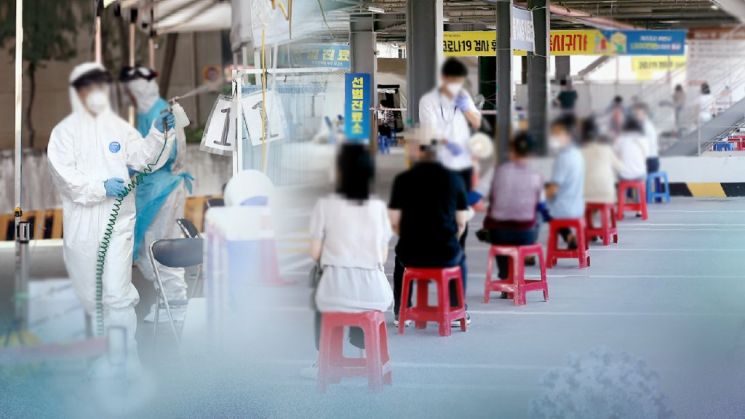
[Asia Economy Reporter Kim Suwan] The number of confirmed cases of the novel coronavirus infection (COVID-19) in South Korea has surpassed 500, spreading uncontrollably.
In particular, cluster infections have occurred at aerobics academies where many people gather, but some show no sense of urgency, raising concerns that COVID-19 may spread further. Recently, cluster infections have been occurring through everyday activities such as family and acquaintances' gatherings or exercise groups, increasing anxiety.
Experts pointed out that with confirmed cases pouring out after the incubation period, a low sense of urgency will make it impossible to avoid a large-scale outbreak.
On the 25th, Gangseo-gu, Seoul, announced that five students were confirmed positive the previous day, and after conducting a full investigation of about 90 students and others, 47 additional positive cases were confirmed. A total of 52 confirmed cases occurred within two days at the same aerobics academy. The quarantine authorities are checking the entire list of students and visitors and conducting diagnostic tests on the confirmed patients' families and contacts.
However, due to the nature of aerobics involving intense movements and especially being in a confined space, the risk of droplet (saliva) transmission is high, so there is a high possibility that more confirmed cases will emerge than expected.
Additionally, since the students of the aerobics academy reside not only in Gangseo-gu but also in other districts, there are concerns that the spread of infection could become even larger.
Another problem is the lack of awareness despite hundreds of confirmed COVID-19 cases emerging.
Office worker Kim (29), who said he goes to a gym, stated, "Even though it's social distancing level 2, the gym is full of people who came to exercise. If everyone follows the rules well, it is possible to exercise safely." However, he explained, "Some people do not wear masks properly, but since the time without masks is not very long, it does not seem to be a big problem."
Another office worker, Yoon (27), said, "I am currently attending Pilates," and added, "During difficult movements, it is hard to breathe, so I briefly lower my mask." He emphasized, "But I put the mask back on immediately, so it does not seem to be a problem."
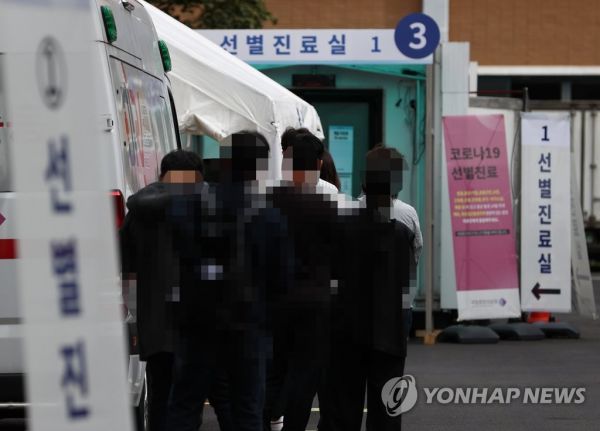 On September 23, citizens visiting the screening clinic at the National Medical Center were waiting for the novel coronavirus infection test. Photo by Yonhap News
As a result, anxiety is growing that the spread of COVID-19 infections could worsen. It is pointed out that group activities should be avoided amid the ongoing cluster infections.
Quarantine authorities repeatedly emphasized refraining from various gatherings and adhering to social distancing and other quarantine rules.
Park Neunghoo, the first head of the Central Disaster and Safety Countermeasure Headquarters (CDSCH), said in opening remarks at the CDSCH meeting held at the Government Seoul Office on the 26th, "Today, the number of confirmed COVID-19 cases has exceeded 500. It has been 18 days since the number surpassed 100 on November 8, and about eight months since recording 518 cases on March 6." He added, "More than 100 confirmed cases emerged from a chain infection starting at an apartment sauna, and more than 50 cluster infections occurred within a day or two at aerobics academies and military training centers."
Park said, "Infection can occur anywhere in our daily lives, and it is no longer unusual for anyone, regardless of age or gender, to be infected. At a time when the third wave is increasing in scale and speed, thorough social distancing is more urgent than ever." He urged, "'Just one person won't matter' behavior can lead to infections not only for oneself but also for family, acquaintances, and colleagues. Only by uniting with a spirit of community consideration and mature civic consciousness can we overcome this third wave."
Experts suggested that the government should present specific and proactive measures to raise public awareness.
Professor Kim Woojoo of the Department of Infectious Diseases at Korea University Guro Hospital said, "Currently, confirmed cases are pouring out after the incubation period. It is estimated that the virus's transmissibility has increased, but public awareness has decreased, and quarantine rules are not being well followed."
He added, "Especially as infections through daily life increase, the risk has become even higher. In a confined indoor environment with poor ventilation, a large-scale infection cannot be avoided," expressing concern.
He continued, "The public should avoid risky places and strictly follow quarantine rules such as wearing masks and social distancing, and the government should take more proactive quarantine measures," he urged.
© The Asia Business Daily(www.asiae.co.kr). All rights reserved.


















