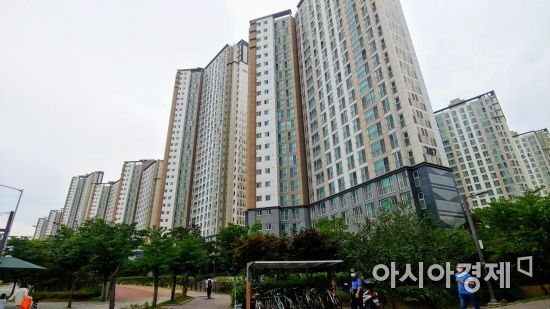
[Asia Economy Reporter Lee Chun-hee] The areas of Gimpo City in Gyeonggi Province and parts of Busan, which had avoided designation as regulated areas in the June 17 real estate measures and experienced concentrated balloon effects, have been largely designated as regulated areas.
The Ministry of Land, Infrastructure and Transport announced on the 19th that after deliberations by the Housing Policy Deliberation Committee held over two days from the 18th to 19th, Gimpo City in Gyeonggi Province, Haeundae, Suyeong, Dongnae, Yeonje, and Nam Districts in Busan, and Suseong District in Daegu will be designated as adjusted target areas. However, within Gimpo City, Tongjin-eup, Wolgot, Haseong, and Daegot-myeon were excluded due to recent price stabilization. The designation takes effect from the 20th.
As a result, the total number of adjusted target areas nationwide has increased to 75, including all 25 autonomous districts of Seoul, Gimpo, Gwacheon, Gwangmyeong, Hanam, Seongnam, Suwon, Anyang, Guri, Gunpo, Uiwang, Goyang, Namyangju City, Seongnam City's Bundang and Sujeong Districts, Ansan City's Danwon District, Yongin City's Suji and Giheung Districts, Hwaseong City's Dongtan 2, Incheon Yeonsu, Namdong, Seo, Jung, Dong, Michuhol Districts, Daejeon Dong, Jung, Seo, Yuseong, Daedeok District, Daegu Suseong District, Sejong, and Cheongju in Chungbuk.
When designated as an adjusted target area, the loan-to-value ratio (LTV) for homes priced at 900 million KRW or less is lowered to 50%, and for the portion exceeding 900 million KRW, it is limited to 30%. The debt-to-income ratio (DTI) is also reduced to 50%.
Restrictions on pre-sale rights trading are also strengthened, prohibiting buying and selling for at least six months up to the time of move-in. According to the new 'Real Estate Transaction Reporting Act' implemented last month, submission of a funding plan is mandatory regardless of the purchase amount when buying a home.
Tax burdens will also increase sharply. For multi-homeowners, capital gains tax is increased by 10 to 20 percentage points, long-term holding special deductions are excluded, comprehensive real estate tax rates rise by 0.2 to 0.8 percentage points, and the tax burden ceiling is also raised.
These areas were expected to experience balloon effects immediately after being excluded from the regulated areas in the June 17 measures, when the government designated a large part of the metropolitan area as regulated.
At that time in June, the government excluded Gimpo City from designation, judging that the housing price increase rate was not yet high enough to warrant regulation.
However, according to the Korea Real Estate Board's weekly apartment sales price index, Gimpo City demonstrated the balloon effect with a sharp 1.88% price increase compared to the previous week in the survey conducted on June 22, immediately after the June 17 measures. Since then, Gimpo City's housing prices have risen by 11.03% over about four months until the 9th. Notably, the surveys on the 2nd and 9th showed steep increases of 1.94% and 1.91% respectively compared to the previous week.
The Ministry of Land explained that Gimpo City was designated as an adjusted target area due to transportation benefits from the metropolitan area express railway (GTX) D line, and the recent increase in investment by outsiders causing rapid price rises and intensified overheating. However, Tongjin-eup, Wolgot-myeon, Haseong-myeon, and Daegot-myeon were excluded from the designation due to price stabilization in those areas.
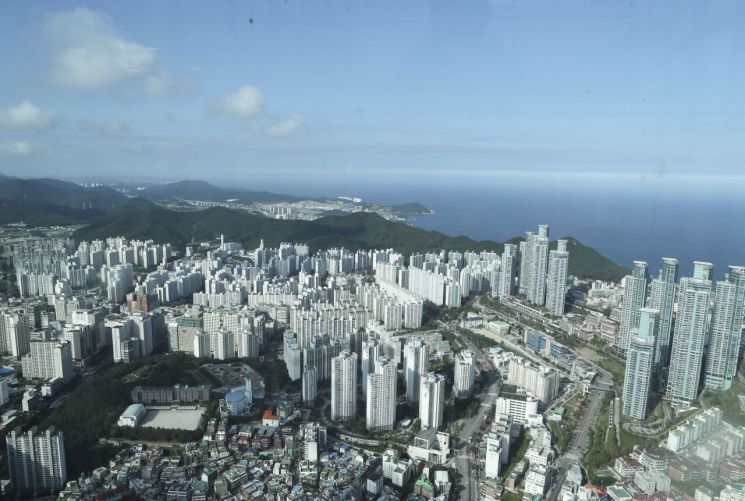
The so-called 'Hae-Su-Dong' areas?Haeundae, Suyeong, and Dongnae Districts in Busan?were re-designated as adjusted target areas just one year after being removed from the list on November 8 last year. Yeonje and Nam Districts were also re-designated about two years after being removed in December 2018.
According to the Korea Real Estate Board's weekly apartment sales price index, since the removal of the 'Hae-Su-Dong' three districts from the adjusted target areas on November 11 last year until the 9th of this month, housing prices rose by ▲13.47% in Suyeong District, ▲13.26% in Haeundae District, and ▲8.57% in Dongnae District. This is two to three times the overall increase rate of 4.55% in Busan during the same period.
The Ministry of Land explained that although these five districts maintained stability after being removed from the adjusted target areas, the rate of increase expanded from July, and with the recent rise in purchases by outsiders, there are concerns about continued overheating, leading to their re-designation as adjusted target areas. They also noted that redevelopment and reconstruction projects are ongoing, which could cause future market instability.
Suseong District in Daegu was the only speculative overheating district nationwide not designated as an adjusted target area, but with this measure, all 48 speculative overheating districts nationwide will be subject to overlapping regulations as adjusted target areas.
The Ministry explained, "Although Suseong District was designated as a speculative overheating district, it was a non-adjusted target area, so tax regulations such as capital gains tax surcharges for multi-homeowners did not apply. Recently, the proportion of purchases by multi-homeowners and outsiders has increased, prices have surged, and overheating has intensified, leading to its designation as an adjusted target area."
The Ministry plans to pursue additional designations for areas experiencing overheating and consider lifting regulations for areas showing stabilization.
The Ministry stated, "We are currently conducting detailed investigations on some existing regulated areas and plan to consider lifting regulations for specific areas showing clear stabilization if necessary." On the other hand, they announced plans to designate additional regulated areas next month for regions where overheating is newly detected.
© The Asia Business Daily(www.asiae.co.kr). All rights reserved.


















