5-Year New Construction Rate in Level 1 Activation Areas at 4.1%, Lower Than Seoul's Average of 6.1%... 280 Billion KRW Invested in 8 Neighborhood Regeneration Areas Over 5 Years, Impact Minimal
[Asia Economy Reporter Jong-il Park] Since the first designation of the first phase urban regeneration activation areas in 2015, the proportion of newly constructed buildings within the 13 activation areas over five years until 2019 was 4.1%, which is lower than Seoul’s general low-rise residential area new construction rate of 6.1%.
In particular, in Haebangchon, out of a total of 1,408 buildings, only 7 were newly constructed over the past five years.
Areas designated for regeneration projects over the past five years, such as New Town and redevelopment cancellation areas, and aging low-rise residential areas that are difficult to maintain independently and urgently need regeneration, are experiencing an even faster rate of building aging.
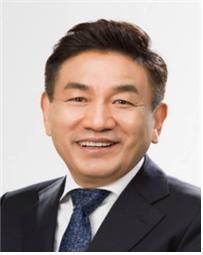
Seoul City Council member Sik-rae Noh (Democratic Party, Yongsan 2) analyzed the causes of the continuous aging of activation areas despite Seoul City’s support, based on the Seoul Institute’s report titled “Measures to Enhance the Effectiveness of Building Regulation Relaxation in Urban Regeneration Activation Areas,” and urged the preparation of alternatives to induce autonomous maintenance in these areas.
Seoul City designated a total of 47 urban regeneration activation areas: 13 in the first phase in 2015, 14 in the second phase in 2017, and 5 in the third phase in 2018.
Among these, Council member Noh reviewed eight general neighborhood-type areas composed of residential and alley commercial districts, excluding economic base type and central business district type, designated in the first phase in 2015.
As a result, after the designation of the activation areas in 2015, out of a total of 12,874 buildings over five years, 735 were newly constructed, resulting in a new construction rate of 5.71%.
This is also lower than Seoul’s general low-rise residential area new construction rate of 6.1%.
Furthermore, although designated as activation areas of the same type during the same period, Jangwi, Sangdo, and Amsa showed new construction rates over five years of 10.03%, 9.65%, and 9.45%, respectively, whereas Haebangchon and Changsin-Sungin showed significantly lower rates of 0.50% and 2.13%, respectively, indicating a large disparity.
Council member Noh attributed this not to the results of regeneration projects but to the effects of floor area ratio relaxation.
Looking at the changes in the use of newly constructed buildings by activation area, Jangwi, Sangdo, and Amsa, which had high new construction rates over five years, rebuilt single-family houses as multi-family housing at rates of 73.91% (85 buildings), 47.85% (100 buildings), and 69.23% (135 buildings), respectively, whereas Haebangchon and Changsin-Sungin had only 28.57% (2 buildings) and 19.30% (11 buildings), respectively.
On the other hand, the total project costs submitted by Seoul City’s Regeneration Policy Division to Council member Noh were 24.2 billion KRW, 34.3 billion KRW, and 16.6 billion KRW for Jangwi, Sangdo, and Amsa, respectively, and 17.1 billion KRW and 81.1 billion KRW for Haebangchon and Changsin-Sungin, respectively, showing no clear influence of regeneration project costs on new construction rates.
Based on this, Council member Noh analyzed, “While investing 280 billion KRW in infrastructure maintenance and anchor facility expansion in eight neighborhood regeneration-type areas with project costs ranging from 16.6 billion KRW to 81.1 billion KRW over the past five years during the first phase activation projects, the impact on residential environment improvement was minimal. Ultimately, floor area ratio and building coverage ratio determine the new construction rate.”
Over five years since 2015, within the 13 first phase activation areas, there were 23 cases of exceeding building coverage ratio and 12 cases of exceeding floor area ratio, totaling 35 cases where building standards were relaxed. The grounds for relaxation included district unit plans (22 cases), comprehensive development plans for semi-industrial areas (10 cases), and redevelopment promotion districts (3 cases), with no cases of building regulation relaxation under the Urban Regeneration Act.
Because regulation relaxation under the Urban Regeneration Act and ordinances is premised on public contribution or limited to height regulation relaxation, it is difficult to apply to small parcel units in general residential areas.
Council member Noh appealed, “Haebangchon is a residential area naturally formed on hilly terrain, with 9.7% of parcels under 90㎡, 10.2% of parcels without road access, 13.6% with poor terrain and slope conditions, 15.6% overlapping two of these factors, and 4.0% overlapping all three, resulting in a dense concentration of parcels with poor road access, size, and slope, making parcel-level maintenance conditions very poor.”
He added, “Other areas designated as activation areas are not much different. Under the current system, since no building activity occurs, aging progresses helplessly. Please consider various measures to induce autonomous maintenance so that the designation of activation areas can be effective.”
© The Asia Business Daily(www.asiae.co.kr). All rights reserved.
















