During Tenure as Chief Cabinet Secretary, Difficulty Responding to COVID-19 Due to 'Digital Backward' Infrastructure
Focus on My Number Card Distribution and Administrative Reform... "Establishment of Digital Cheong"
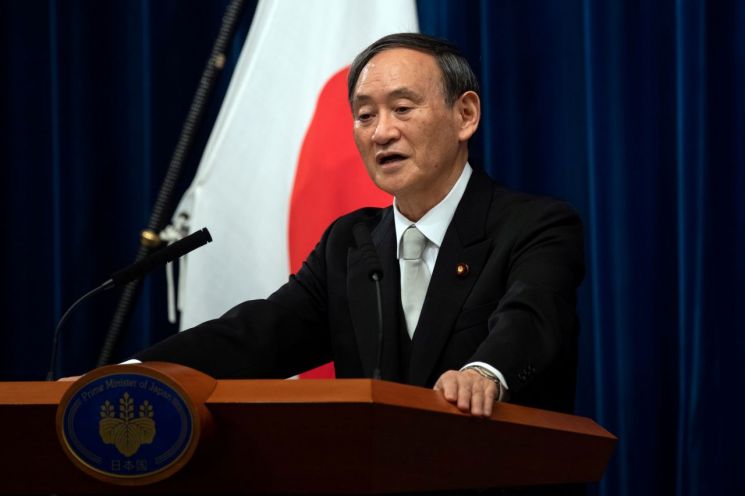
[Asia Economy Reporter Jeong Hyunjin] "We need to create a Digital Agency."
Yoshihide Suga, Prime Minister of Japan, deeply felt the limitations of the non-digitized administration while experiencing the COVID-19 pandemic this year as the Chief Cabinet Secretary of the former Shinzo Abe administration. Although the Japanese government implemented the IT Basic Law in 2001 with the goal of establishing a world-leading IT nation, Japan currently ranks only 14th in the United Nations (UN) rankings after 20 years. This realization of Japan’s limitations as a digitally outdated country was the reason why Prime Minister Suga strongly advocated for the establishment of a Digital Agency immediately after the cabinet was formed.
According to Japanese media such as the Asahi Shimbun on the 27th, the biggest difficulty the Japanese government faced during the COVID-19 period due to administrative digital aging was the distribution of disaster relief funds. At that time, the former Abe administration made a difficult decision to provide 100,000 yen (approximately 1.1 million KRW) in COVID-19 disaster relief funds to all citizens, but despite the urgency, the payment process was delayed due to administrative issues and lack of information. This was because resident information was not shared between the central government and local governments.
The Japanese government required citizens holding a "My Number Card" (an ID card similar to Korea’s resident registration card) to apply for disaster relief funds online. However, the local governments responsible for actually distributing the funds had to manually match their resident information with the data, re-entering personal information into the system, which complicated the process further. Additionally, due to the low adoption rate of the card, most procedures were handled by mail, inevitably slowing down the process.
The low adoption rate of the My Number Card was a concern for Prime Minister Suga even when he was Chief Cabinet Secretary. In January last year, he gathered senior officials from the Ministry of Internal Affairs and Communications and the Ministry of Health, Labour and Welfare to instruct them to come up with measures to increase the card’s adoption. Although three years had passed since the card’s issuance began, the adoption rate was only 12%, which was a source of concern for Suga at the time, according to Asahi. Although measures such as allowing the card to be used as a health insurance card were introduced later, the policy was deprioritized, causing slow progress and ultimately leading to problems during the COVID-19 crisis.
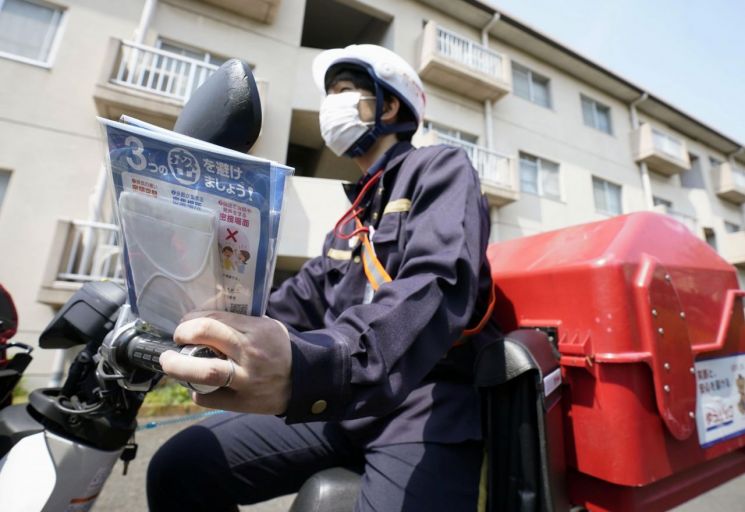 In April, a postal worker in Tokyo, Japan, was delivering masks distributed by the government. [Image source=Reuters Yonhap News]
Furthermore, various problems frequently occurred due to the lack of digitalization in managing COVID-19 infection information, which required paperwork at both the central government and local government levels. Even after conducting COVID-19 tests, PCR test results were not aggregated online for 2 to 3 days, making it difficult to grasp the infection situation across Japan. At that time, Chief Cabinet Secretary Suga expressed frustration several times, asking, "Why can’t we do something so obvious?" according to the Nihon Keizai Shimbun.
Prime Minister Suga is accelerating the establishment of the Digital Agency immediately after taking office. He appointed Takuya Hirai, known as a digital and IT policy expert within the Liberal Democratic Party, as the Minister in charge of Digital Reform and chaired a ministerial meeting dedicated solely to this topic. At this meeting, he emphasized the need for digital reform, instructed that the basic establishment plan be completed within the year, and announced plans to submit related legislation to the Diet early next year.
Suga also stated that by the end of 2022, the goal is for almost all citizens to have issued My Number Cards. As of the 23rd, the card’s adoption rate is around 20%. Additionally, there is a plan to standardize the differing administrative systems across local governments by 2025, with the government considering financial support for related costs.
This atmosphere is also expected to contribute to cultural changes in Japan. It is common in Japan for office workers to come to work just to stamp documents, as stamps are generally used instead of signatures. In response, Taro Kono, Minister in charge of Administrative Reform, requested all ministries to stop using stamps in all administrative procedures, aiming to eliminate the culture of stamp usage. After Kono’s announcement, Minister Hirai said, "To solve the stamp issue throughout society, I will hold regular meetings with Minister Kono and proceed with the reforms."
© The Asia Business Daily(www.asiae.co.kr). All rights reserved.


















