Telegram 'Baksabang' Paid Members' Personal Information Disclosure Fails
'Butta' Kang Hoon Requests Constitutional Review at Court
Citizens "2 Million Related Petitions... Personal Information Must Be Disclosed" Anger
Choo Mi-ae "Even Nth Room Spectators Can Have Personal Information Disclosed"
Experts "Need Understandable Explanation for Non-Disclosure of Personal Information"
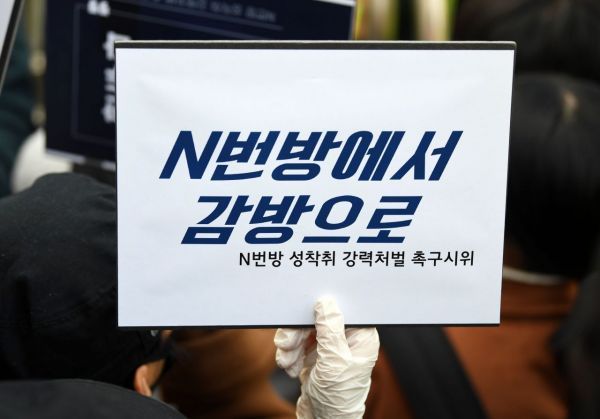 On March 25, as the vehicle carrying Jo Joo-bin, the operator of the 'Baksa Room' accused of producing and distributing sexual exploitation materials of women including minors on the internet messenger Telegram, left the Jongno Police Station in Seoul and headed to the prosecution detention center, citizens held a picket protest demanding severe punishment for Jo Joo-bin. Photo by Yonhap News
[Asia Economy Reporter Kim Suwan] Criticism continues to mount as the disclosure of personal information of two paid members, who were the first to be charged with joining a criminal organization in the Telegram 'Baksa Bang' case involving the production and distribution of sexual exploitation materials of minors and women, has failed.
Citizens have expressed frustration over the refusal to disclose personal information despite related petitions garnering millions of signatures, arguing that such disclosure could reduce these crimes. Especially since this case has sparked national outrage, there is a view that the first step must be taken correctly.
The police judged that although these individuals were heavily involved in the crimes, the practical benefits of disclosing their personal information were not significant.
On the 3rd, the Seoul Metropolitan Police Agency's Special Investigation Unit for Digital Sex Crimes announced, "We have decided not to refer paid members Jang and Lim, who were arrested on the 25th of last month on charges of violating the Act on the Protection of Children and Juveniles from Sexual Abuse and joining a criminal organization, to the Personal Information Disclosure Review Committee."
The police explained the reason for not disclosing personal information, stating, "We discussed whether to refer the case to the Personal Information Disclosure Review Committee, but judged that the benefits of disclosure, such as crime prevention effects, were not high, so we decided not to refer it."
Previously, Kang Hoon, accused of operating Baksa Bang, opposed the disclosure of personal information by investigative agencies and even filed a request for a constitutional review of the law with the court.
Kang Hoon's lawyer said, "Disclosing personal information at the suspect stage is too harsh, violating the right to a fair trial and the presumption of innocence," adding, "Also, since personal information disclosure is an administrative measure without an appeal procedure, there is no way to promptly seek relief, which is argued to be unconstitutional."
He continued, "Although minors are excluded from disclosure, classifying individuals as adults and subject to disclosure simply because they reach the age of majority in the year of their birthday, regardless of the actual date, also has constitutional issues," and argued, "Despite the Civil Act's provisions on the age of majority, arbitrarily changing it as needed is inconsistent application of legal standards."
As a result, skeptical views have emerged regarding the actual application of personal information disclosure, citing the lack of concrete criteria or proven practical effects.
Professor Lee Sujeong of Kyonggi University's Criminal Psychology Department analyzed, "The personal information disclosure system itself was unstable from the start, as evidenced by Kang Hoon filing a constitutional lawsuit."
The problem lies in the fact that the decision on whether to disclose the personal information of paid members under investigation is influenced by the disclosure status of these individuals.
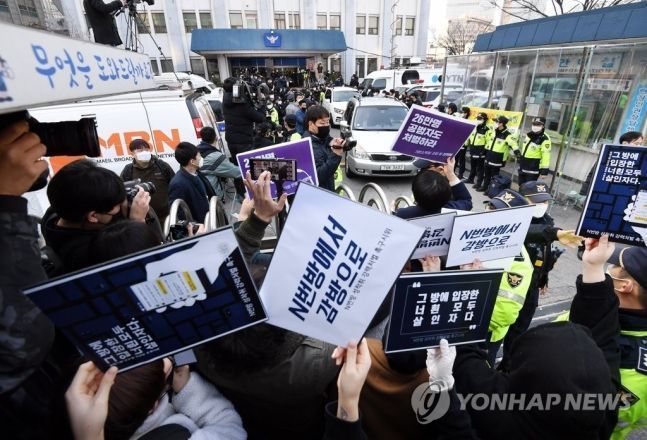 On March 25, as the vehicle carrying Jo Joo-bin, the operator of the 'Baksa Room' accused of producing and distributing sexual exploitation materials of women including minors on the internet messenger Telegram, left the Jongno Police Station in Seoul and headed to the prosecution detention center, citizens held a picket protest urging severe punishment for Jo Joo-bin. Photo by Yonhap News
Citizens are expressing frustration, saying, "Isn't this the first time a member has been indicted? They should have been disclosed naturally," and "Didn't they promise to disclose the personal information of related parties?"
A 27-year-old office worker, A, said, "The police say the crime prevention benefits of disclosure are small and plan to keep it private, which is unacceptable. They should have disclosed it naturally," adding, "I think the thing criminals fear most is personal information disclosure. Out of fear of being exposed, similar crimes might decrease in the future."
He continued, "Especially since this is the first indictment of a member related to the n-bang case," and added, "I understand that disclosure depends on the severity of the crime, but it seems society does not consider sexual exploitation crimes as serious offenses, which makes me angry."
Moreover, the controversy is intensifying as the government has also declared it will make every effort to punish those involved in the n-bang case. On April 4th, Justice Minister Choo Mi-ae appeared on KBS Radio's 'Kim Kyung-rae's Strongest Current Affairs' and said, "We will disclose the personal information of those heavily involved," ordering strict punishment.
In particular, National Police Agency Commissioner Min Gap-ryong stated in March, in response to a petition urging the disclosure of personal information of 'n-bang' operators and members, "We will strictly prosecute illegal offenders according to relevant procedures and regulations without going against the public's demands, and will also consider personal information disclosure, taking firm action."
Some argue that deciding not to disclose personal information despite a national petition with over 2 million signatures demanding full disclosure of related parties ignores the will of the people.
Experts point out the need for a comprehensible explanation regarding the non-disclosure. Seo Seung-hee, head of the Korea Cyber Sexual Violence Response Center, said, "It is obvious that sex offenders should be severely punished. However, whether this punishment should be through personal information disclosure is a point of societal debate," adding, "It is difficult to disclose all sex offenders' personal information. Therefore, discussions on the criteria for disclosure are necessary."
She added, "The police have taken a tough stance on punishment. If so, they need to explain to citizens why they decided not to disclose personal information in this case so that the public can understand."
*If you are experiencing difficulties due to illegal filming or distribution of photos or videos, blackmail using such materials, or sexual harassment in cyberspace, you can receive support from the Women's Emergency Hotline 1366 and the Digital Sex Crime Victim Support Center (02-735-8994).
© The Asia Business Daily(www.asiae.co.kr). All rights reserved.


















