Fake Images Circulated Before Official Photos Released
On January 3 (local time), Nicolas Maduro, President of Venezuela, was reportedly arrested and extradited to the United States on the orders of U.S. President Donald Trump, throwing the world into confusion. Although generative AI companies have touted "safety mechanisms," there are criticisms that these did not function properly in reality.
According to a report by The New York Times on January 5 (local time), after news broke of President Maduro's arrest on January 3, social media was flooded with images showing him in handcuffs being escorted by Drug Enforcement Administration agents or surrounded by soldiers on a military aircraft. Most of these were fake photos created using AI image generation tools.
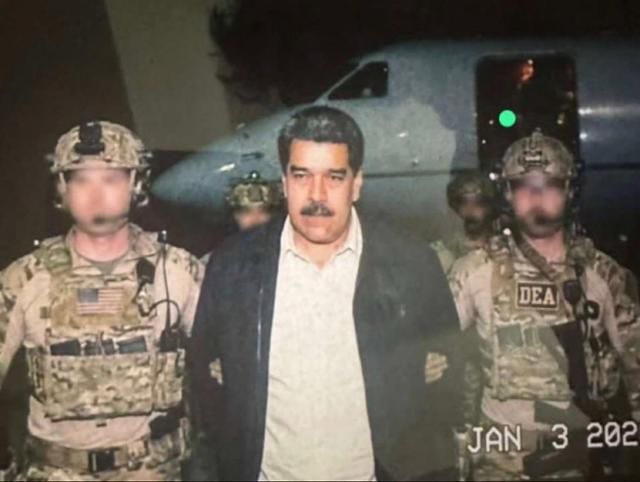
The spread accelerated rapidly on social media after President Trump himself shared these images. However, The New York Times analyzed that "the photos are of very low quality, are tilted, and show Maduro in a suit, which undermines their credibility, especially since reports indicated he was arrested in athletic wear."
Experts evaluated this as the first instance where AI generated fake images of a historical moment. Roberta Braga, Executive Director of the Digital Democracy Institute of the Americas, stated, "This is the first time I have seen so many AI-generated images depicting what should be a real moment in history."
In fact, some Latin American media outlets initially mistook the fake photos for actual arrest scenes and reported them as such, only to later replace them with genuine images.
Jean Freddy Gutierrez, who runs a fact-checking site in Caracas, said, "Some Latin American media were also deceived by the fake images," adding, "Later, the fake photos were replaced with images that President Donald Trump posted on social media."
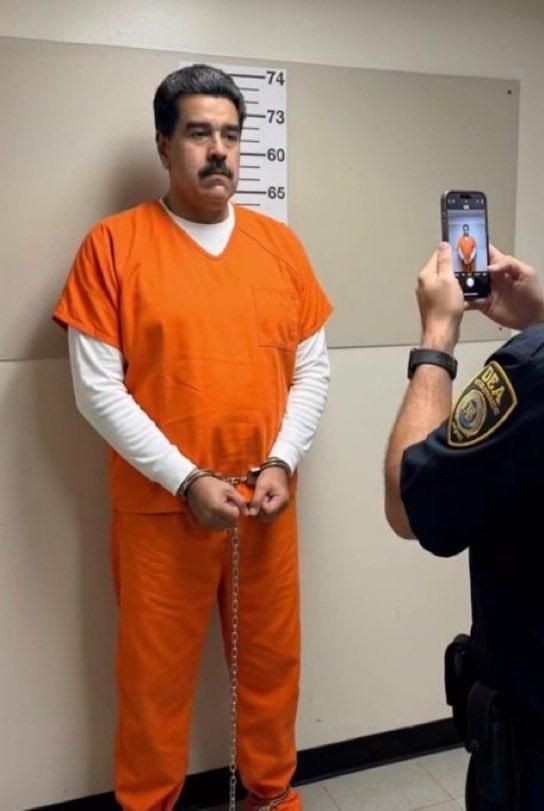 Fake photo of Nicolas Maduro, President of Venezuela, wearing a prison uniform. It is presumed to be generated by artificial intelligence (AI). Screenshot from X.
According to one tally, the fake images and videos were viewed more than 14.1 million times on X (formerly Twitter) in less than two days.
AI developers stated that their policies prohibit the creation of false information and the synthesis of public figures, but in practice, these "safety mechanisms" appear to have failed.
Gemini and Grok generated the photos instantly, while ChatGPT responded that it could not generate images of Maduro. However, when The New York Times made the request through another website using the ChatGPT model, it produced the relevant images. The New York Times pointed out, "The experiment showed that most AIs ignored the rules meant to prevent technological misuse."
© The Asia Business Daily(www.asiae.co.kr). All rights reserved.



![15-Year Veteran Field Mechanic Becomes AI Talent... Korean Air's Experiment [AI Era, Jobs Are Changing]](https://cwcontent.asiae.co.kr/asiaresize/319/2025121111232252273_1765419802.jpg)