Appeared as a witness at the National Assembly joint hearing on December 31
On sales and stock price decline: "It's due to misinformation"
On perjury criticism: "My answers were not fully interpreted"
When asked about stock price drop after the hearing: "I don't know"
Harold Rogers, interim CEO of Coupang, continued to emphasize on the second day of the National Assembly joint hearing that "many customers are currently being misinformed," stressing that the decline in sales and stock price following the large-scale personal data breach was due to misinformation.
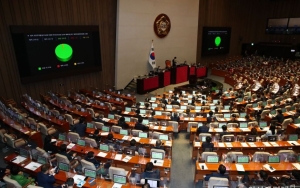
On December 31, Rogers appeared as a witness at the "Hearing on the Coupang Security Incident, Personal Data Breach, Unfair Trade Practices, Labor Environment Assessment, and Measures to Prevent Recurrence" held at the National Assembly and made these remarks. In his procedural statement, Rogers said, "Some have claimed that my answers yesterday were perjury, but I believe my responses were not fully interpreted," adding, "While I respect the National Assembly, I am here representing myself and the company, and tens of thousands of employees and many customers are currently aware of the misinformation."
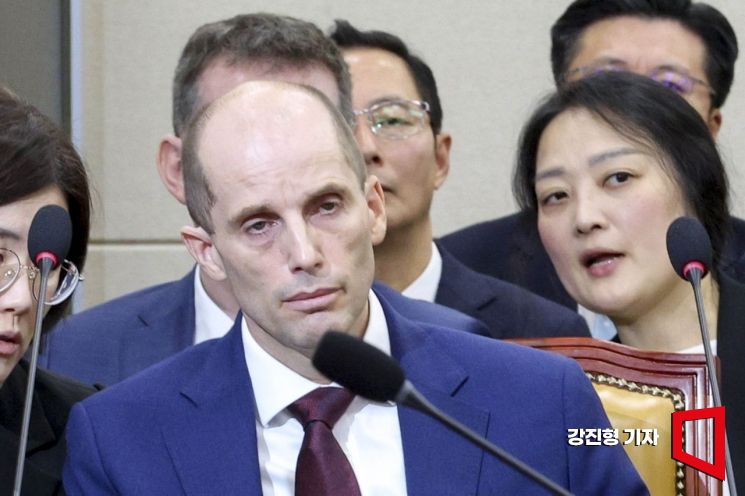 Harold Rogers, CEO of Coupang, is attending the 'Coupang Joint Hearing' held at the National Assembly in Yeouido, Seoul on the 29th. 2025.12.30 Photo by Kang Jinhyung
When asked by Hwang Jeonga, a lawmaker from the Democratic Party of Korea, whether he knew how much Coupang's stock price and sales had dropped on the US stock market after the previous day's hearing, Rogers replied, "I cannot disclose that publicly," but added, "However, I believe misinformation is having an impact. Customers are not hearing the truth about their data." When asked specifically how much the stock price fell immediately after the hearing, he responded, "I don't know."
Lawmakers expressed frustration at Rogers' evasive answers, which continued for a second day. When Hwang asked, "Even to the simple question of whether Chairman Kim Beomseok watched the National Assembly hearing yesterday, Coupang did not answer. Why did you not submit the requested materials?" Rogers replied, "I did not say that Chairman Kim did not watch the hearing. I don't know." When asked what instructions were given at the board of directors meeting, he said, "We regularly discuss matters with the chairman of the board."
Rogers also repeatedly answered "I don't know" regarding the leaked information needed for victim compensation. When Hwang asked, "Out of 33.7 million accounts, how many are withdrawn or dormant?" he replied, "I don't know." When asked, "Shouldn't you provide additional notice to the users of the 3,000 stored accounts about the retention of their personal data?" he answered, "We have notified customers with 33 million accounts." Lawmakers criticized, saying, "This is tantamount to admitting that Kim Beomseok makes the decisions at Coupang and that Rogers is merely a figurehead."
Regarding criticism of Coupang's "self-investigation," Rogers reiterated his previous position, calling it "a successful case of cooperation between a private company and the Korean government" and stating that they had cooperated according to government instructions. The previous day, the National Intelligence Service officially denied this and requested the National Assembly to file perjury charges. When Jeong Ilyoung, a lawmaker from the Democratic Party of Korea, pressed, "Yesterday, Coupang repeatedly said it acted on government instructions and was asked to submit credible materials. Why didn't you do so?" Rogers responded, "There are few cases where the government and private sector have cooperated this successfully. We limited secondary damages. This fact is not well known. Why not inform the Korean public of this success?"
The same evasive responses were given regarding the reason for discrepancies between the Korean and English versions of the self-investigation report. When Jeong asked, "The Korean version states that 'unnecessary anxiety' is being caused, while the English version refers to 'false insecurity.' Who wrote these?" Rogers replied, "Why not talk about the success of the joint efforts between Coupang and the Korean government? Why not inform the Korean people about this situation? This is a good example of success," again avoiding the question.
© The Asia Business Daily(www.asiae.co.kr). All rights reserved.