Mamdani Becomes Youngest-Ever Mayor of New York City
A Surge in Demands for Political Generational Change Following the "Mamdani Effect"
With Zohran Mamdani’s election as mayor of New York City, discussions about generational change in American politics have been sparked, and there are growing expectations that the rise of the youngest-ever mayor in his 30s could become a turning point for Millennials & Gen Z political aspirants. On November 10, Yonhap News, citing ABC News, reported that the emergence of the youngest-ever New York City mayor in his 30s is fueling debate about generational change in US politics. The report also noted that, ahead of next June’s local elections in Korea, attention is turning to whether a “wind of Millennials & Gen Z” will also blow in the country.
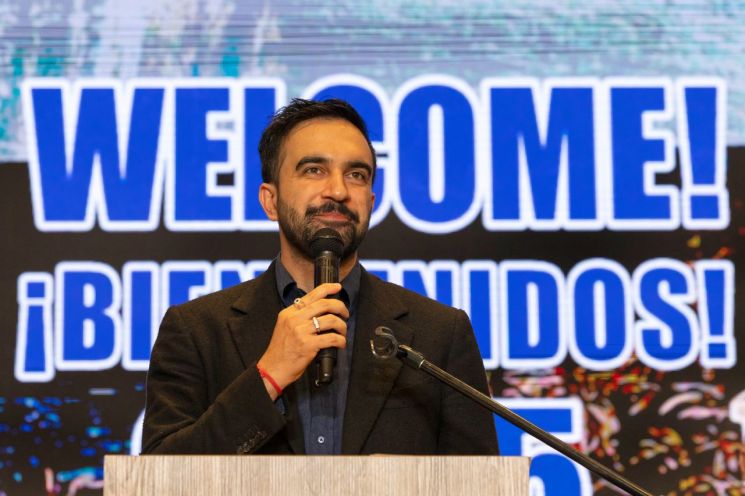 Millennials & Gen Z member and political newcomer Mamdani made history as the youngest mayor of New York City at the age of 34, winning the mayoral election held on the 4th. Photo by AP Yonhap News
First, the term Millennials & Gen Z refers to the combined cohort of millennials and Generation Z, who are leading global culture and trends through social networking services (SNS). This group generally includes those born from the mid-1980s to the early 2010s. They are characterized by their familiarity with digital environments and their emphasis on social values and self-expression.
In the United States, Zohran Mamdani, a member of Millennials & Gen Z and a political newcomer, made history by being elected as the youngest mayor of New York City at the age of 34 in the election held on November 4. According to ABC News, Mamdani’s campaign succeeded because voters wanted change rather than maintaining the status quo, and he delivered a progressive message that the urgent issues facing the younger generation, such as high housing costs, must be addressed. He challenged the existing political establishment and ultimately secured victory.
Above all, Mamdani’s election is leading to increased political challenges from Millennials & Gen Z not only within the US Democratic Party but also among the Republican Party. Jonathan Hanson, a political scientist at the University of Michigan, said in an interview with ABC News, “Veteran members of Congress are already facing challenges from young political aspirants, and there is evidence that these challengers are gaining support from voters. The voters are saying that it is time for new faces.”
However, Hanson pointed out that while the rise of young political aspirants is evident across both progressive and conservative camps, Millennials & Gen Z candidates in the Republican Party tend to compete more for the support and approval of former President Donald Trump and his MAGA allies, rather than challenging the status quo. He cited as a representative example of this trend in conservative circles the large-scale rallies organized by Turning Point USA, which was led by the late Charlie Kirk, who was recently killed in a shooting attack. According to a Pew Research Center poll, the median age of members of the US House of Representatives is 57.5, the median age of US senators is 64.7, while the median age of the American population is 39.1.
 With Mamdani's recent election, political challenges from Millennials and Gen Z are increasing not only within the US Democratic Party but also among the Republican Party. Photo by AP Yonhap News
Mamdani’s election is also having a significant impact on domestic politics in Korea. Regarding Mamdani’s victory, former Democratic Party lawmaker Park Yongjin warned on his SNS on November 10, “If the Democratic Party fails to properly understand the dissatisfaction and anxiety of people in their 20s, it will be perceived not as a progressive force leading change, but as a reactionary force defending vested interests, and will inevitably be trapped by the generational siege in all future elections.”
He continued, “Mamdani developed his campaign pledges by listening and paying attention, rather than arguing, in conversations with Trump supporters. Just as the change Mamdani is initiating in New York must be accompanied by politics with our own Generation Z in Seoul, the Democratic Party must at least struggle to ensure its politics do not degenerate into what young people call ‘Young Forty Politics.’”
© The Asia Business Daily(www.asiae.co.kr). All rights reserved.