32 Fish Species Now Inhabit the Stream, an Eightfold Increase Since Restoration
Exhibition Highlights the Value of Ecological Conservation
For the 20th anniversary of the Cheonggyecheon Restoration, a freshwater fish survey revealed the first-ever discovery of the shiri, a key indicator species of a healthy stream. The number of fish species, which was only four before restoration, has now increased to 32, indicating a remarkable recovery of the urban stream ecosystem.
The National Science Museum, in collaboration with the Seoul Facilities Corporation, released the results of this year’s academic survey on freshwater fish in Cheonggyecheon on October 23. The survey identified a total of 32 species and 1 subspecies of fish, belonging to 7 orders and 9 families, with approximately 6,700 individuals. Compared to the period before restoration, the number of fish species has increased more than eightfold.
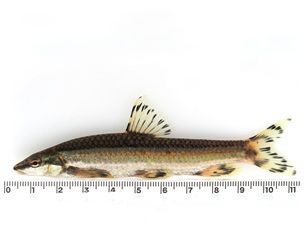
Notably, shiri fry, which only inhabit clear, oxygen-rich riffles, were found for the first time in the upper reaches of Cheonggyecheon. The National Science Museum explained, “Although this applies to only certain sections, the findings show that the environment where shiri can thrive is being stably maintained.”
This survey was conducted three times from April to September at six sites, spanning from Mojongyo near Cheonggye Plaza to the confluence with Jungnangcheon. The same locations as 20 years ago were selected to enable an objective comparison of long-term changes.
By taxonomic classification, the order Cypriniformes accounted for the largest number with 23 species and 1 subspecies, followed by the order Gobiiformes with four species. The most dominant species was the pale chub, making up 38.1% of all individuals, followed by the crucian carp (17.2%) and the Chinese bleak (12.7%).
Six Korean native species were identified: Korean splendid dace, striped shiner, shiri, Korean barbel, Korean chub, and spotted sleeper. As for non-native species, Israeli carp, guppy, and bass were found. Of these, seven guppies and one bass are believed to have been introduced artificially. All fish surveyed were released back into their original habitats after identification on site.
By section, the upper reaches (Mojongyo to Majongyo) were mainly inhabited by species such as shiri, slender shiner, and Korean chub, which prefer fast-flowing, oxygen-rich environments. In the middle reaches (Hwanghakgyo to Gosanjagyo), species adapted to moderate flow and diverse riverbed structures, such as crucian carp, striped barbel, and sandfish, were prevalent. In the lower reaches (confluence with Jungnangcheon), species tolerant of poor water quality, such as Chinese bleak, pale chub, and crucian carp, were mainly found, clearly distinguishing the ecological characteristics of each section.
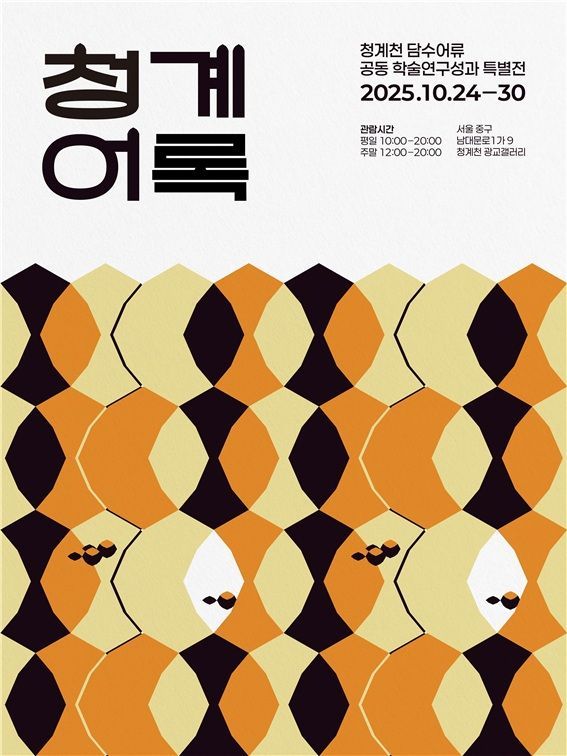
To share the results of this survey with the public, the National Science Museum and the Seoul Facilities Corporation have organized a special exhibition, "Cheonggye Eorok: Joint Academic Research Results on Cheonggyecheon Freshwater Fish." The exhibition features a variety of content, including an AI-produced video chronicling "20 Years of Cheonggyecheon Restoration," detailed illustrations of Korean freshwater fish, and records from the Cheonggyecheon Exploration Team, allowing citizens to experience the significance of an ecological stream within the city.
Kwon Seokmin, Director of the National Science Museum, stated, “The ecological restoration of Cheonggyecheon is an example showing that even a damaged environment can recover through consistent management and cooperation. We will continue to develop Cheonggyecheon as a space for natural education where citizens can nurture scientific curiosity and a spirit of exploration.”
© The Asia Business Daily(www.asiae.co.kr). All rights reserved.