Average Temperature Has Continued to Rise Over the Past 30 Years
Longer Summers and Shorter Winters
Ecosystem Changes Accelerate Due to Global Warming
With the discovery of mosquitoes in Iceland-the only country in the world whose name contains the word "Ice"-attention is focusing on whether this is a result of climate change. On October 21 (local time), AFP and the British daily The Guardian reported, citing the Icelandic Institute of Natural History, that three striped mosquitoes (Culiseta annulata) were recently found in an area about 30 kilometers north of the capital, Reykjavik.
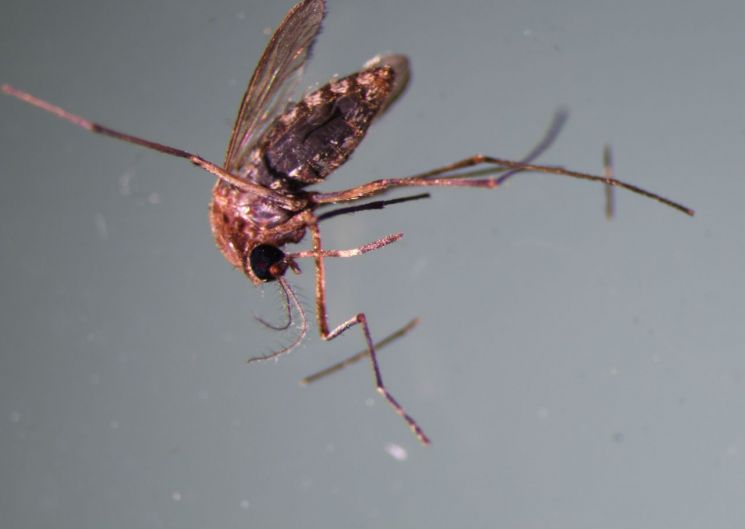 The mosquitoes discovered this time consisted of two females and one male, captured by a device installed to catch moths and other insects. National Institute of Health and Environment
The mosquitoes discovered this time consisted of two females and one male, captured by a device installed to catch moths and other insects. This device uses a string coated with a solution of sugar and wine, designed to attract insects drawn to sweetness. Known as the "Land of Ice," Iceland, along with Antarctica, has long been recognized as a region where mosquitoes do not inhabit due to its harsh cold. However, this marks the first time mosquitoes have been detected in the natural environment of Iceland.
Some experts analyze that rising temperatures, with longer summers and milder winters, have created an environment where mosquitoes can survive. However, Mathias Alfredsson, an entomologist at the Institute of Natural History, pointed out that the mosquitoes found this time may have recently arrived via ships or containers. He stated, "It is necessary to conduct additional monitoring in the spring to determine whether they are spreading." He emphasized that "this discovery cannot be definitively attributed to climate change." Nevertheless, he added, "The striped mosquito found this time appears to be a species adapted to cold climates," explaining that "this means it can survive the long winters when temperatures drop below freezing."
Meanwhile, the average temperature in Iceland has risen about four times faster than the global average over the past 30 years, and the number of days in winter when temperatures do not fall below freezing is steadily increasing. As a result, insects and fish that could not previously survive in Iceland are gradually expanding their habitats northward. The Icelandic Environment Agency stated, "This is the first official confirmation of mosquitoes in Iceland," and announced plans to regularly monitor the population and distribution of mosquitoes and to develop control measures in the future.
© The Asia Business Daily(www.asiae.co.kr). All rights reserved.