Free Vending Machines Spread Across Japan, the Land of Vending Machines
Receive Free Samples by Completing a Survey and Scanning a QR Code with Your Smartphone
Korean Cosmetic Sample Vending Machines Gain Popularity... Sixfold Increase in One Ye
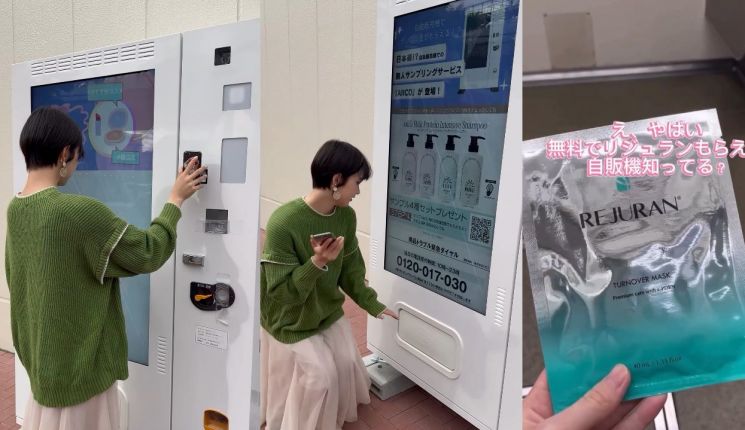 An image compositing the sale of Korean cosmetics from a vending machine in a video introducing a cosmetics vending machine by Japanese digital marketing specialist Adinte and vending machine developer and operator Aico. Adinte and Aico Instagram
In Japan, known as the land of vending machines, free vending machines are gaining popularity. Customers can use them without any cost, while for companies, they provide opportunities to collect customer information, gather product reviews, and use them for marketing. Locations that install these vending machines can increase foot traffic, which is leading to their nationwide expansion. In particular, vending machines that distribute free samples and sell Korean cosmetics have become so popular that the number of installed vending machines has increased sixfold in just one year.
◆ A 'Win-Win' Structure for Customers, Manufacturers, and Commercial Facilities
On October 13, the Japanese broadcaster Tokyo MX reported on the rapidly increasing number of "free vending machines" across the country, asking, "Why can people receive products for free?" According to the report, at the ViNAWALK shopping center in Ebina, Kanagawa Prefecture, a customer was seen holding a smartphone up to a vending machine and receiving something. When asked what he was doing, he happily replied, "I received a protein sample for free." This vending machine allows users to receive free samples of protein products. The process is simple: users add the brand as a friend on the LINE messenger service, answer a brief survey, and then scan the QR code displayed on their screen at the vending machine to receive a sample.
Users have responded positively, saying, "If a person were handing out samples, I would just walk by, but with a vending machine, I don't feel embarrassed and it's easy to receive," and "I like that there are no sales calls or solicitations." These "free vending machines" are rapidly increasing across Japan. At Tokyo Solamachi, a commercial facility near Tokyo Skytree, a vending machine has appeared that offers free samples of Korean cosmetics. The Aicosme vending machine, operated by Aico, provides cosmetic samples and also sells cosmetics. While there were only about 50 free vending machines nationwide last year, the number has now increased to over 300. Additionally, a free vending machine for women's razors, which launched in the Kyushu region in July this year, is expected to expand nationwide in the future.
◆ What Is the Revenue Model for Free Vending Machines?
How are these free vending machines operated? A representative from Aico, which develops and operates these vending machines, explained, "Our company covers all the installation costs. Commercial facilities do not have to pay for installation." Commercial facilities benefit by increasing visitor numbers in exchange for providing space for the free sample vending machines. Users receive samples in return for answering a brief survey, and manufacturers can easily conduct marketing research to see who received the samples based on the survey data. This structure benefits all three parties involved.
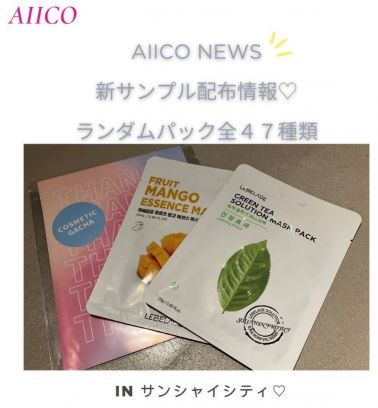 Instagram announcement from ICO, a developer and operator of vending machines, about distributing Korean cosmetics samples through free vending machines in May 2024.
◆ Customers Surprised! Free Tastings of Over 80 Products
This "free system" is spreading not only through vending machines but also in store formats. At MEGDAI in Daikanyama, Tokyo, more than 80 different products are available, all of which can be sampled for free. The process is as follows: customers pick up a card in front of the product they want to try and hand it to a staff member, who then prepares the sample on the spot. Users are often amazed, saying, "Is it really okay to try so many things for free?" "There are so many products, and it's refreshing to be able to sit down and compare the flavors at your own pace," and "It's hard to buy something when you don't know what it tastes like, but being able to judge through a direct tasting experience instead of just reading reviews is an interesting approach."
There is no obligation to purchase after sampling. The purpose of MEGDAI is to give consumers the opportunity to try products and collect surveys about taste, price, and other factors. An executive at MEGDAI stated, "Participating manufacturers pay for shelf space, and visitors fill out surveys after sampling."
◆ Japanese Netizens: "Excellent Marketing Tool" vs. "Be Careful About Information Leaks"
Japanese netizens have expressed a variety of opinions. Many compared it to street or supermarket tastings and prize giveaways through street surveys, saying, "It's an excellent marketing tool and a great opportunity to promote brands without burdening consumers."
Another netizen recalled that there were also "free copiers" at universities, with advertisements printed on the back of the paper, which were very useful for copying club flyers or past exam questions. In fact, these advertisements reportedly helped increase company sales.
However, there are also concerns about personal information leaks. One netizen commented, "I grew up learning that nothing is scarier than something free," and added, "If my information is misused after receiving a free product, it would be difficult to complain."
© The Asia Business Daily(www.asiae.co.kr). All rights reserved.