Higher Obesity Rates Among Low-Income Groups
But Fewer Seek Medical Care
Chronic Disease Disparities Also Widen by Income
Treatment Costs Force Many to Avoid Hospitals
Despite the fact that low-income groups are the primary risk group for health problems related to obesity, a recent study found that the number of people actually receiving medical treatment is much higher among high-income groups. Experts point out that this gap in access to medical care could lead to the further spread of chronic diseases.
 As of 2023, the obesity prevalence rate among the bottom 20% income group was 38%, which is 7 percentage points higher than the 31% observed in the top 20% income group. Getty Images
Recently, Seo Mihwa, a member of the National Assembly's Health and Welfare Committee from the Democratic Party of Korea, released this analysis based on statistical data submitted by the Korea Disease Control and Prevention Agency and the National Health Insurance Service.
According to the data, as of 2023, the obesity prevalence rate among the bottom 20% income group was 38%, which is 7 percentage points higher than the 31% observed in the top 20%. Even when using waist circumference-a measure that indirectly indicates body fat accumulation-the proportion of low-income individuals exceeding the standard was 4.9 percentage points higher than that of high-income individuals.
The issue is that the pattern is reversed when it comes to the rate of people actually visiting medical institutions. In 2024, the number of people receiving obesity-related treatment in the lowest income bracket (first decile) was 1,243, while the highest income bracket (tenth decile) had 3,425 people-nearly three times as many. Comparing the bottom 20% and top 20% income groups, the numbers were 2,801 and 5,925, respectively, showing a significant gap.
Although the frequency of medical visits was lower among low-income groups, the average medical expenses per person were higher. The average treatment cost for those in the lowest income bracket was 1,356,000 won, about 1.5 times higher than the 937,000 won for the highest income bracket. This suggests that obesity may be more severe or treatment may be delayed among low-income individuals, resulting in a greater financial burden for treatment.
A similar pattern was observed in the major chronic diseases associated with obesity, such as hypertension, diabetes, and hyperlipidemia. As of 2024, the gap in the number of patients receiving treatment between the top and bottom 10% income groups was 2.05 times for hypertension, 2.01 times for diabetes, and 2.43 times for hyperlipidemia. Even when expanding the income range to 20%, the number of high-income patients receiving treatment for these diseases was 1.8 to 2.0 times higher than that of low-income patients.
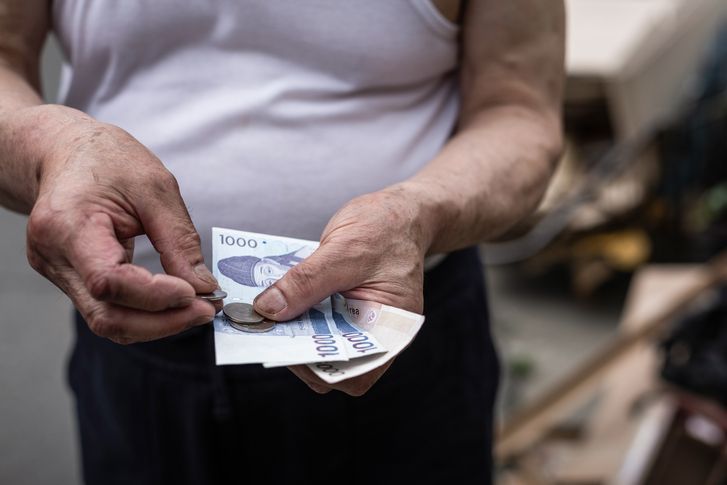 The total number of obese patients is gradually decreasing, but an increasing trend has been observed among the elderly. Getty Images
While the total number of obese patients is gradually decreasing, an increasing trend has been observed among the elderly. The total number of people receiving obesity-related treatment decreased by about 18%, from 25,352 in 2020 to 20,672 in 2024. However, the number of patients aged 60 or older increased by 13.2%, from 1,662 to 1,881 during the same period. Analysts warn that this, combined with an aging population, could increase the burden of managing chronic diseases.
Assemblywoman Seo emphasized, "The rising number of people receiving treatment for chronic diseases every year is driving up medical costs for both the National Health Insurance Service and individuals. The fact that many low-income people are unable to receive hospital care signals the existence of blind spots in our healthcare system."
She added, "Obesity can be a gateway to hypertension, diabetes, and cardiovascular disease. If treatment is delayed and the disease worsens, it ultimately leads to greater social costs. The government should proactively identify those who cannot access hospitals due to economic reasons and strengthen prevention-focused health policies."
© The Asia Business Daily(www.asiae.co.kr). All rights reserved.