Korea GM Considers Launching Buick Envista in Korea
Coupe-Style SUV Sells 80,000 Units in U.S.
High Value Model Priced Around 34 Million KRW
Seeking Solutions for Domestic Recovery and Production Sustainability
Korea GM, which has been the subject of persistent rumors about withdrawing from the market, is considering launching the export model "Buick Envista" domestically. The company aims to introduce this popular North American vehicle to the domestic market in order to boost its market share, which has dropped to the 1% range, and to secure the sustainability of domestic production that is currently heavily dependent on exports to the United States.
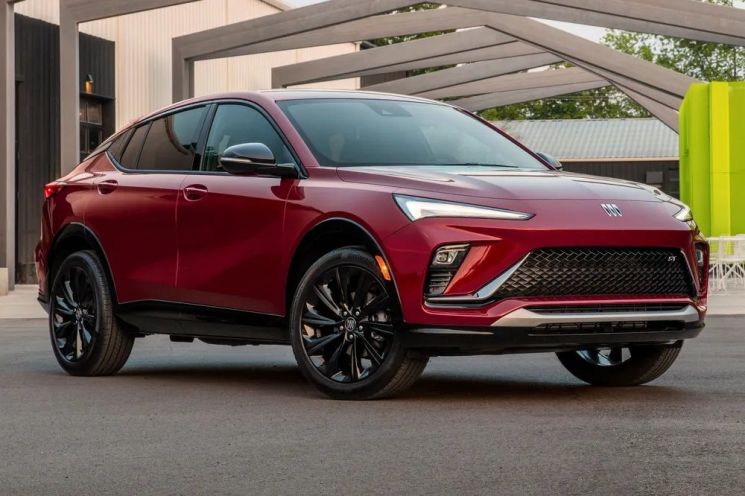
According to the Korea GM labor union and other sources on October 10, the company’s labor and management plan to convene a Future Development Committee within the fourth quarter to discuss whether to launch the Envista in Korea. The Envista, a coupe-style SUV, was introduced to the North American market in April 2023 and has sold a cumulative 80,000 units through the first quarter of this year, earning recognition as the model that revived the Buick brand.
The local price is about $24,000 (around 34 million won), offering excellent value for money, and the union expects it could appeal strongly to the domestic market, where SUVs are highly favored. Currently, all units are produced at Korea GM’s Bupyeong plant.
Korea GM is considering introducing the Buick model to the domestic market in order to reduce its extreme dependence on exports and ensure sustainable production. From January to August this year, Korea GM produced a total of 302,746 vehicles, of which 292,116 were exported. The export ratio exceeds 96%, with most vehicles shipped to the United States. During the same period, only 10,304 units were sold domestically, accounting for just 1.1% of total domestic vehicle sales (911,826 units) during that time.
Given this overwhelming reliance on exports, the 25% tariff imposed by the United States on imported vehicles has had a significant impact. General Motors announced in its second-quarter earnings report that tariff losses amounted to $1.1 billion (approximately 1.53 trillion won), with half of that-$550 million (about 760 billion won)-attributable to Korea GM.
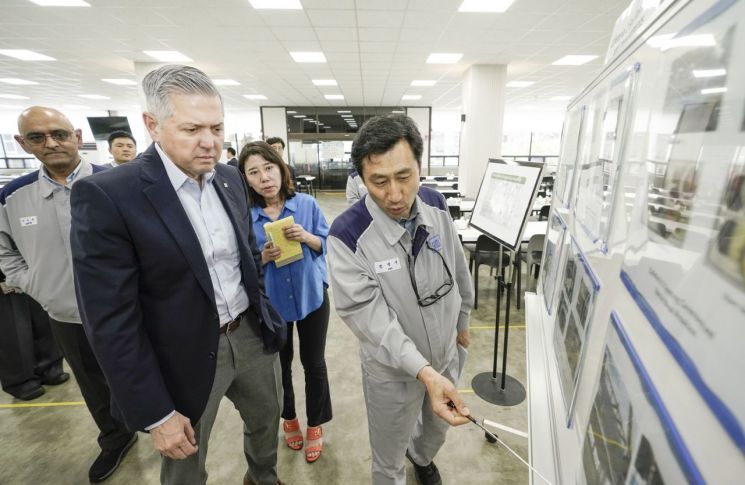
Due to the increased tariff burden, the company announced plans to sell off idle assets, which at one point fueled rumors of a market withdrawal. In particular, the inclusion of directly operated service centers among the assets for sale led to concerns that the company might be abandoning the domestic market entirely. However, labor and management reached an agreement to revisit restructuring discussions, which has temporarily put the withdrawal rumors to rest.
Nevertheless, long-term concerns remain unresolved. In 2018, when GM considered withdrawing from its Korean operations, KDB Industrial Bank, the second-largest shareholder of Korea GM, provided 810 billion won in management normalization funds, and GM signed an agreement to continue operating the plant until 2028. As a result, whether the Korean business will be maintained after 2028 remains uncertain.
An industry insider commented, "With the market share having declined, shifting export models to the domestic market to recover sales is a win-win situation for both labor and management. However, the key issue will be how much the company can reduce export volumes in negotiations with the headquarters."
© The Asia Business Daily(www.asiae.co.kr). All rights reserved.