Studying for Differentiation and Exams
Fails to Select the Talent Universities Need
Education Should Focus on Nurturing, Not Just Teaching
Students Must Acquire "Lightweight Civilization Learning"
Universities Should Prioritize Competence
"We must accept that evaluations for the sake of evaluation, and tests designed solely for differentiation, are no longer valid."
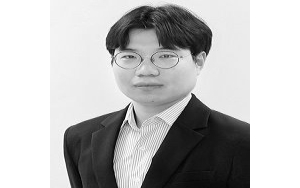
Big data expert Song Kilyoung stated in an interview with Asia Economy on October 2, "In reality, the studies undertaken for selection purposes often do not align with the studies needed to live in the real world." He identified the root of this issue as the limitations of the Korean education system, which has developed with a focus on 'selection.' He pointed out that studying for differentiation and for exams, rather than for general knowledge and cultural literacy, has resulted in universities failing to select the talent they actually need.
](https://cphoto.asiae.co.kr/listimglink/1/2024090918133623665_1725873216.jpg)
Song emphasized, "Education in the future should be closer to nurturing rather than teaching." As artificial intelligence (AI) becomes widespread and society transforms into one where knowledge is instantly accessible, universities must cultivate talent that meets these new demands. He also commented on the mismatch between corporate and university talent, stating, "If we consider universities as places of learning rather than simply job preparation institutions, this mismatch reflects a failure to nurture the kind of talent required in the AI era."
In his book "Forecast of the Times: The Birth of Lightweight Civilization," Song defines 'lightweight civilization' as one that abandons weight and stability. He argues that the traditional method of memorizing codified and structured knowledge, producing correct answers within a set time, and monopolizing opportunities by outcompeting tens of thousands of people, is no longer effective.
Instead, he defines the talent needed in the AI era as those who have acquired 'lightweight civilization learning.' Song explained, "The key talent in the AI era is someone who learns new things with curiosity and is not afraid to forget what they have learned," adding, "It must be someone who can become lighter amid constant change." He continued, "Rather than proving the value of one’s studies by graduating from university and getting a job after four years, lightweight civilization learning is about constantly learning and immediately applying what you have learned to your own archive, startup, or creative project."
He stressed that, for this to happen, universities of the future must be 'centered on ability rather than degrees.' Song said, "Education and evaluation should be based not on qualifications written on paper, but on actual demonstrable competencies," and added, "When the shift to ability-centered education occurs, students will be able to redefine learning by leveraging AI themselves and contribute to society and industry in new ways."
He also pointed out that the way students are evaluated within the education system must change. Song stated, "If we move away from a selection-centered education system, we can reconsider whether it is necessary to rank students solely based on grades and scores." He emphasized the need for criteria that help set academic goals, such as 'knowing what one does or does not know' and 'understanding one's position relative to the achievements of peers,' rather than ranking for its own sake. He suggested this could be achieved through 'evaluations connected to the real world.' Song said, "What matters is experience rather than scores," citing as an example the practice of uploading class assignments online and gauging performance through public feedback.
© The Asia Business Daily(www.asiae.co.kr). All rights reserved.