The Balance in Education Policy Must Not Remain a Mere Slogan
Harmony Between "Equity" and "Excellence" Is Essential
A Starting Point for Alleviating Pathological Issues in Korean Society
Article 31 of the Constitution of the Republic of Korea stipulates that "all citizens have the right to receive an equal education according to their abilities." This provision embodies both the value of "equity," in that educational opportunities must be open to everyone, and the value of "excellence," in that individuals must have the right to receive an education that allows them to maximize their abilities. However, in reality, these two values are not being harmoniously realized. Experts in the education sector advise that "achieving a balanced realization of equity and excellence within the constitutional framework is a core task for a major transformation of education in Korea."
](https://cphoto.asiae.co.kr/listimglink/1/2025100110455056972_1759283150.jpg)
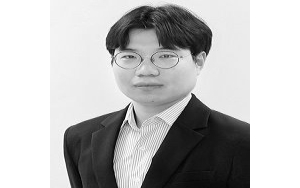
Lee Deoknan, President of the Korean Association of Educational Law and Head of the Education and Culture Team at the National Assembly Research Service, emphasized in an interview with Asia Economy that "the Constitution’s preamble calling for harmony between equity and excellence in education means not to lean toward either extreme," adding, "When formulating policies, this harmony and balance must be taken into account."
He cited the government's ongoing higher education policies as examples. Lee explained, "The Glocal University Support Project can be seen as a policy focused on excellence, while the University Innovation Support Project is a policy that considers equity." He continued, "If the Glocal University Support Project is focused on fostering excellence by providing concentrated support to a small number of top universities, the University Innovation Support Project encourages autonomous structural reform and innovation by offering support opportunities to a large number of universities nationwide." He added, "The fact that both policies are being pursued in parallel shows evidence of efforts to harmonize equity and excellence."
However, he pointed out the need for improvement, stating, "The concept of balance in education policy should not remain a mere slogan." Lee highlighted the reality that regional universities are increasingly marginalized, saying, "Even if a policy aims for equity, in practice, the concentration in the Seoul metropolitan area is intensifying. Therefore, effective measures such as expanding higher education funding and easing university operation regulations must be implemented simultaneously."
He analyzed the "Creating 10 Seoul National Universities" policy in the same context. He said, "If the goal is to support universities to enter the top 100 or 500 in global university rankings, this inevitably becomes an excellence-centered approach. On the other hand, expanding support for regional flagship national universities to prevent the outflow of talent to Seoul and to enhance local settlement can be seen as a policy that prioritizes equity." He continued, "In reality, since the goal is to foster excellent regional universities, the emphasis is on equity. However, to achieve this goal, a comprehensive review is needed, including increasing financial investment, innovating the legal status and administrative and financial decision-making structures of national universities, and improving regulations."
Lee stressed, "Education is not just about delivering knowledge; it is a key pillar that transforms social structures." He emphasized, "Harmonizing equity and excellence in education policy will ultimately serve as a starting point for alleviating social pathologies in Korean society, such as low birth rates, polarization, and regional disparities."
© The Asia Business Daily(www.asiae.co.kr). All rights reserved.