Delayed Payments to Contractors Due to Budget Shortfalls
Board of Audit and Inspection Issues Warning to Korea Hydro & Nuclear Power
Unclaimed Amounts by Korea Power Engineering Service Surge Sharply
Korea Hydro & Nuclear Power was found to have intentionally delayed payments for construction and service contracts, citing its own financial improvement targets, thereby causing difficulties for its contractors.
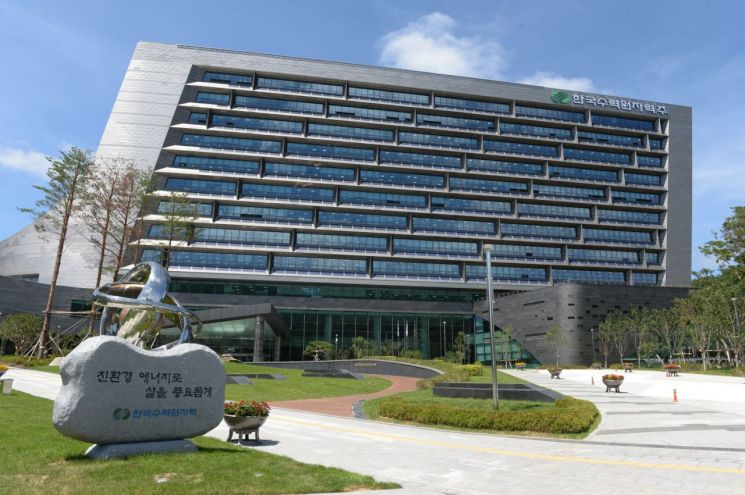
On September 3, the Board of Audit and Inspection revealed this in its report on the "Status of Settlement and Accounting Audits of Public Institutions." According to the report, Korea Hydro & Nuclear Power set financial improvement goals for 2023, such as reducing nuclear power plant maintenance costs, and allocated only 1.3526 trillion won out of the related budget of 1.8935 trillion won. This amounts to 71% of the total related budget.
Subsequently, each power generation division at Korea Hydro & Nuclear Power requested payment delays to contractors such as Korea Power Engineering Service, which had completed maintenance and service work, citing budget shortages. As a result, the amount that Korea Power Engineering Service, the company with the largest volume of transactions with Korea Hydro & Nuclear Power, was unable to claim from Korea Hydro & Nuclear Power surged from 24.8 billion won in 2021 to 168.2 billion won in 2023.
After confirming these practices, the Board of Audit and Inspection issued a warning to Korea Hydro & Nuclear Power to ensure that there are no delays in payments for construction and service contracts. Additionally, the Board of Audit and Inspection instructed Korea Hydro & Nuclear Power to devise improvement measures regarding cases where costs such as maintenance expenses were incorrectly recorded as assets under construction.
The Board of Audit and Inspection also noted that some other public institutions showed shortcomings in areas such as the operation of the auditor appointment committee, criteria for selecting auditors, and management of audit hours, and recommended that these findings be used to improve work processes. This audit by the Board of Audit and Inspection covered quasi-governmental institutions, including 87 public enterprises.
© The Asia Business Daily(www.asiae.co.kr). All rights reserved.