Trump Administration Imposes 39% Tariff on Swiss Imports
Calls Grow in Switzerland to Reassess Neutral Status
"We Can No Longer Navigate Between Powerful Blocs as Before"
There is growing analysis that President Donald Trump's tariff hikes are intensifying Switzerland's concerns about its status as a neutral country. Yonhap News, citing the Wall Street Journal (WSJ) on the 12th (local time), reported, "Switzerland, which has long maintained a status as a perpetually neutral state in the international community, is now facing serious questions about its neutrality in the wake of the Trump administration's tariff hikes."
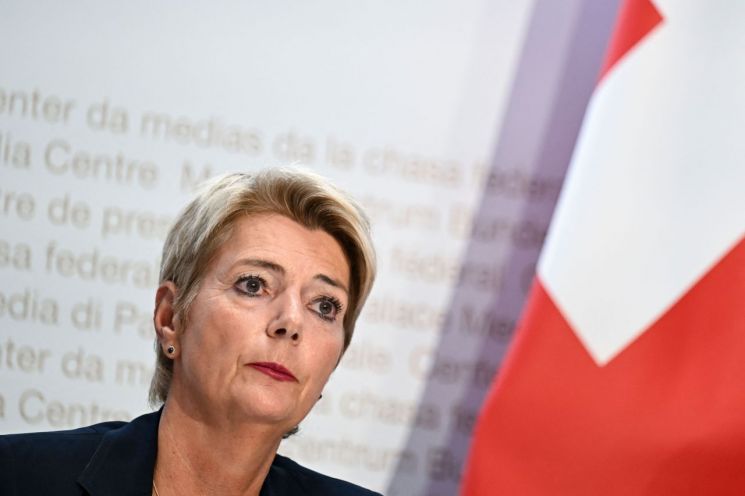
Since the 7th, the Trump administration has imposed a steep 39% tariff on imports from Switzerland. As a result, Switzerland's key export industries-including watches, chocolate, pharmaceuticals, and machinery-are suffering significant damage. In comparison, European Union (EU) member states, which concluded tariff agreements at a 15% rate in exchange for making astronomical investments in the United States, face much lower tariffs. In response, Swiss companies are considering relocating their production bases to countries where the United States imposes relatively lower tariffs, or localizing production for the U.S. market.
This round of tariff hikes is prompting concerns that Switzerland's standing as a neutral country is being seriously undermined. Stephanie Walter, professor of international political economy at the University of Zurich, commented, "The idea that neutrality protects us from all security threats is a myth," adding, "Neutrality only has value when other countries recognize us as a neutral state."
Switzerland was the first country to be recognized as neutral at the Congress of Vienna in 1815, receiving guarantees of independence and territorial integrity in exchange for renouncing participation in wars except for national defense. After the Napoleonic Wars, the European powers, seeking balance and peace in Europe, designated Switzerland as a neutral state to serve as a geopolitical buffer, a move that aligned with Switzerland's own interests. Based on its neutral status, Switzerland has played the role of mediator on the international stage, helping to coordinate the interests of major powers and parties to conflicts.
Switzerland's neutral status also became a subject of debate after Russia's invasion of Ukraine in 2022. At that time, Switzerland joined the EU's sanctions against Russia under international pressure-an action that went beyond its traditional UN sanctions obligations and was seen as a case where Switzerland's longstanding political neutrality was shaken.
There are also calls within Swiss political circles to reassess the country's neutral status. Jon Pult, vice president of the Social Democratic Party, stated, "Switzerland can no longer navigate between great power blocs as it once did. That era is over. We do not live in that kind of world anymore." Hans-Peter Portmann, a member of the Free Democratic Party, said, "Switzerland cannot join the EU," but added, "A small country like ours is at risk of being trampled. The tariff dispute with the United States has opened many people's eyes, and there is a need to readjust our geopolitical priorities."
© The Asia Business Daily(www.asiae.co.kr). All rights reserved.