"More Negotiating Power Over Time...
Agreements Should Be Reached Quickly"
A former trade official from the Trump administration predicted that even if South Korea increases its investment in the United States, it will be difficult to lower tariffs on major South Korean export items such as steel and automobiles.
Stephen Vaughn, former Chief Legal Officer of the United States Trade Representative (USTR), stated at a meeting with South Korean correspondents in Washington, D.C. on the 22nd (local time) that “If there are people who think they can somehow avoid tariffs on steel and automobiles, they will be disappointed,” in response to a question about the possibility of lowering tariffs on steel and automobiles.
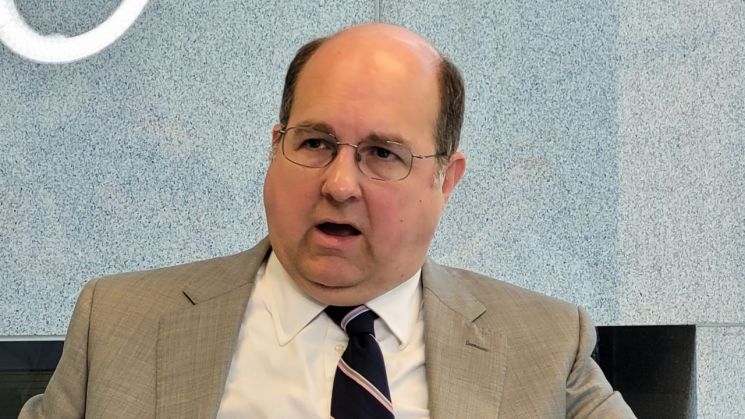 Stephen Vaughn, former Chief Legal Officer of the United States Trade Representative (USTR). Photo by Yonhap News
Vaughn explained that, unlike the United Kingdom, South Korea is a major exporter in the automobile and steel sectors, making it difficult to lower tariffs on these items through negotiations. He said, “The UK was not a major player in those (automobile and steel) markets, so such an agreement was possible, but I do not expect the United States to make similar agreements with South Korea, Japan, or the European Union (EU).”
He also predicted that South Korea’s strategy of urging tariff relief from the Trump administration by offering to increase investment in the United States would have little effect. The U.S. steel and automobile industries are currently vulnerable, making it difficult to concede market share to other countries, and South Korea has consistently shown a willingness to invest in the United States regardless of tariff negotiations. He said, “When South Korea comes to Americans and says, ‘We want to invest more in the United States,’ that is not a concession. I believe South Korea will invest more in the United States regardless of tariffs.”
When asked whether an increase in South Korea’s defense spending would help in negotiations, he replied, “Europe agreed to spend more on defense, but President Trump still said he would impose a 30% tariff,” adding, “It would be a mistake to think that all Americans want is an increase in defense spending.”
Although it will be difficult for South Korea to lower tariffs on key items, Vaughn argued that both countries should continue tariff negotiations. He said, “It may not be as easy to secure access to the U.S. market as it was ten years ago, but I still believe the United States will be a better trading partner for South Korea than most of its other trading partners.” He also pointed to the current strength of the U.S. economy, saying, “As the U.S. economy continues to grow stronger, the president will have more negotiating power. I believe those who reach agreements early will secure better deals than those who do so later.”
© The Asia Business Daily(www.asiae.co.kr). All rights reserved.