First New Nuclear Plant Since the 2011 Fukushima Disaster
"Social Awareness Has Changed"... Earthquake Risks Remain
Kansai Electric Power Company is moving to build a new nuclear power plant for the first time since the Great East Japan Earthquake.
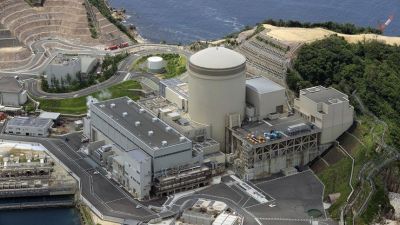
On July 19, Japanese local media reported that Kansai Electric is considering constructing a new nuclear power plant at the Mihama Nuclear Power Plant site in Fukui Prefecture, located in the central-western part of Honshu. The company plans to explain the proposal to the Fukui Prefecture local government as early as next week and begin an on-site survey.
Kansai Electric had previously planned to build a new nuclear power plant to replace the aging Mihama Unit 1 in 2010, but halted the project after the Fukushima Daiichi nuclear disaster in 2011. Currently, only Unit 3 at Mihama is in operation, while Units 1 and 2 have been decommissioned.
Kansai Electric operates seven nuclear power plants in Fukui Prefecture, but five of them have been in operation for more than 40 years. In Japan, nuclear power plants can operate for up to 60 years, but it takes nearly 20 years to construct a new one.
As a result, Kansai Electric appears to be considering an early start to construction in order to minimize potential power shortages in the future. The government has also shifted its nuclear power policy, planning to increase the share of nuclear power in the energy mix from the current 8.5% to 20% by 2040. To achieve this, more than twice as many nuclear power plants as are currently operating will be needed, while the share of thermal power generation is set to decrease from 70% to between 30% and 40%.
No new nuclear power plants have been built in Japan since Hokkaido Electric Power Company's Tomari Nuclear Power Plant Unit 3 was completed in 2009. Recently, the government decided to promote the construction of next-generation reactors at existing sites to achieve its decarbonization goals.
A Kansai Electric official stated, "There are increasing voices recognizing the need for nuclear power," adding, "Social awareness and the environment have changed."
However, concerns about earthquake risks persist. In April, the Japanese government announced that there is an 80% probability of a magnitude 8.0 to 9.0 Nankai Trough megaquake occurring within the next 30 years. Large-scale earthquakes have also occurred in the Nankai region in the past at intervals of 100 to 150 years.
It has been projected that if a magnitude 9.0 megaquake were to occur, the Korean Peninsula's crust could shift by about 30 centimeters, the death toll could reach up to 320,000, and economic damage could total approximately 1,410 trillion yen. Recently, more than 2,100 earthquakes were recorded in the Tokara Islands of Kagoshima Prefecture, prompting residents to evacuate.
© The Asia Business Daily(www.asiae.co.kr). All rights reserved.