Warning Signs in the Economy Amid Real Estate Slump
Youth Unemployment, Weak Domestic Demand, and Trade Conflicts
Signs of Communist Party Restructuring, Growing Skepticism About China
![[The Viewpoint of Dongki Kim] How Should We View China's Growing Pains?](https://cphoto.asiae.co.kr/listimglink/1/2024040412070429181_1712200025.jpg)
China is showing signs of instability. Political changes are being sensed beneath the surface, and economic difficulties remain unresolved. The real estate market is the primary issue. About 90% of China's housing stock was built in the past 30 years, and approximately 500 million people have migrated from rural areas to cities over the past 25 years. The real estate market, which had been the main driver of China's economic growth, suddenly entered a slump in 2020 and 2021. This was the result of a decision by China's leadership to engineer a soft landing for an overheated market.
However, the cost of mismanaging the economy has been significant. Just before the collapse in 2020, industries related to real estate accounted for about 25% of GDP, but now this has fallen to around 15%. In 2021, about 80% of household assets were tied up in real estate, but currently this figure is only about 70%. As the real estate investment boom subsided, local governments were left with excessive debt.
The employment situation is also severe. The average economic growth rate in the 2010s was about 7.7%, but it has now dropped to around 5%. Strict lockdowns due to COVID-19 and the spread of the Omicron variant dampened consumer sentiment, and the collapse of the real estate market led to a sharp decline in both consumption and investment. The economic downturn has resulted in job losses, with youth unemployment rising sharply in particular. The number of university students, which was about 2.3 million in 1990, increased to about 42 million in 2020. The difficulty university graduates face in finding jobs is causing deep anxiety. Whether the current generation in their 20s can avoid becoming a "lost generation" and regain the "Chinese Dream" is crucial for China's future.
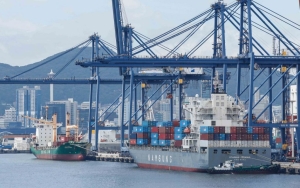
The trade surplus has become a source of conflict. China's share of global manufacturing output is now similar to that of the combined G7 nations, making it a manufacturing powerhouse. In the 1990s, China's economic growth was led by heavy and light industries such as coal, steel, and cement, but now its high-tech industries have also become strong. China is the only country that possesses the technology, labor force, and capability to manufacture almost everything. As a result, exports have increased and China has posted trade surpluses, but these have become a point of contention with the United States and other Western countries. The trade surplus is partly due to insufficient domestic demand, but overcapacity in production is also a contributing factor.
Additionally, China has suffered from deflation over the past five years. Falling prices are unfavorable for producers, leading to reduced investment and further economic contraction. The Chinese government attributes the cause of deflation to excessive competition. The electric vehicle industry is a representative example.
On May 23, BYD implemented significant price cuts on 22 models of its main electric vehicle brand. Competitors soon joined the price-cutting race. If this trend continues, more suppliers will face difficulties as the costs of price competition are passed down the supply chain. The renewable energy industry is also struggling in the quagmire of deflation caused by oversupply.
Meanwhile, changes are being detected in the power structure that must address these challenges. Some observers believe a serious power struggle is underway. At the end of last month, the Chinese Communist Party established a new decision-making and coordination body to plan and implement major national projects. The creation of a new body above the existing top institution, the Politburo Standing Committee, is evidence that there has been a shift in the power of General Secretary Xi Jinping, who has strengthened traditional one-man rule throughout his tenure.
Next month, the fourth plenary session of the 20th Central Committee of the Chinese Communist Party may be held, which could reveal a more concrete picture. China's uniquely undemocratic and opaque power structure makes the country's future uncertain. The future of China's state-led economy is also inseparable from the direction of political power. Observing recent political developments, there are growing doubts as to whether China can truly present a new model to the international community that could replace the United States.
Kim Dongki, author of "The Power of the Dollar" and attorney
© The Asia Business Daily(www.asiae.co.kr). All rights reserved.