Even After 60, Core Workforce at Small and Medium-Sized Enterprises
Continued Employment Is Essential for Small Businesses
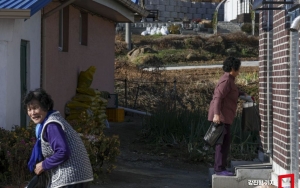
The heavy press machine operates with a loud "thud." Sinsong Nam, working swiftly in front of this massive equipment that never stops moving, cannot afford to let his guard down for even a moment. In front of this machine, which stamps out elevator parts while emitting a deafening roar that drowns out even the voices of those nearby, any lapse in attention can immediately lead to a major accident. When visiting Jeongil Industry's factory in the Siwha Industrial Complex, Gyeonggi Province, on May 12, the first scene encountered was Mr. Nam, 61 years old, busily working with earplugs in to block out the noise. He performs the most demanding tasks here, yet even after surpassing the retirement age, he is not the most senior worker.
![No Pay Cut or Demotion After 60... "Hiring in Their 40s and 50s Is Tough, So Even 71-Year-Old Veterans Are Invaluable" [Retirement Extension, Time to Choose]](https://cphoto.asiae.co.kr/listimglink/1/2025051215030253434_1747029782.jpg) Sinsong Nam (61) working at Jeongil Industry's production plant located in Siwha Industrial Complex, Siheung City, Gyeonggi Province on the 12th. Photo by Kang Jinhyung
Sinsong Nam (61) working at Jeongil Industry's production plant located in Siwha Industrial Complex, Siheung City, Gyeonggi Province on the 12th. Photo by Kang Jinhyung
Even After 60, Core Workforce at Small and Medium-Sized Enterprises
Jeongil Industry employs about 110 people across its Siwha Industrial Complex and Chungbuk Chungju plants, of whom 18 continue to work after passing the retirement age. Kim Daehwan, the plant manager overseeing production at the Siwha Industrial Complex, is 66 years old, well past the official retirement age. Kim Dooyeon, who handles rubber press work at another plant, was born in 1954 and, at 71, is even senior to Plant Manager Kim. Bang Gwangho, the forklift operator delivering elevator parts throughout the factory, is exactly 60 years old this year. Including these individuals, all employees who have passed the retirement age continue to handle key responsibilities in production, after-sales service, and maintenance, just as they did before retirement.
"Hiring young workers? That's like picking stars from the sky. Even hiring people in their 40s or 50s is not easy," said Jeong Kwangyong, CEO of Jeongil Industry, when interviewed at the factory. While the positive influence of long-serving, skilled workers and their unique energy, which helps the company overcome various crises together, are invaluable, there is also an unavoidable and practical reality behind this situation.
![No Pay Cut or Demotion After 60... "Hiring in Their 40s and 50s Is Tough, So Even 71-Year-Old Veterans Are Invaluable" [Retirement Extension, Time to Choose]](https://cphoto.asiae.co.kr/listimglink/1/2025051215042553450_1747029865.jpg) Kim Daehwan, plant manager of Jungil Industry (66 years old, right), overseeing employees' work at Jungil Industry production plant located in Siwha Industrial Complex, Siheung-si, Gyeonggi-do on the 12th. Photo by Kang Jinhyung
Kim Daehwan, plant manager of Jungil Industry (66 years old, right), overseeing employees' work at Jungil Industry production plant located in Siwha Industrial Complex, Siheung-si, Gyeonggi-do on the 12th. Photo by Kang Jinhyung
For these reasons, Jeongil Industry does not place much significance on the retirement age. Although there is no separate policy, as long as the employee is willing and the conditions are right, employment is maintained as is, and on a permanent basis. Salaries are not reduced. In fact, salaries are increased annually, and employees continue to be entrusted with their previous responsibilities. In some cases, when retirement benefit settlements are necessary, employees have left and then been rehired. What is witnessed here is a snapshot of continued employment for retirees, a reality that has already taken hold before the issue of "retirement extension" has become a full-fledged social agenda. It is also a vivid argument that, by recognizing this reality and providing institutional support, everyone?including the economic and industrial sectors and the government?must work together so that both companies and workers can benefit.
Although the CEO's policy and its background may seem simple, they are deeply rooted in the difficulties faced by small and medium-sized enterprises. "In 40 years of running a business, I have never felt as much despair as I do now," he confessed. The company must endure the direct impact of the sluggish construction market, but what is especially painful is the reality that efforts to hire and retain younger workers are not bearing fruit. Even Jeongil Industry, which has maintained its competitiveness in the elevator manufacturing sector for nearly 40 years since its establishment in 1987, is not immune to the employment challenges facing small and medium-sized enterprises.
At Jeongil Industry's Chungju plant, a wide range of housing benefits, such as dormitory accommodation, are provided, but few people are willing to work there simply because it is located in a provincial area. Even when young employees are hired with great difficulty, they tend to avoid tough and demanding work, so they do not stay long, according to both the CEO and field staff. The fact that Jeongil Industry continues to offer work opportunities to employees past the retirement age is largely a reaction to these complex problems.
Continued Employment Is Essential for Small Businesses
According to the Korea Small Business Institute on May 14, 28.9% of small and medium-sized enterprises report a labor shortage. Only 3.2% say they have enough staff. This means that most small and medium-sized enterprises suffer from chronic manpower shortages. Against this backdrop, the proportion of employees aged 50 or older in small and medium-sized enterprises reached 12,364,000 as of last year, accounting for 48.6% of all SME employees. This figure was 38% in 2014, marking a 10.6 percentage point increase over the past decade.
Now, nearly half of those working at small and medium-sized enterprises are so-called "older workers." This reality is even more pronounced when compared to large companies. Last year, only 26.4% of employees at companies with more than 300 employees were aged 50 or older. The rate for small and medium-sized enterprises is 22.2 percentage points higher.
Although demand for employing older workers and continued employment is high at small and medium-sized enterprises, and government programs such as the Continued Employment Incentive and Senior Worker Employment Support Fund exist, there are clear limitations regarding eligibility and the amount of support. Under the current Restriction of Special Taxation Act, the tax credit for employing older workers is only about 4 million to 15 million won per person, and the employment stability subsidy for older workers is only 1.2 million to 3.6 million won per person per year.
![No Pay Cut or Demotion After 60... "Hiring in Their 40s and 50s Is Tough, So Even 71-Year-Old Veterans Are Invaluable" [Retirement Extension, Time to Choose]](https://cphoto.asiae.co.kr/listimglink/1/2025051315580955310_1747119488.jpg)
Given the relatively high wages of skilled workers eligible for employment, it is difficult for companies with only moderate size and financial capacity to implement continued employment, perpetuating the cycle of labor shortages. Statistics show that the number of companies applying for the continued employment incentive has dropped by 26% over the past two years, highlighting this reality.
Jo Joohyun, president of the Korea Small Business Institute, stated, "It is more important than ever to expand the scope of tax support for companies hiring older workers in order to strengthen incentives." He also suggested, "Currently, the age standard for tax benefits for hiring older workers at small and medium-sized enterprises is 60, but it would be beneficial to lower this threshold to broaden the benefits." Industry insiders and experts agree that, in addition to this, a thorough analysis of employment conditions in the industrial sector and overall society is needed, and that economic and social discussions should be accelerated so that companies can explore new ways of managing their workforce through the employment and continued employment of older workers.
© The Asia Business Daily(www.asiae.co.kr). All rights reserved.