Special Act Limits Use of Closed Schools to Education and Social Welfare
Public Property Act Can Be Applied, But Leads to Inefficiency in Time and Cost
"Innovative Measures Needed from Education Authorities"
Although Korea has enacted a special law to enable the effective use of closed schools, in reality, the avenues for utilization remain narrow. Unless the purpose is strictly for public interest, it is difficult to use these properties, making it hard for private companies to participate. While the government has belatedly issued guidelines, concerns persist that the number of abandoned schools will continue to rise unless the law itself is amended.
![[Disappearing] ⑤ Many Closed Schools Remain Unused... Blocked Paths, Special Act Limitations Persist](https://cphoto.asiae.co.kr/listimglink/1/2025042807040336881_1745791443.jpg) The Deoksu High School, which was closed last year, is being utilized as the Seoul Integrated Online School. 2025.04.26 Photo by Dongju Yoon
The Deoksu High School, which was closed last year, is being utilized as the Seoul Integrated Online School. 2025.04.26 Photo by Dongju Yoon
The 'Special Act on the Promotion of Utilization of Closed School Properties' (Closed School Special Act) was enacted in 1999 with the intention of utilizing closed schools to develop local communities. This law not only specifies the responsibility for utilizing closed schools but also defines the scope of their permitted uses. According to Article 5 of the Special Act, city and provincial superintendents of education may lease or sell closed school properties by private contract under certain conditions to those who intend to use them for educational, social welfare, cultural, public sports, or income-generating facilities. For example, if local residents jointly use closed school properties as income-generating facilities, the superintendent may lease the land and buildings at a reduced fee.
However, the scope for utilizing closed school properties is extremely limited. Since non-public uses are effectively prohibited, private companies and other entities find it difficult to lease or purchase these properties. In response to criticism that the scope is too narrow, the National Assembly passed a partial amendment to the Closed School Special Act in December of last year, allowing free leases to alternative education institutions. Although this amendment will take effect in July, the fundamental limitation remains, as it is still restricted to public purposes, making it difficult for private companies to attempt to lease or purchase closed schools. Heon Seung Lee and Wi Sang Kim, both members of the People Power Party, have each proposed amendments to the Closed School Special Act to make it easier for school corporations and youth start-ups to utilize closed schools, but these proposals remain stalled in the National Assembly's Education Committee.
If one wishes to utilize closed schools in ways not specified by the Closed School Special Act, the 'Public Property and Goods Management Act' (Public Property Act) must be followed. However, Article 3 of the Closed School Special Act stipulates that the Special Act takes precedence regarding the use of closed school properties. Since it is difficult to assume that the Special Act cannot be clearly applied, in practice, the education sector is compelled to safely apply the Special Act when handling closed schools. Furthermore, the Public Property Act, in principle, requires public bidding rather than private contracts, resulting in inefficiencies in time and cost.
![[Disappearing] ⑤ Many Closed Schools Remain Unused... Blocked Paths, Special Act Limitations Persist](https://cphoto.asiae.co.kr/listimglink/1/2025050809183248258_1746663512.jpg)
To address these issues, the Ministry of Education and the Ministry of the Interior and Safety jointly distributed guidelines last month to local governments regarding the use of closed school properties. This represents a central government initiative to eliminate ambiguities between the Closed School Special Act and the Public Property Act. The guidelines clarify that when transferring, donating, or exchanging assets?procedures not covered by the Special Act?local governments may follow the Public Property Act. The guidelines also provide information on administrative procedures and methods to shorten the required period for utilizing closed schools. For example, the guidelines cite a 2020 pre-consultation case by the Board of Audit and Inspection, explaining that "if a closed school property cannot be used as an educational facility under the Special Act and is to be leased for other purposes, it is possible to lease it by private contract according to the requirements of the enforcement decree of the Public Property Act."
Education authorities expect that the guidelines will lead to more active utilization of closed schools. Eunju So, Acting Director General for Responsible Education Policy at the Ministry of Education, stated, "If the utilization of closed school properties increases through these guidelines, it will make a tangible contribution to the development of local communities," adding, "We will continue to provide institutional support to enhance the value of public property utilization."
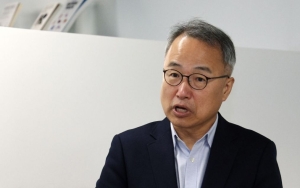
However, experts point out that to promote the use of closed schools, policies must become more flexible by expanding the scope of permitted uses and diversifying participants. There are concerns that unless the limitations set by the Special Act are addressed, the issue of abandoned schools will persist. Jeongho Yang, professor of education at Sungkyunkwan University, said, "This is not a new measure at all. Even in the past, guidelines and other solutions were introduced, but they did not resolve the issue of closed schools," adding, "As things stand, there is a high likelihood that closed schools will continue to be neglected. The education authorities need to come up with innovative measures."
![[Disappearing] ⑤ Many Closed Schools Remain Unused... Blocked Paths, Special Act Limitations Persist](https://cphoto.asiae.co.kr/listimglink/1/2025051611042560363_1747361065.jpg)
© The Asia Business Daily(www.asiae.co.kr). All rights reserved.