Integration of European and African Commands
Reviewing Suspension of Biden's Plan to Expand U.S. Forces in Japan
Expected to Relinquish NATO Supreme Allied Commander Position
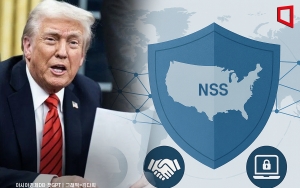
The U.S. Donald Trump administration is accelerating the downsizing of the federal government, and the U.S. military is also undergoing restructuring. It is reviewing the integration of combat commands and the suspension of plans to expand U.S. forces in Japan, and will also relinquish the position of Supreme Allied Commander Europe (SACEUR) of the North Atlantic Treaty Organization (NATO).
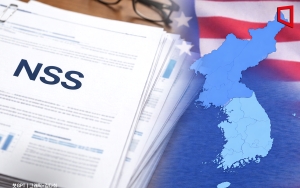
On the 19th (local time), U.S. CNN and NBC obtained and reported on a Department of Defense report containing these details.
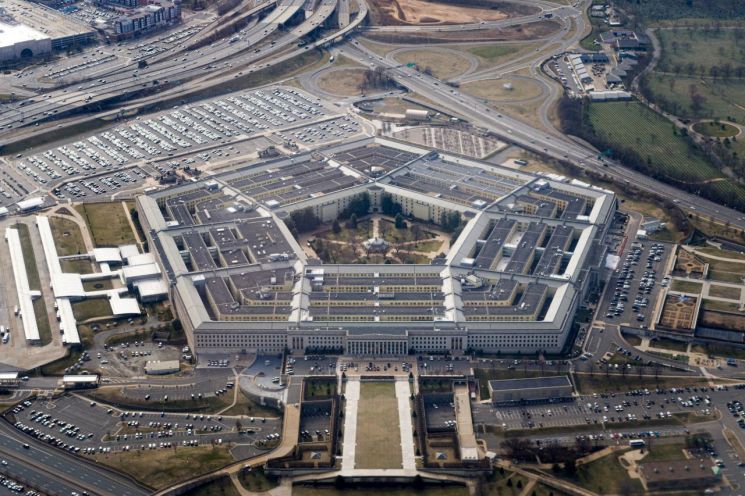
The European Command and African Command will be merged into a single command in Stuttgart, Germany, and the U.S. Northern Command and Southern Command will also be combined into a single command.
The U.S. military divides the world into six regions, each with its own combatant command. The African Command was established in 2007, recognizing the region as one with enough issues to require its own command authority. The Northern Command and Southern Command have traditionally operated as separate organizations. Northern Command focuses on homeland defense and cooperation with Canada and Mexico, while Southern Command concentrates on Central and South America, the Caribbean, and adjacent waters, with distinct roles.
The Indo-Pacific Command, responsible for Asia, and Central Command, responsible for the Middle East, were not mentioned as subjects of this integration.
The report estimates that the Department of Defense could save $330 million (approximately 482.1 billion KRW) over five years through command integration. However, it acknowledges that the integration could pose risks and potentially expand the scope of control and operations. It also points out that the political risks from closing command headquarters may vary.
The report also mentions suspending plans to expand U.S. forces in Japan as a cost-saving measure. The previous Joe Biden administration had promoted the reorganization and modernization of U.S. forces in Japan as part of strengthening cooperation with Japan in response to the threat from China. Suspending the plan could save about $1.1 billion but may cause political risks and reduce command and control scope in the Pacific region, the report notes.
It is unclear whether U.S. Forces Korea is included in the budget reduction targets. CNN did not mention U.S. Forces Korea.
The report also discusses significantly reducing the department responsible for joint training and education within the Joint Chiefs of Staff. This includes the possibility of eliminating the Joint Information Operations Center, with potential budget cuts amounting to $1 billion over five years.
The U.S. military’s annual budget exceeds $800 billion. Last month, Defense Secretary Pete Hegseth instructed the military to prepare plans for significant budget cuts over the next five years in areas excluding border security.
CNN cited Department of Defense officials saying that in recent weeks, efforts have focused on reducing civilian staff, with the Department aiming to cut 5-8% of its civilian workforce.
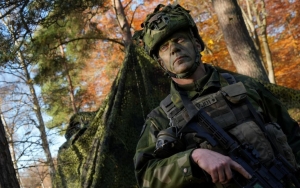
Additionally, NBC reported, citing two Department of Defense officials, that the U.S. is also considering not holding the NATO Supreme Allied Commander Europe (SACEUR) position. For the past 75 years, the NATO Supreme Allied Commander has been a U.S. four-star general. The SACEUR is also the head of the European Command and has overseen support for Ukraine in the Russia-Ukraine war.
James Stavridis, a former U.S. Navy admiral who served as NATO Supreme Allied Commander from 2009 to 2013, told NBC, "The U.S. giving up the NATO Supreme Allied Commander position would be seen as a significant signal of withdrawing from the European alliance," adding, "It would be a huge political mistake, and if we give it up, they will not return that position to us." He further expressed concern, saying, "We would lose tremendous influence within NATO, and it would likely be seen as the first step toward completely withdrawing from the alliance."
NBC stated, "Giving up the NATO Supreme Allied Commander position would be a significant symbolic change in the balance of power of NATO, an alliance that has defined European security and peace since World War II."
© The Asia Business Daily(www.asiae.co.kr). All rights reserved.