Cho Jaehyun, President of the Korean Constitutional Association:
"Discussions within the constitutional law community are complete...
Now is the time for implementation"
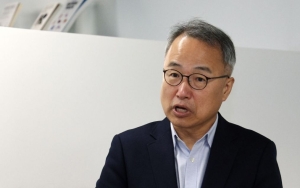
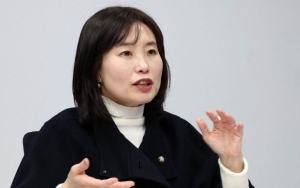
![[Constitutional Amendment, Connecting the Future] "Constitutional Amendment Discussions Have Already Ended in the Constitutional Law Community... Only Implementation Remains"](https://cphoto.asiae.co.kr/listimglink/1/2025021014161626231_1739164576.jpg) Cho Jae-hyun, President of the Korean Constitutional Law Association, is giving an interview to Asia Economy on the 10th. 2025.02.10 Photo by Yoon Dong-joo
Cho Jae-hyun, President of the Korean Constitutional Law Association, is giving an interview to Asia Economy on the 10th. 2025.02.10 Photo by Yoon Dong-joo
On the 6th, Cho Jae-hyun, president of the Korean Constitutional Association (professor at Dong-A University Law School), stated in an interview with Asia Economy that the current moment, when the necessity of constitutional amendment has been starkly revealed by the December 3 emergency martial law incident, is the perfect time for constitutional reform.
Cho, who graduated from Yonsei University Law School and earned a Ph.D. in constitutional law from the same university's graduate school, assumed the presidency of the Korean Constitutional Association on November 30 last year, just before the martial law incident. His term runs for one year starting January 2025. Since taking office, Cho has been busy traveling between Seoul and Busan. Recently, as the issue of constitutional amendment has become a hot topic mainly among constitutional scholars and politicians, the number of people seeking him out has increased significantly.
Professor Cho diagnosed, "Because political forces have continuously tried to take the lead in constitutional amendment discussions, the debate has not always appeared to be in good faith." However, he views constitutional amendment as a trend of the times. Cho emphasized, "This time, the ruling and opposition parties must unite in their will for constitutional amendment and achieve reform that matches the changes of the era." The following is a Q&A.
-Both ruling and opposition parties agree on the need for constitutional amendment, but there are differences in direction. What is the desirable direction for Korea's constitutional amendment?
▲The 9th revised constitution was achieved through the desire for democratization. The 1987 'June Struggle' expressed the people's political demands, leading to the introduction of direct presidential elections, which was the sole goal. At that time, the constitution was supplemented to strengthen basic rights and emphasize procedural legitimacy in the exercise of governing power. However, the 1987 constitutional system is now outdated. The public finds it difficult to accept the current situation where the president has been impeached, and following Acting Prime Minister Han Duck-soo, Acting Prime Minister and Deputy Prime Minister for Planning and Finance Choi Sang-mok is acting as the acting head of state.
I believe a four-year two-term system is desirable. Some suggest a decentralized presidential system as an alternative, but I think that system emerged from France's unique political culture. For example, can President Yoon Seok-yeol and Prime Minister Lee Jae-myung effectively govern together?
The presidential system, which Koreans are familiar with, can be an alternative. The single-term system stems from trauma over past dictatorships, but now the public's awareness has greatly improved. A two-term system that allows for mid-term evaluation of the president is an alternative. The problem with a single term is the mindset of 'I'll do it once anyway.' In the two-term system, assuming re-election is possible, the president performs well in the first term, considering the possibility of a second term. But in a single term, once it's done, it's over. There is a risk of pursuing policies that pander to popularity.
-The four-year two-term system, modeled after the U.S., is gaining traction, but there are concerns about a 'king-like' president if the ruling party is in the minority in the National Assembly. What do you think?
▲The people will no longer remain passive. The current empowerment of the large opposition party is the people's judgment. The two-term system allows the people to make a sober judgment after four years. The public decides whether to entrust the same president again. The fear of the two-term system partly stems from concerns about past dictatorships. But times have changed. Conversely, if a president who continuously advances the economy and governs well comes, wouldn't it be unfair to limit them to just five years? Of course, the prevailing view is that such a president has not yet appeared.
Since the 1987 system, Korea has experienced continuous regime changes. The people have not entrusted power to just one party. Some criticize the 'king-like' presidency, but I think the problem lies not in the governing system but in the president's management. If President Yoon had extended a hand to cooperate with the opposition even a little, the current situation might not have arisen.
![[Constitutional Amendment, Connecting the Future] "Constitutional Amendment Discussions Have Already Ended in the Constitutional Law Community... Only Implementation Remains"](https://cphoto.asiae.co.kr/listimglink/1/2025021014152926221_1739164530.jpg) Cho Jae-hyun, President of the Korean Constitutional Law Association, is giving an interview to Asia Economy on the 10th. 2025.02.10 Photo by Yoon Dong-joo
Cho Jae-hyun, President of the Korean Constitutional Law Association, is giving an interview to Asia Economy on the 10th. 2025.02.10 Photo by Yoon Dong-joo
-The opposition, which has been passive so far, has started constitutional amendment discussions again. Presidential candidates have brought up the constitutional amendment card. What is your view?
▲Constitutional amendment must be based on reality and should not cause further discord. It must not bring division among the people but move toward harmony. First, the ruling and opposition parties must sit down and reach an agreement, then proceed through procedures such as a national referendum. The amendment must be realistically approachable; inserting impractical proposals would be empty rhetoric.
-Korean society is experiencing political turmoil. What do you think is the cause?
▲Ideological polarization is severe. Ideological polarization is intensifying across the economy, society, and culture. Politics requires cooperation, but cooperation has disappeared. Especially YouTube, through its algorithms, further fuels polarization. The culture of hostility and neglect toward those with different views is serious. We need to objectively recognize facts and view them rationally, but some media seem to be stirring division by splitting left and right.
-What are your goals since assuming the presidency of the Constitutional Association?
▲The Constitutional Association is an academic organization, not a political group. Shortly after taking office in January, we held an emergency forum on 'Whether the refusal or delay of the acting president to appoint constitutional court justices is unconstitutional.' About 40 constitutional scholars participated, and except for one, most professors judged that the acting president's failure to appoint justices was wrong. We plan to continue holding urgent forums whenever constitutional issues arise. There is a call to prepare for constitutional amendment gradually from within, so we will form a task force (TF) to discuss it deeply. Regardless of the Constitutional Court's impeachment trial results, we are continuously preparing for constitutional amendment. In August or September, we will actively voice opinions on constitutional amendment through a conference of constitutional scholars within the association.
© The Asia Business Daily(www.asiae.co.kr). All rights reserved.