Vice President JD Vance and CEO Elon Musk Strongly Oppose Court Ruling on the 8th
WSJ: "Tensions Rise Between the White House and the Judiciary"
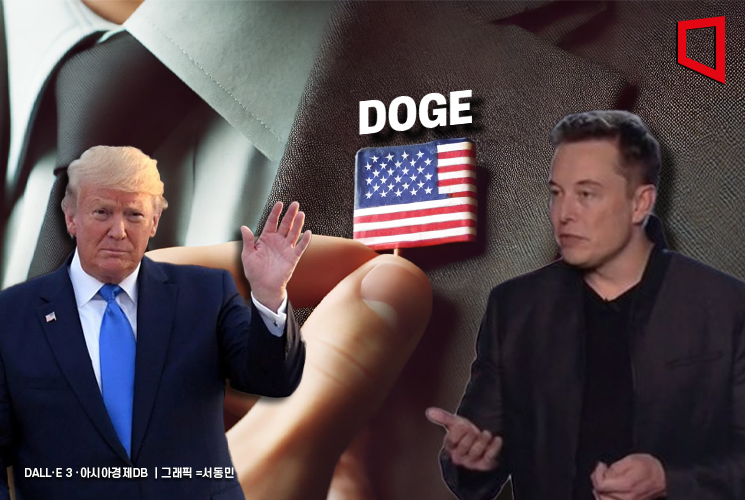
JD Vance, Vice President of the United States, and Elon Musk, CEO of Tesla, strongly criticized the decision of a federal judge to temporarily block the Department of Government Efficiency (DOGE) from accessing the U.S. Treasury Department's payment system.
On the 9th (local time), Vice President Vance posted on his social media platform X (formerly Twitter), "Judges cannot control the legitimate authority of the executive branch," calling the judge's action illegal.
Musk, who leads the DOGE department, immediately after the ruling, posted on his X account, calling the judge "a corrupt judge protecting corruption" and demanding "impeachment immediately." He also added an explanation about the plans he intends to pursue with the Treasury Department.
This is interpreted as a backlash following the decision by Judge Paul Engelmayer of the U.S. District Court for the Southern District of New York on the 8th (local time) to temporarily block certain DOGE officials and related personnel from accessing the Treasury Department's payment system.
In particular, it was revealed through an AP news report that DOGE's attempt to access the Treasury payment system aimed to block funds flowing to the U.S. foreign aid agency, the United States Agency for International Development (USAID).
Judge Engelmayer, appointed during the Obama administration, stated in the ruling, "The executive branch may have exceeded legal limits by allowing overly broad personnel access to sensitive Treasury data."
The Wall Street Journal (WSJ) evaluated the conflict, saying, "This is an early sign that tensions between the White House and the judiciary are likely to escalate further."
Legal experts explained to CNBC that the court's limitation of executive authority is a fundamental principle of the Constitution and the rule of law. Joyce White Vance, professor at the University of Alabama Law School, said, "According to the tradition of the Constitution and the rule of law, courts have the authority to review whether the executive branch (the President) acts lawfully," adding, "Currently, many state attorneys general have raised concerns about whether President Trump's actions are legal."
Marin K. Levy, professor at Duke University Law School, also noted, "This ruling is not a final judgment but only an emergency relief measure," explaining, "Courts issue emergency measures when there is a possibility of irreparable harm before a final judgment is made."
© The Asia Business Daily(www.asiae.co.kr). All rights reserved.