Request for Reconsideration at the Interim Cabinet Meeting on the 19th
Concerns Raised Over Rice Price Decline and Fiscal Drain
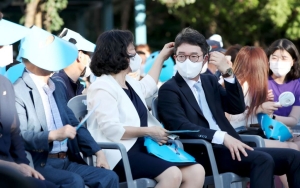
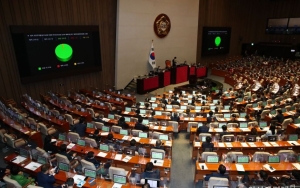
On the 19th, the government pointed out at an extraordinary Cabinet meeting regarding the National Assembly's request for reconsideration of the four agricultural laws, including the "Partial Amendment to the Grain Management Act (Grain Act Amendment)," that "(these bills) are expected to cause side effects such as structural overproduction of rice becoming entrenched, worsening rice price declines, hindrance to switching to other crops besides rice, and enormous fiscal costs."
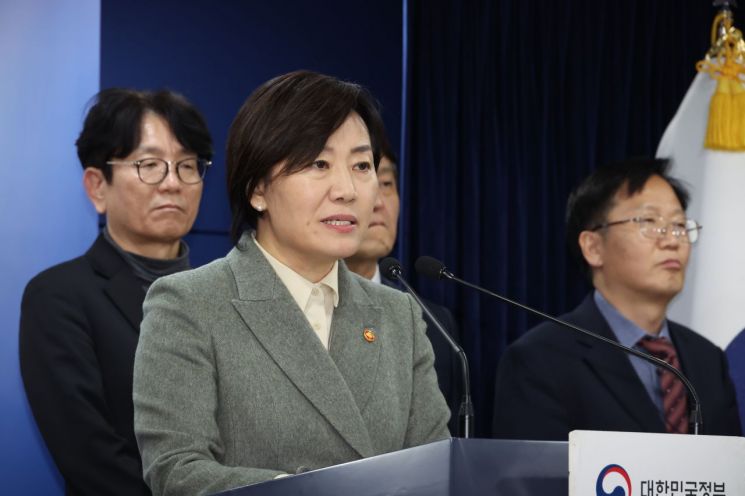
The four agricultural laws requested for reconsideration that day include the Grain Act Amendment, the "Partial Amendment to the Act on Distribution and Price Stabilization of Agricultural and Fishery Products (Agricultural Products Price Stabilization Act Amendment)," the "Partial Amendment to the Agricultural and Fishery Disaster Insurance Act (Disaster Insurance Act Amendment)," and the "Partial Amendment to the Agricultural and Fishery Disaster Countermeasures Act (Disaster Countermeasures Act Amendment)."
The Ministry of Agriculture, Food and Rural Affairs stated in the materials distributed that day, "The Grain Act Amendment adds the 'grain price stabilization system,' under which the government pays the difference if the market price of grains falls below the average price, in addition to the 'mandatory purchase of excess rice production,' which was already requested for reconsideration once by the government and discarded in the 21st National Assembly." It added, "Structural overproduction of rice becoming entrenched, worsening rice price declines, hindrance to switching to other crops besides rice, and enormous fiscal costs are expected as side effects."
The Ministry further explained, "Considering the purpose of the Grain Act Amendment, the government announced a rice supply stabilization plan for the harvest season on September 10, the earliest ever after next year, to stabilize rice prices early this year. On the 12th, the government prepared the 'Rice Industry Structural Reform Plan' to transition the rice industry to a high-quality production system based on mid- to long-term rice supply stability and consumer demand, and is strengthening cooperation with related agencies to accelerate rice price recovery."
Regarding the Agricultural Products Price Stabilization Act Amendment, it said, "It introduces a price stabilization system that compensates for the difference when the market price of major agricultural products falls below the reference price." It criticized, "If such a price stabilization system is introduced, production will concentrate on items with high farming convenience and guaranteed levels, leading to intensified supply and price volatility, unnecessary conflicts within the agricultural sector during the selection of supported items, and excessive fiscal burdens."
The Ministry of Agriculture, Food and Rural Affairs announced, "Considering the purpose of the Agricultural Products Price Stabilization Act Amendment, the government is promoting the establishment of a field-centered proactive supply and demand management system involving producer organizations and local governments by production area, and is pushing for amendments to the Act on Levying and Using Agricultural Funds to strengthen the functions and authority of producer representative organizations."
Regarding the Disaster Insurance Act Amendment, it stated, "It excludes surcharge based on natural disaster damage when calculating insurance premium rates." It argued, "In this case, it will be difficult to maintain insurance products as premium rates cannot be set proportionally to disaster risk, and issues such as fairness in premium burdens among subscribers may arise."
The Ministry said, "To enhance the effectiveness of agricultural disaster insurance, the government is expanding target items, coverage of disasters, and coverage levels, and considering the purpose of the Disaster Insurance Act Amendment and field opinions, it plans to improve the discount and surcharge system for crop disaster insurance." It added, "In addition to agricultural disaster insurance compensating for yield reductions caused by natural disasters, from next year, agricultural income stabilization insurance compensating for income losses due to market price declines will be gradually expanded nationwide."
Regarding the Disaster Countermeasures Act Amendment, it said, "It includes coverage of production costs in addition to existing restoration costs when disasters occur, which conflicts with national disaster support under the 'Framework Act on the Management of Disasters and Safety,' raises concerns about fairness with other sectors, and may weaken incentives to subscribe to disaster insurance."
The Ministry further explained, "Considering the purpose of the Disaster Countermeasures Act Amendment, the government increased disaster restoration support rates by an average of 23% this year and added 80 support items including agricultural machinery and facilities. Going forward, it plans to expand restoration support so that farmers affected by disasters can quickly resume farming activities by reflecting actual transaction prices in support rates and subdividing and newly establishing support items."
Song Mi-ryeong, Minister of Agriculture, Food and Rural Affairs, said, "If the four agricultural laws are desirable for the nation's future, agricultural and rural development, and farmers, the government should take the lead in amending them first. However, since implementing these laws would not only be difficult but also clearly cause side effects, please understand that as the minister in charge of enforcing the laws, I had no choice but to request reconsideration."
Minister Song added, "I believe that agriculture and rural areas are the foundation of the country and that both the National Assembly and the government share the desire to resolve farmers' difficulties. I earnestly request that the National Assembly additionally discuss feasible alternatives so that the purpose of the law amendments can be properly realized."
© The Asia Business Daily(www.asiae.co.kr). All rights reserved.







![$29 Monthly Subscription AI Plant Appliance... US Startup Challenges LG [CES 2026]](https://cwcontent.asiae.co.kr/asiaresize/319/2026010819285284553_1767868133.png)