Concerns Over Major Earthquake in Japan Spread
Increasing Number of Chinese Nationals Returning Early
Amid concerns over a major earthquake occurring for the first time in 100 years, many Chinese travelers are reportedly canceling their trips to Japan.
According to Chinese local media such as Caoxinhua on the 14th (local time), representatives from Chinese online travel agencies like Ctrip and Fliggy stated, "Recently, many travelers have canceled their hotel reservations in Japan, and most hotels have provided full refunds."
On Xiaohongshu, the Chinese version of Instagram, numerous posts from Chinese tourists mention canceling their flight bookings to Japan. In fact, over 550 people who planned to visit the Izu Peninsula in central Honshu, Shizuoka Prefecture, known for its hot springs, canceled their accommodation reservations. Officials from the Dogo Onsen Tourist Hotel Association in Ehime Prefecture also expect at least 1,000 tourists to cancel their local lodging reservations by the 15th, indicating that Japan is experiencing a decline in hotel guests.
As more Chinese travelers seek refunds, some Chinese airlines are providing full refunds for purchased but unused tickets. Air China announced that tickets purchased before 4 p.m. on the 9th will be refunded regardless of the Japanese destination, and China Eastern Airlines has allowed refund applications for certain regional flights issued before the 8th.
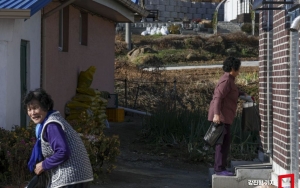
 A Japanese store that imposed a per-person limit on bottled water sales immediately after the earthquake on the 10th.
 [Image source=AFP Yonhap News]
However, as Chinese travelers who have already departed are returning early, airfare prices for flights from Japan to China are soaring. On the 13th, ticket prices for the Tokyo Haneda Airport to Shanghai Pudong Airport route rose to as high as 8,000 yuan (approximately 1.52 million KRW), about ten times the usual price.
According to data released by the Japan National Tourism Organization (JNTO), the number of foreign tourists visiting Japan in the first half of this year reached 17.78 million, the highest ever for the first half of a year. Among them, South Koreans were the largest group with 4.44 million visitors, followed by Chinese tourists at 3.06 million.
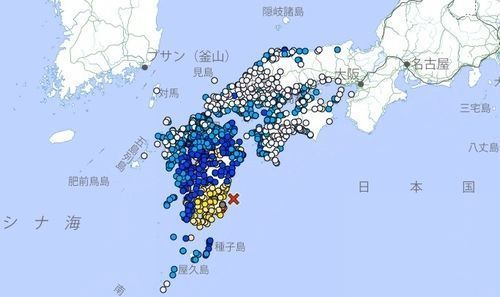
Earlier, on the 8th, the Japan Meteorological Agency issued a "Nankai Trough Earthquake Temporary Information" (major earthquake warning) for the first time after a magnitude 7.1 earthquake occurred off the coast of Miyazaki Prefecture in Kyushu. The Nankai Trough megathrust earthquake is known to occur at intervals of 100 to 150 years along the Nankai Trough, which extends from the sea off Shizuoka Prefecture west of the Tokyo metropolitan area to the southern part of Shikoku and the eastern sea area of Kyushu.
The Japanese government estimates the probability of a Nankai Trough megathrust earthquake occurring within the next 30 years to be 70 to 80%. It has been analyzed that if an earthquake of magnitude 8 to 9 occurs, there could be approximately 230,000 deaths and missing persons, and about 2.09 million buildings could be damaged. The government plans to lift the temporary earthquake information for the Nankai Trough at 5 p.m. on the 15th if no special seismic activity is observed.
Meanwhile, the British government has issued an emergency travel alert for its citizens regarding travel to Japan. On the 11th, the UK Foreign Office advised against travel, stating, "There is a high possibility of a large-scale earthquake that could affect the entire country of Japan." This is the first time the UK has issued a travel advisory recommending restraint. South Korea, the United States, and other countries have not yet issued travel warnings for Japan.
© The Asia Business Daily(www.asiae.co.kr). All rights reserved.