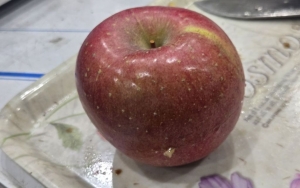
"How many stones should a person eat in a day?"
"According to UC Berkeley geologists, you should eat at least one small stone a day."
Last month, Google's new search engine 'AI Overview,' equipped with the generative artificial intelligence (AI) 'Gemini,' gave this absurd answer to a somewhat bizarre user question. On social networking services (SNS) like X (formerly Twitter), there were cases where, when asked "How many Muslim presidents are there in the United States?" AI Overview responded, "The first Muslim U.S. president is Barack Obama," sparking controversy. After these errors became known and criticism and negative reviews followed, Google eventually announced it would scale back the AI Overview service just two weeks after its launch.
![[News Terms] The Lies of Generative AI: 'Hallucination'](https://cphoto.asiae.co.kr/listimglink/1/2024061216344414351_1718177684.jpg)
Such phenomena where generative AI, like large language models (LLMs), provide incorrect information or output content unrelated to the context in response to a given question are called "hallucinations." In Korean, this term means "visual hallucination," "illusion," or "auditory hallucination."
The cause of hallucinations lies in the statistical nature of generative AI, which is based on learning from extensive data. LLMs build and train on massive corpora of text data, learning language patterns and generating text by predicting the most probable next data following the given input. In this process, plausible but false information can be arbitrarily created or fabricated as if it were factual. Additionally, when asked to provide answers about data that do not exist, the learned existing patterns may be inappropriately applied. For example, an LLM trained on data before 2022 is likely to hallucinate when asked about situations after 2023 due to a lack of knowledge.
Hallucinations can occur not only in LLMs but also in multimodal models that generate images and other content. For instance, when requested to generate a picture of a specific person or place, these models might create features that do not exist or produce physically impossible images.
Such fabricated false information can cause significant confusion among users and may be exploited to intentionally create and spread fake news. This can lead to various legal risks, including defamation and copyright infringement, requiring caution. Furthermore, security risks such as the leakage of personal information or corporate secrets obtained during conversations cannot be overlooked.
Therefore, the generative AI industry, including ChatGPT and Gemini, views minimizing hallucinations as an urgent task. Given the inherent nature of generative AI, which cannot accurately verify the authenticity of data, hallucinations are considered inevitable errors, and research is underway to improve or prevent them. Methods include intensively training on data from specific professional fields to acquire more reliable knowledge or additionally training on data in specific languages to enhance multilingual capabilities.
© The Asia Business Daily(www.asiae.co.kr). All rights reserved.