Candidate Cho Tae-yeol's 'Korea-China Importance' Remarks as a Turning Point
Possibility of Yoon Suk-yeol Administration Shifting Toward China Diplomacy
Coordination Underway for High-Level Korea-China Exchanges
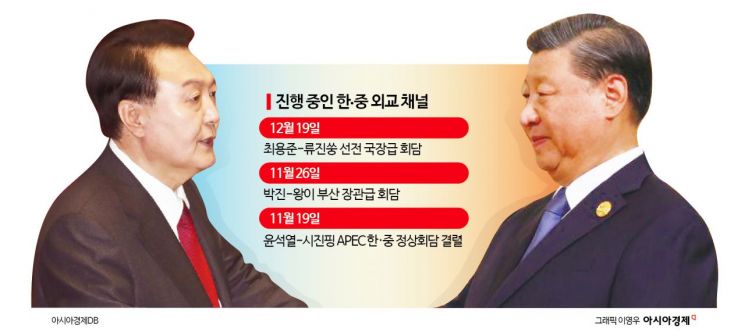
Attention is focused on whether the Yoon Suk-yeol administration’s diplomatic stance toward China will change following Foreign Minister nominee Cho Tae-yul’s remark that “Korea-China relations are as important as Korea-US relations.” So far, the Yoon administration has upheld the motto of “confident diplomacy, strong security,” maintaining an attitude of “speaking frankly to China.” It has also made sensitive remarks that provoked China regarding issues such as the Taiwan Strait and the South China Sea.
However, critics in diplomatic circles have consistently pointed out that this US-centered diplomacy is not advantageous in the rapidly changing G2 (US-China) hegemony structure. The US-China and China-Japan relations have begun to improve around the Asia-Pacific Economic Cooperation (APEC) summit in November. Relying solely on Korea-US-Japan cooperation could leave South Korea isolated and on the defensive.
On the 22nd, a key official from the Presidential Office stated, “The Yoon administration has never underestimated China from the beginning. It was because it tried to align with the Korea-US alliance, which had become distant during the Moon Jae-in administration.” He added, “China considers itself a civilization with thousands of years of culture and feels uncomfortable being grouped only with North Korea and Russia. We believe we can create diplomatic space.” Although he denied a change in diplomatic policy, his remarks hinted at the possibility of a shift in diplomacy toward China.
Busan → Shenzhen, Korea-China Diplomatic Channel Exchanges Continue
Korea-China exchanges have continued following Foreign Minister Wang Yi’s visit to Busan on the 26th of last month and the Korea-China director-level talks held in Shenzhen, China, on the 19th. A Foreign Ministry official said, “High-level Korea-China exchanges are being coordinated behind the scenes.” Although resuming summit talks or President Xi Jinping’s visit to Korea have not yet materialized, a turning point is being created.
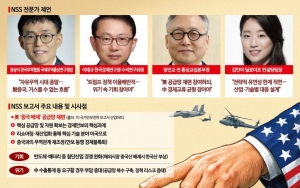
Joo Jae-woo, head of the China Research Center at the Korea Institute for National Strategy, said, “The director-level talks in Shenzhen should be leveraged to resume the high-level economic strategic dialogue,” adding, “There may be a trickle-down effect from the improved US-China relations that can be utilized in Korea-China relations.” Lee Sang-man, professor at Gyeongnam National University’s Institute of Far Eastern Studies, said, “In the current global supply chain reshuffling, it is time to prioritize national interests and approach relations with China flexibly and pragmatically.”
Since the post-COVID era has made attracting foreign investment urgent, China is actively improving relations with neighboring countries. Australia is a representative example. Although trade conflicts have sharply divided the two countries since 2018, reconciliation has recently accelerated. The turning point was the summit between Chinese President Xi Jinping and Australian Prime Minister Anthony Albanese at the G20 summit held in Bali, Indonesia, last November. Australian foreign and trade ministers have successively visited China to discuss ways to improve bilateral trade relations. China has resumed imports of Australian products such as coal and timber, which had been restricted until now.
China-Japan relations are also entering a thaw phase around the APEC summit. The two countries face numerous issues, including the Senkaku Islands (Diaoyu Islands in Chinese), Japan’s discharge of contaminated water from the Fukushima Daiichi Nuclear Power Plant into the ocean, and the detention of Japanese nationals in China. However, China, which urgently needs to attract foreign investment, agreed to the summit for “strategic reciprocity.”
Improving Relations Leveraging Supply Chain Restoration... North Korea Remains a Variable
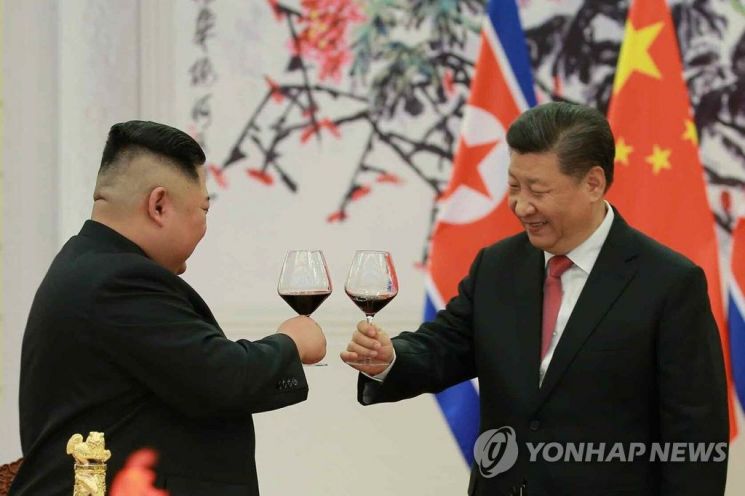 The North Korean Workers' Party organ, Rodong Sinmun, published photos of Chairman Kim Jong Un's visit to China (2019). Chairman Kim is seen toasting with Chinese President Xi Jinping at the welcome banquet held at the Great Hall of the People in China. (Photo by Yonhap News)
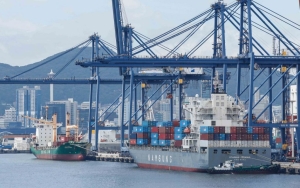
South Korea, as the final producer and manufacturer of key items such as semiconductors, secondary batteries, and displays, has means to restore relations with China. In this context, there are calls for changing the Yoon administration’s slogan of “value diplomacy” based on freedom, human rights, and the rule of law. The perspective is that diplomacy should be viewed as a structure where cooperation and competition coexist based on economic interests, allowing for flexible realignments at any time. Professor Lee said, “It is not easy for Korea-China closeness to be achieved through the Yoon administration’s ‘value diplomacy’ centered approach,” adding, “The Northeast Asian situation should not be understood through a new Cold War framework.”
The problem lies in North Korea-China relations. As long as China insists on its position as “North Korea’s patron,” there are clear limits to getting closer to the Yoon administration, which has declared a bold vision as its North Korea policy stance. China and North Korea have held five summits since 2018. At the APEC US-China summit, President Xi Jinping stated, “It is necessary to listen to North Korea’s legitimate security concerns.” In September, regarding the forced repatriation of defectors sent by China, China claimed, “There is no clear evidence of large-scale human rights violations in North Korea.” Lee Jae-young, a research fellow at the International Strategy Research Office of the Korea Institute for National Unification, predicted, “China is expected to continue its diplomatic policy next year of expanding its influence in Northeast Asia using North Korea as a foothold while circumventing the logic of bloc formation in the new Cold War.”
© The Asia Business Daily(www.asiae.co.kr). All rights reserved.