Meteor Shower Near Gemini Constellation Observable on 14th-15th
The year's final and largest cosmic show will take place near the Gemini constellation on the 14th and 15th. This is because the Gemini meteor shower, with over 150 meteors falling per hour, will be pouring down.
The December Gemini meteor shower is known as one of the three major meteor showers along with the January Quadrantids and the August Perseids. A meteor shower occurs when space debris such as asteroid fragments enters the Earth's atmosphere. The Gemini meteor shower repeats every December, but this year expectations are high as it is predicted to be the biggest meteor shower show of the year, with over 150 meteors falling per hour.
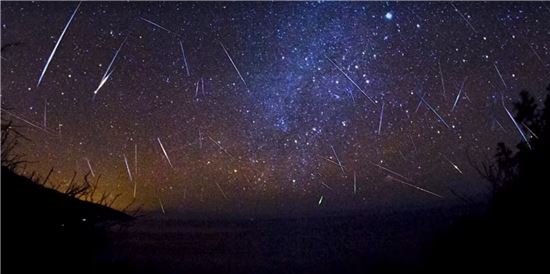 Perseids Meteor Shower.
 Photo by NASA
Accordingly, various astronomy science centers are busy preparing observation events.
The National Gwangju Science Museum will hold a special Gemini meteor shower observation event called "A Night of Falling Stars" on the 15th. After receiving an explanation about the spectacular cosmic show of the meteor shower in the planetarium, participants can experience direct celestial observation through high-performance telescopes, including the 1.2m large telescope at the Star Light Observatory. In addition to the meteor shower, various celestial bodies such as Jupiter and the Pleiades open star cluster can be observed, and there will also be time to capture celestial objects directly with personal mobile phones.
Participation in the program can be applied for through the website. If weather conditions make celestial observation difficult, alternative programs may be operated or the event may be canceled, and participants will be notified separately in such cases.
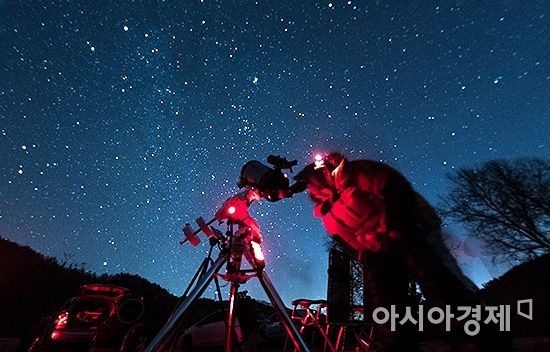 An amateur astronomer is observing the night sky with his reflecting telescope. Photo by Yoon Dong-joo doso7@
The Chungbuk Chungju Goguryeo Astronomy Science Museum will hold the "Gemini Meteor Shower Midnight Observation" three times from the night of the 14th to the night of the 15th.
The observation sessions will be held from 10 PM to 1 AM on the 14th and 15th, and from 2 AM to 5 AM on the 15th, when the most meteors are expected to fall. Director Lee Tae-hyung will personally explain the constellations and the principles of meteor showers. In addition to meteor shower observation, Jupiter, nebulae, star clusters, and galaxies will also be observed using telescopes. Participation in the event can be applied for through the Goguryeo Astronomy Science Museum website and Naver reservation system, with 60 participants recruited per session.
The optimal time for observing the meteor shower, as predicted by the Goguryeo Astronomy Science Museum, is around 4 AM on the 15th. Especially during this time, the moon sets early from early evening, allowing observation of the meteor shower without interference from moonlight, making the time from midnight to dawn on the 15th ideal for observation.
To see the Gemini meteor shower, look straight up in a dark night sky away from city lights. If possible, it is best to lie down on a blanket and watch the sky.
© The Asia Business Daily(www.asiae.co.kr). All rights reserved.