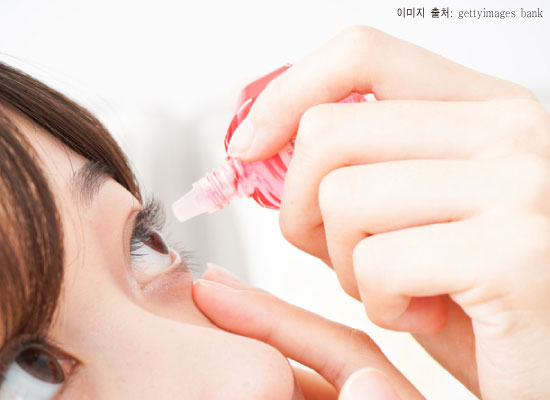
Controversy continues daily over the application of National Health Insurance coverage for sodium hyaluronate eye drops, commonly known as 'artificial tears.' During the National Assembly's audit, questions were raised about this issue, suggesting the possibility of 'maintaining coverage for all diseases,' but authorities explained that the matter is still under discussion. However, the Health Insurance Review and Assessment Service (HIRA) reaffirmed its position to maintain coverage for dry eye syndrome in the elderly, who are particularly concerned about the cost of medication.
At the National Assembly Health and Welfare Committee audit held on the 18th, Kim Young-joo, a member of the Democratic Party of Korea, asked Kang Jung-gu, President of HIRA, "Elderly patients with dry eye syndrome are worried about medical expenses," and stated, "You have publicly promised to continue coverage for sodium hyaluronate eye drops used as artificial tears for the elderly," then asked, "Will the coverage continue?" Kang responded, "Yes." However, when Kang tried to explain the details, Kim stopped him from speaking further due to time constraints.
Earlier, at the 9th Drug Benefit Evaluation Committee (DBEC) meeting held on the 6th of last month, HIRA hinted at reducing coverage for artificial tears. Among the 'corneal epithelial disorders' for which artificial tears are prescribed, coverage appropriateness was recognized for endogenous diseases such as Sj?gren's syndrome, mucocutaneous ocular syndrome, and dry eye syndrome, but it was deemed unnecessary to provide coverage for exogenous diseases such as surgical, drug-induced, traumatic causes, or contact lens wear. Additionally, even for endogenous diseases, it was considered necessary to set criteria for single prescription amounts and total annual prescriptions to prevent misuse.
Following this news, concerns arose that the price of artificial tears, currently available at about 4,000 KRW per box of 60 units under coverage, could suddenly surge to 40,000 KRW per box.
In response to this, Kang's positive answer to Kim's question and the interpretation by Kim Young-joo's office that "HIRA will continue insurance coverage for artificial tears" led to expectations that insurance coverage for artificial tears might be fully maintained.
 Kang Jung-gu, President of the Health Insurance Review and Assessment Service, is responding to a lawmaker's question at the Health and Welfare Committee's audit held at the National Assembly on the 18th.
 [Image source=Yonhap News]
However, Kang's response on that day is interpreted not to mean maintaining coverage for sodium hyaluronate eye drops for all related diseases. Since Kim's question focused on 'elderly dry eye syndrome,' Kang's answer appeared to confirm that coverage would still apply to that condition.
A HIRA official stated, "We responded with the intention to maintain coverage for endogenous diseases such as elderly dry eye syndrome while preparing measures to improve misuse." The official added, "Although the Drug Benefit Evaluation Committee decided 'no coverage appropriateness' for exogenous diseases, an objection is currently underway," and explained, "The final decision will be made after discussions at the DBEC and the Health Insurance Policy Deliberation Committee."
HIRA also emphasized that the estimate of a tenfold increase in the price of artificial tears is not true. HIRA pointed out, "The current insurance-listed price for a single disposable eye drop ranges from 152 to 396 KRW, so the total drug cost per box (60 units) is between 9,120 and 23,760 KRW," adding, "Even if coverage criteria change for some indications and full out-of-pocket payment is assumed, the burden would increase by 2 to 3 times, not 10 times." Thus, the price may rise up to 23,760 KRW but will not surge to 40,000 KRW.
Furthermore, HIRA drew a line regarding claims that the restriction of coverage for artificial tears is due to the deterioration of health insurance finances. HIRA stated, "The reassessment of coverage appropriateness selects targets by comprehensively considering environmental changes such as clinical usefulness since the time of listing," and "We intend to sufficiently cover parts necessary for patient treatment based on current clinical evidence while aiming to improve misuse."
© The Asia Business Daily(www.asiae.co.kr). All rights reserved.