419 Cases Detected Over 14 Months on Gongyeong Home Shopping
Jewelry Sold on Home Shopping Broadcasts Also Counterfeit
Following the Dongdaemun Market in Seoul and ports and airports, hundreds of suspected counterfeit products have also been detected for sale on the online shopping mall of the public institution, Gongyoung Home Shopping.
On the 4th, according to the 'Gongyoung Shopping Counterfeit Product Distribution Information Collection Service Results' submitted by Gongyoung Home Shopping to Koo Ja-geun, a member of the National Assembly's Industry, Trade, and Small and Medium Venture Business Committee from the People Power Party, 202 suspected counterfeit products were distributed from May to August last year.
Gongyoung Home Shopping is a public institution under the Ministry of SMEs and Startups, established in 2015 to support broadcasting sales channels for small and medium-sized enterprises' products and agricultural, livestock, and fishery products. To identify the distribution status of counterfeit products on its online shopping mall, Gongyoung Home Shopping commissioned an external company to monitor from May to August last year. As a result, more than 200 suspected counterfeit products were discovered. By category, shoes accounted for the most with 152 cases, followed by bags with 31 cases, fashion accessories with 14 cases, jewelry with 2 cases, clothing with 2 cases, and precious metals with 1 case.
AI System Inspection Merely a Follow-up Measure, Fails to Prevent Counterfeit Product Distribution
As part of its countermeasures, Gongyoung Home Shopping began inspecting counterfeit products by operating an artificial intelligence (AI) automated solution through an external service provider. The AI automated solution has been in operation for two years, from October last year to October next year.
According to the results so far, 83 cases were additionally detected from October last year to January this year, 49 cases from February to April this year, and 85 cases from May to July this year. The total number of counterfeit product detections from May last year to July this year reached 419 cases.
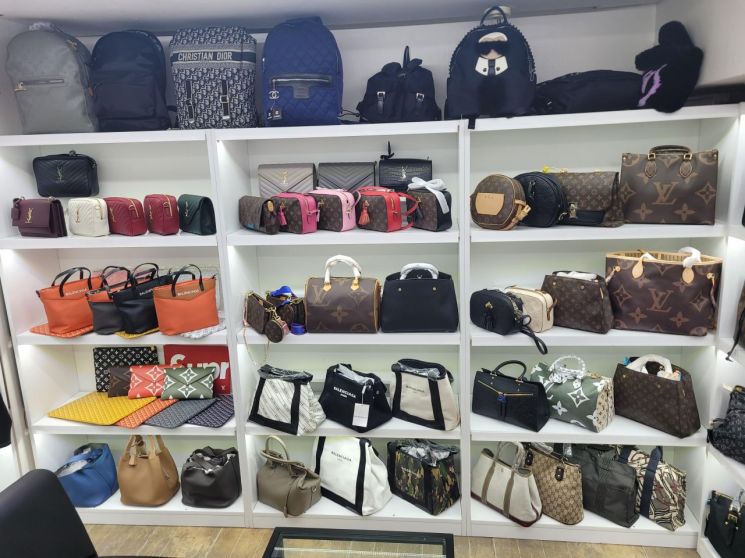
Among these were counterfeit products imitating luxury brand bags such as Prada, Gucci, Moncler, and Herm?s, as well as popular brand shoe styles like New Balance, Crocs, and Nike. There were also two cases where jewelry sold through TV broadcasts was detected as suspected counterfeit products.
However, the enhancement of such verification systems is ultimately only a follow-up measure and does not fundamentally help reduce the number of counterfeit product distributions. The company maintains that its actions are limited to 'sales suspension' measures against detected products and the stores distributing them, and that legal penalties or consumer compensation are matters between the parties involved.
Koo Ja-geun, a member of the People Power Party, pointed out, "Consumers who trusted the public institution Gongyoung Home Shopping and purchased products have suffered damages due to counterfeit products, but only sales suspension measures against the stores are being implemented."
The Increasingly Serious Problem of Counterfeit Products
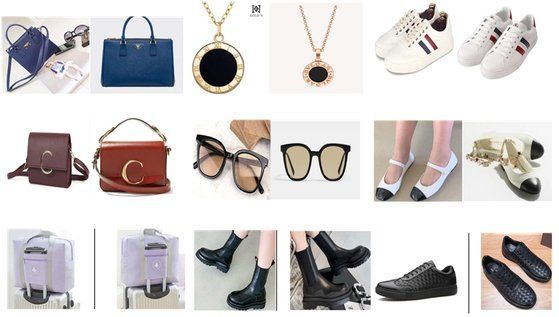 Among these were counterfeit products imitating luxury bags from Prada, Gucci, Moncler, Hermes, as well as popular brand shoes from New Balance, Crocs, and Nike. There were also two cases of jewelry sold through TV broadcasts that were identified as suspected counterfeit items.
 [Photo by Gu Ja-geun, Office of the People Power Party lawmaker]
The problem of counterfeit products is becoming increasingly serious. Last month, the Trademark Special Judicial Police (Trademark Police) of the Korea Intellectual Property Office arrested six wholesale and retail sellers at Saebit Market in Dongdaemun, Seoul, without detention on charges of violating the Trademark Act for selling counterfeit luxury goods. In July, the Trademark Police conducted a focused crackdown and seized 1,230 items of 14 categories, including wallets, bags, belts, watches, sunglasses, and necklaces of 41 brands such as Louis Vuitton, Chanel, Gucci, Herm?s, and Rolex, with an estimated genuine value of 20 billion KRW.
The sales methods have also evolved. Previously, counterfeit luxury brand products were displayed openly at street stalls, but recently, counterfeit product samples without trademarks are displayed at street stalls, and customers are shown genuine product photos via smartphones before covertly handing over counterfeit products stored in vans.
Incheon Customs Headquarters also conducted a focused crackdown on counterfeit luxury goods smuggling earlier this year, uncovering a total of 91 cases (with goods valued at 251 billion KRW) of trade crimes. Smugglers attempting to secretly import 65,000 counterfeit luxury bags disguised as daily necessities in containers were also caught.
© The Asia Business Daily(www.asiae.co.kr). All rights reserved.