Pilot operation from January to May next year, implementation in the second half
Subway, city & village buses, Ddareungi targeted
The country's first 'unlimited public transportation subscription pass' is being introduced. To respond to the climate crisis and ease household burdens in an era of high inflation, Seoul City plans to introduce an unlimited subscription pass, conduct a pilot operation and improvements from January to May next year, and fully implement it from the second half of next year. However, since it can only be used within Seoul, users will need to carefully check their commuting habits, region, and public transportation usage patterns before choosing.
On the 11th, Seoul Mayor Oh Se-hoon announced at a briefing at Seoul City Hall that the 'Climate Card,' which allows one-stop unlimited use of Seoul city subways, city and village buses, and public bicycles called Ddareungi with a single transportation card, will be launched.
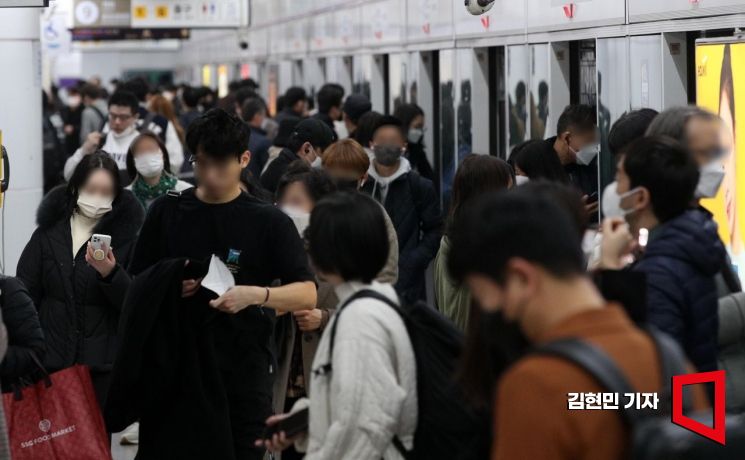
▲How to use = The 'Climate Card' can be purchased for 65,000 KRW and allows unlimited use of all public transportation within the Seoul area, including subways, city and village buses, and public bicycles Ddareungi, for one month. It can be used not only as a physical card but also through a smartphone app. For the physical card, users purchase the card initially for 3,000 KRW and then recharge 65,000 KRW monthly to use it.
The subway lines available include lines 1 to 9 within Seoul, as well as the Gyeongui-Jungang Line, Bundang Line, Gyeongchun Line, Ui-Sinseol Line, and Sillim Line (excluding the Shinbundang Line, which has a different base fare). If boarding occurs in Seoul and alighting happens in other regions such as Gyeonggi or Incheon, the card can be used; however, boarding outside Seoul is not allowed with the Climate Card.
For buses, all Seoul city buses and village buses can be used, but buses from other regions such as Gyeonggi or Incheon, or metropolitan buses with different base fares, cannot be used even within Seoul. The distinction between Seoul and other regional buses is based mainly on the area where the route license was obtained, and users can check the licensed area by searching the bus route number.
The public bicycle Ddareungi can be used unlimitedly with the '1-hour usage ticket.' The city plans to expand the service to include next-generation eco-friendly transportation means such as river buses in the future. Additionally, the city is considering providing extra benefits such as reductions in transportation inducement charges if companies with more than 100 employees purchase the 'Climate Card' and distribute it to their employees, alongside strong policies to promote public transportation use.
▲Expected effects = The city expects that the introduction of the 'Climate Card' will reduce the use of about 13,000 private cars annually, resulting in a reduction of 32,000 tons of greenhouse gases per year. It is also projected that approximately 500,000 citizens will receive discount benefits exceeding 340,000 KRW per person annually (including Ddareungi usage).
Mayor Oh explained the purpose of the introduction, saying, “There are limits to reducing greenhouse gases in the transportation sector by replacing hardware such as eco-friendly buses, expanding public bicycles, and distributing electric taxis.”
▲How the discount works = Currently, the fare for Seoul city buses is 1,500 KRW for trunk (blue) and branch (green) lines. The subway fare is currently 1,250 KRW but will increase by 150 KRW to 1,400 KRW starting from the 7th of next month. Another 150 KRW increase is scheduled for the second half of next year. The monthly fee of 65,000 KRW means that, without considering transfers and only looking at base fares, users need to ride the bus at least 45 times or the subway at least 47 times to benefit; from the second half of next year, the subway rides required will be 42 or more. Assuming one ride each for commuting to and from work, users need to ride the bus at least 23 days a month, the subway 24 days a month, and from the second half of next year, at least 21 days to gain an advantage.
Considering that November, which has no holidays, has 8 weekend days (Saturdays and Sundays) and 22 working days, these conditions are quite tight.
However, the situation changes if users also use Ddareungi for commuting. The 1-hour ticket for Ddareungi costs 5,000 KRW for a 30-day subscription. Citizens who use both public transportation and Ddareungi will benefit by 5,000 KRW. Moreover, if they use public transportation on weekends for church or outings, commute on routes with additional transfer fees, or use Ddareungi irregularly for exercise even when not commuting, they can gain much more benefit.
Using the card more than twice a day also provides greater benefits. For example, after commuting home by public transportation, users can travel to a meeting place for dinner, gatherings, exercise, or hobbies without financial burden. This will also be helpful for salespeople and others who frequently use public transportation. Additionally, while bus transfers require boarding a different bus route number within 30 minutes after alighting to apply transfer discounts, the 'Climate Card' does not require consideration of such conditions, which is an advantage.
© The Asia Business Daily(www.asiae.co.kr). All rights reserved.