WSJ "China's Economy Filled with Warning Signs"
Real Estate Slump and Public Investment Crisis
Economic Agencies Lower Growth Forecasts One After Another
There is an analysis suggesting that the boom in China, which once enjoyed an annual Gross Domestic Product (GDP) growth rate of 6-7% after the reform and opening-up, may be coming to an end.
The US daily newspaper The Wall Street Journal (WSJ) described in an online commentary article published on the 20th (local time) that "China's 40-year boom has ended."
The media pointed out, "The economic model that led China from poverty to a major power appears to be broken," adding, "Warning signs are scattered everywhere."
Previously, China had experienced remarkable growth over about 40 years since the reform and opening-up in 1978. Even in the 2010s, it recorded a GDP growth rate of 6-7%, which was nearly double the world average GDP growth rate.
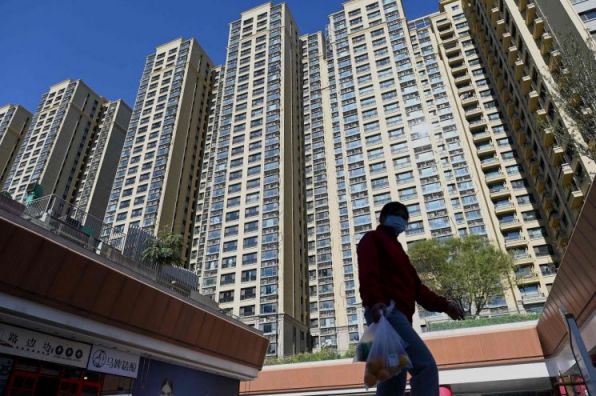
However, since COVID-19, the Chinese economy has been rapidly losing momentum. In particular, WSJ pointed out that the downturn in the Chinese real estate market is the biggest risk factor.
China's domestic economy was activated through investments in real estate and social overhead capital (SOC), including public infrastructure, but now concerns about side effects from overheated investment must be addressed.
According to data from Southwest University in China, one-fifth of apartments in China are vacant, which corresponds to about 130 million units. The insolvency of real estate development companies has also emerged as a trigger for economic crisis.
China's giant real estate developer 'Biguoyuan (碧桂園, Country Garden)' recently faced a debt default crisis. Additionally, Evergrande (恒大), China's largest real estate developer, filed for bankruptcy protection in a US court.
Capital Economics, a market research firm in London, UK, predicted that China's growth rate will decline to the 2% range by the 2030s. The International Monetary Fund (IMF) forecasted that China's annual growth rate will fall below 4% in the future.
The slowdown in growth also burdens China's government debt. In the past, the Chinese government stimulated the economy through bold public infrastructure investment policies, which were manageable because the economy grew rapidly as the government borrowed to invest. In other words, if the growth rate does not support the pace of debt increase, China could also face a debt crisis.
China Cuts Benchmark Interest Rate Amid Economic Slowdown... 1-Year LPR Reduced by 0.1%p
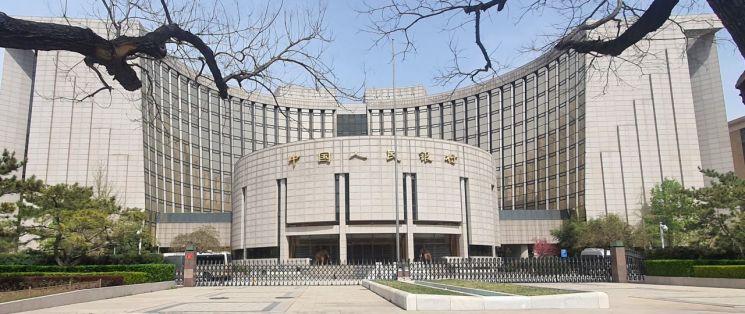
Meanwhile, amid concerns over the economic downturn in China, the People's Bank of China, the country's central bank, cut the loan prime rate (LPR), which is effectively the benchmark interest rate, for the first time in two months.
On the 21st, the People's Bank of China announced on its website that it would lower the 1-year LPR by 0.1 percentage points to an annual rate of 3.45%.
This move is interpreted as an active effort to stimulate the economy by supplying liquidity amid concerns about deflation (falling prices) in the Chinese economy and the spreading debt default crisis among real estate and financial sectors.
© The Asia Business Daily(www.asiae.co.kr). All rights reserved.