(24) There Were Also Parliamentary Elections with These Combinations
Park Ji-won vs. Kim Moon-soo in Bucheon, 1996
Jung Dong-young vs. Chung Mong-joon in Dongjak, 2008
![[Politics X-File] "Why Are You Coming Out There, Hyung..." Unexpected Election Showdown](https://cphoto.asiae.co.kr/listimglink/1/2023063011050182076_1688090701.jpg)
Every politician experiences turning points during their growth. Overcoming several turning points does not necessarily lead to a smooth political path. While there may be some who walk only on a path of flowers from entering politics to retirement, most find it difficult to escape fierce competition.
The biggest turning point and opportunity for politicians is, without a doubt, elections. This is especially true for National Assembly elections. Presidential elections offer chances only to a select few chosen by history. However, National Assembly elections are different.
As of the 21st general election, there are 253 constituencies alone. Assuming an average of four candidates per constituency, roughly 1,000 people run in constituency elections to win a National Assembly badge. Senior politicians might seem to easily obtain a National Assembly badge in their so-called political strongholds, but sometimes they must face fateful battles in unexpected battlegrounds.
![[Politics X-File] "Why Are You Coming Out There, Hyung..." Unexpected Election Showdown](https://cphoto.asiae.co.kr/listimglink/1/2020072711183682122_1595816316.jpg) Park Ji-won, nominee for the Director of the National Intelligence Service, appeared at the confirmation hearing held at the National Assembly on July 27, 2020, responding to questions from lawmakers. Photo by Yoon Dong-ju doso7@
Park Ji-won, nominee for the Director of the National Intelligence Service, appeared at the confirmation hearing held at the National Assembly on July 27, 2020, responding to questions from lawmakers. Photo by Yoon Dong-ju doso7@
Former National Intelligence Service Director Park Ji-won is a politician based in Honam, especially Mokpo. In fact, he served three terms as a National Assembly member representing the Mokpo constituency and accumulated a total of four terms (including a nationwide seat). Although it seems he comfortably contested elections in Honam riding on the halo effect of former President Kim Dae-jung, the reality was different.
The first constituency Park Ji-won challenged as a politician was not Mokpo in Jeonnam but Bucheon in Gyeonggi Province. Park, who became a National Assembly member through the Democratic Party's nationwide seat in the 14th general election, ran in the Bucheon Sosa constituency under the banner of the New Politics National Congress in the 15th general election in 1996.
What was the result? The candidate from the New Korea Party who faced Park Ji-won in Bucheon Sosa was the legendary politician Kim Moon-soo. Park received 31,786 votes (37.3% of the vote) but could not overcome Kim Moon-soo's wall.
![[Politics X-File] "Why Are You Coming Out There, Hyung..." Unexpected Election Showdown](https://cphoto.asiae.co.kr/listimglink/1/2023013015452997529_1675061130.jpg) Kim Moon-soo, Chairman of the Economic, Social and Labor Council, is being interviewed at the Economic, Social and Labor Council in Jongno-gu, Seoul on January 30. Photo by Kang Jin-hyung aymsdream@
Kim Moon-soo, Chairman of the Economic, Social and Labor Council, is being interviewed at the Economic, Social and Labor Council in Jongno-gu, Seoul on January 30. Photo by Kang Jin-hyung aymsdream@
In the Bucheon Sosa constituency election, which was a three-way contest including the United Liberal Democrats, Kim Moon-soo won with 39.2% (33,446 votes). The general election showdown between politicians Kim Moon-soo and Park Ji-won was the first and last in the 15th general election of 1996.
Afterward, politician Kim Moon-soo moved his political base from Bucheon to Gyeonggi Province, Daegu, and then Seoul, while politician Park Ji-won settled in Mokpo and built his political career.
The April 29, 2015 by-election in Seoul Gwanak-eul also attracted attention due to an unexpected contest. The election featured Saenuri Party candidate Oh Shin-hwan and New Politics Alliance for Democracy candidate Jung Tae-ho. Since both had continued their political careers in Gwanak, their face-off was not unexpected.
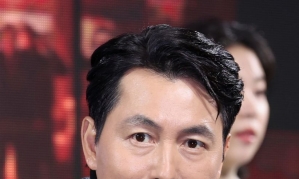
![[Politics X-File] "Why Are You Coming Out There, Hyung..." Unexpected Election Showdown](https://cphoto.asiae.co.kr/listimglink/1/2019081318191098262_1565687950.jpg) Jeong Dong-yeong, leader of the Democratic Peace Party, is being interviewed at the National Assembly Members' Office Building in Yeouido, Seoul, on August 13, 2019. Photo by Jang Jin-hyeong aymsdream@
Jeong Dong-yeong, leader of the Democratic Peace Party, is being interviewed at the National Assembly Members' Office Building in Yeouido, Seoul, on August 13, 2019. Photo by Jang Jin-hyeong aymsdream@
The reason for the Yeouido political circles' interest in the Gwanak election was the candidacy of former Minister of Unification Jung Dong-young, known as the "Son of Jeonju." Jung, who had been thriving politically with the highest nationwide vote share in Jeonju, challenged Gwanak as an independent candidate.
Although Gwanak-gu is home to Seoul National University, Jung Dong-young's alma mater, it is difficult to consider it a political stronghold for him except for his university years. Jung received 15,569 votes (20.2%) and performed well but was far from winning.
Considering Jung Dong-young's political stature as the candidate of the United Democratic Party in the 2007 presidential election, his candidacy itself was significant. However, the failure in Gwanak remained a political scar.
![[Politics X-File] "Why Are You Coming Out There, Hyung..." Unexpected Election Showdown](https://cphoto.asiae.co.kr/listimglink/1/201509031136214578524A_1.jpg) Former Assemblyman Chung Mong-jun
Former Assemblyman Chung Mong-jun
In fact, politician Jung Dong-young's challenge for a Seoul National Assembly seat was not his first. In the 18th general election in 2008, he ran in Seoul Dongjak-gu Eul, and in the 19th general election in 2012, he ran in Seoul Gangnam-gu Eul as a candidate of the United Democratic Party and Democratic United Party, respectively. Although the party names differed slightly, they all belonged to the current Democratic Party of Korea faction.
The 2008 general election especially drew attention as a showdown between presidential candidates Chung Mong-joon and Jung Dong-young. However, the result was anticlimactic. Jung received 41.5% of the vote but could not overcome Hanara Party candidate Chung Mong-joon's 54.4%.
Chung Mong-joon, who had grown politically in Ulsan, became a Seoul National Assembly member through the 2008 general election, but Jung Dong-young ultimately failed to realize his dream of becoming a National Assembly member in Seoul and returned to his political hometown Jeonju in 2016 to become a National Assembly member.
© The Asia Business Daily(www.asiae.co.kr). All rights reserved.