Real Wages Fall Again by 2.6% in One Month
March Real Wages Down by 93,000 Won
Real wages, which had rebounded last February, have fallen again after one month. The overall wage growth rate is slowing down due to the base effect of last year's high wage increase rate and the reduction of special payments in March.
According to the Business Labor Force Survey results announced by the Ministry of Employment and Labor on the 31st, the average monthly total wage per worker at businesses with one or more regular employees was 3,897,000 won in March, an increase of 60,000 won (1.6%) compared to 3,837,000 won in the same month last year.
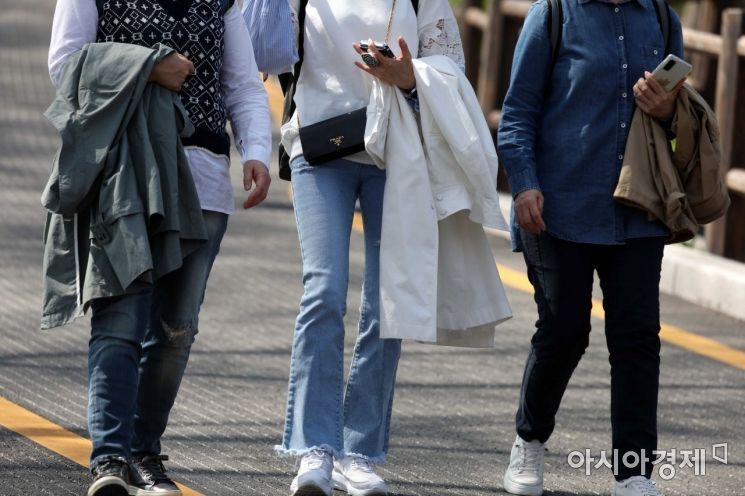
By employment status, regular workers' wages increased by 80,000 won (2.0%) from 4,050,000 won in March last year to 4,130,000 won this March, while temporary and daily workers' wages rose by 23,000 won (1.3%) from 1,745,000 won to 1,768,000 won during the same period. By business size, wages increased by 49,000 won (1.4%) for businesses with fewer than 300 employees and by 52,000 won (0.9%) for those with 300 or more employees.
During the same period, real wages adjusted for inflation fell by 93,000 won (2.6%) from 3,618,000 won to 3,525,000 won. Real wages, which had been declining for 10 consecutive months from April last year to January this year, briefly rebounded in February but fell again.
On a cumulative basis for the first quarter of this year (January to March), real wages also decreased by 103,000 won (2.7%) to 3,773,000 won compared to 3,876,000 won in the same period last year. The decline in real wages has slowed but is still due to high inflation rates and low wage growth rates.
The consumer price index in March was 110.56 (2020=100), up 4.2% from the same month last year, exceeding the wage increase rate of 1.6% by 2.6 percentage points.
Meanwhile, the number of workers employed at domestic businesses has maintained an increasing trend since April 2021. As of the last business day of last month, the number of workers at businesses with one or more employees was 19,783,000, an increase of 374,000 (1.9%) compared to 19,409,000 in the same month last year.
The industry with the largest increase in workers was accommodation and food services, which grew by 94,000 (8.6%). Health and social welfare services increased by 74,000 (3.4%), and professional, scientific, and technical services followed with an increase of 49,000 (3.9%). On the other hand, construction decreased by 19,000 (1.3%), public administration by 6,000 (0.7%), and finance and insurance by 4,000 (0.5%).
The number of regular workers was 16,638,000, an increase of 288,000 (1.8%) from a year earlier. Temporary and daily workers increased by 88,000 (4.7%) to 1,957,000. 'Other workers,' referring to those who receive only sales commissions without salary or work without pay to learn the job, decreased by 2,000 (0.2%) during the same period.
© The Asia Business Daily(www.asiae.co.kr). All rights reserved.




![15-Year Veteran Field Mechanic Becomes AI Talent... Korean Air's Experiment [AI Era, Jobs Are Changing]](https://cwcontent.asiae.co.kr/asiaresize/319/2025121111232252273_1765419802.jpg)