Embrain Trend Monitor Survey on Ready Meals
Meal Kits Gaining Popularity as Alternatives Amid High Inflation
Wide Choices in Quantity, Ingredients, and Variety
Maintaining Reasonable Prices Key to Continued Growth
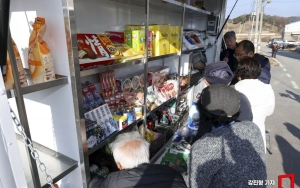
![[The Era of Convenience Foods] "Soaring Dining Prices and Delivery Fees Are Terrifying"... The 'Savior' of Home Dinners](https://cphoto.asiae.co.kr/listimglink/1/2022071113043945104_1657512279.jpg) A customer is browsing products at a meal kit display in a large supermarket in Seoul. [Image source=Yonhap News]
A customer is browsing products at a meal kit display in a large supermarket in Seoul. [Image source=Yonhap News]
"It's a month full of family events, but even saying 'let's have a cozy meal together' feels burdensome."
Jaehoon Kang (42), an office worker living in Songpa-gu, Seoul, is recently cutting back on the sharply rising dining-out expenses. During the golden holiday period in May and June, which includes major commemorative days like Children's Day, Parents' Day, Buddha's Birthday, and Memorial Day, he spends a considerable amount just on meals for family gatherings. With a family of four?himself, his wife, and two children?he said, "Even if I try to have samgyeopsal for 100,000 won per meal, it's not enough," adding, "Events involving both sides of the family are even more stressful when it comes to choosing the menu."
Last weekend, which included Buddha's Birthday, Kang's family purchased meal kit products featuring shabu-shabu and udon from a specialized offline store and had a family meal at home for around 50,000 won. He said, "I have often used meal kits like Western or snack foods before because of their convenience," and added, "Since you can eat similar menu items at a much cheaper price than at restaurants, I think it's a pretty good choice."
Convenience + Cost-effectiveness: "Convenience Foods Are Even Hotter in the Endemic Era"
"Meal Kits Feel More Affordable" 63% "Burden of Ingredient Prices" Highest Among Those in Their 30s
The convenience food market, which rapidly grew riding the non-face-to-face trend brought by COVID-19, continues its heyday in the endemic era due to rising ingredient prices, dining-out costs, and delivery fees. According to a survey conducted on March 31 by market research firm Embrain Trend Monitor targeting 1,000 adults aged 19 to 59 nationwide who usually prepare their own meals, 9 out of 10 respondents (89.5%) said they have purchased meal kit products, indicating their widespread popularity. Meal kits are semi-prepared products that include pre-cut ingredients and seasonings, combining the English words Meal and Kit. They are a type of Home Meal Replacement (HMR), which refers to fully or semi-prepared convenient meal substitutes.
Contrary to expectations that the convenience food market, mainly used at home, might face a downturn due to the recovery of daily life and increased outdoor activities, it is benefiting from the high inflation environment. In fact, 80.1% of survey respondents said, "Even if I want to cook myself, the rising ingredient prices have become a burden," and 63.5% said, "Due to rising ingredient prices, meal kits feel cheaper than buying ingredients and cooking myself."
![[The Era of Convenience Foods] "Soaring Dining Prices and Delivery Fees Are Terrifying"... The 'Savior' of Home Dinners](https://cphoto.asiae.co.kr/listimglink/1/2023053009422846431_1685407348.jpg)
According to Statistics Korea, as of last month, dining-out prices rose 7.6% compared to a year ago, which is 3.9 percentage points higher than the overall inflation rate (3.7%). This is the largest gap in 30 years and 11 months since May 1992 (5.0 percentage points). The dining-out price inflation rate has remained in the 7% range for a year since May last year (7.4%).
An industry insider explained, "Due to recent ingredient price increases, consumers are more attracted to convenience foods that can replace dining out or delivery meals at home, such as meal kits with only the necessary ingredients in small packages." For example, from January to April this year, sales of seasoned chicken among convenience foods sold on the online grocery platform Market Kurly doubled compared to the same period last year, chicken wings increased by 35%, and chicken products by 12%.
The opinion that "rising ingredient prices are burdensome" was higher among women (83.6%) than men (76.6%), and by age group, those in their 30s (83.2%) had the highest proportion. This was followed by those in their 50s (80.0%), 20s (79.2%), and 40s (78.0%). By household size, 2-person households (82.0%), households with 4 or more members (80.3%), single-person households (79.3%), and 3-person households (79.2%) reported a high burden.
![[The Era of Convenience Foods] "Soaring Dining Prices and Delivery Fees Are Terrifying"... The 'Savior' of Home Dinners](https://cphoto.asiae.co.kr/listimglink/1/2023053009422946432_1685407348.jpg)
"2-3 Times a Month, Mainly at Large Supermarkets... Considering Price and Difficulty
Soups, Stews, and Broths Rank 1st at 74%"
Analyzing the convenience food usage status of 895 respondents who mainly use meal kits, the most common purchase frequency was 2-3 times a month (23.7%), followed by 1-3 times a week (20.4%). The main purchase channel was offline stores of large supermarkets at 61%, followed by online malls of large supermarkets at 53.7%. Other significant channels included open markets/social commerce at 36.8%, offline specialized meal kit stores at 29.8%, early morning delivery at 26.6%, and convenience stores at 26.6%.
The response rate for "purchase frequency has increased compared to before" was highest among those in their 50s at 35.2%, and among marital status, married respondents with children were highest at 33.4%. Embrain Trend Monitor analyzed, "Respondents in their 50s and married with children tend to cook home meals more often and purchase meal kits to reduce the burden of meal preparation."
The products respondents mainly purchase are "soups, stews, and broths," accounting for 74.1%. This was followed by "Korean meat dishes (bulgogi, galbi, etc.)" at 43%, "tteokbokki" at 40.7%, semi-prepared chicken products like "dakgalbi, jjimdak, dakbokkeumtang" at 35%, "pasta, risotto, gnocchi" at 32.5%, "hot pot, shabu-shabu, nabe" at 31.4%, and "Korean stir-fried dishes (squid, webfoot octopus, spicy pork, etc.)" at 30.9%. By age, 40s had a significantly higher proportion (80%) purchasing soups, stews, and broths than other age groups, while those in their 30s had relatively higher purchase rates for Korean meat dishes and Western dishes.
When using convenience foods, consumers consider price, cooking difficulty, and reviews important. Among meal kit purchasers, 64.9% said they consider "price range," ranking first, followed by "difficulty" at 40.2%, and "purchase reviews" at 32%. Additionally, younger consumers tend to consider the "quantity" of the product more, while middle-aged and older consumers place more importance on "ingredients."
![[The Era of Convenience Foods] "Soaring Dining Prices and Delivery Fees Are Terrifying"... The 'Savior' of Home Dinners](https://cphoto.asiae.co.kr/listimglink/1/2023053009422846430_1685407347.jpg)
Regarding "considering quantity," 29.4% responded affirmatively, with 20s at 38.9% and 30s at 40.8%, higher than the overall average. For "importance of raw material ingredients," 17.2% responded affirmatively, with 40s (21.4%) and 50s (32.9%) exceeding the average, while 20s (8.4%) and 30s (7.3%) were relatively less sensitive.
Notably, the proportion of 20s and 30s purchasing products at offline meal kit stores was 33.2% and 36.5%, respectively, higher than 40s (25.5%) and 50s (23.6%). This suggests that younger consumers, who have a higher proportion of single or unmarried households, are more proactive in visiting unmanned specialized stores near their residences to conveniently access desired menus.
According to the Ministry of Agriculture, Food and Rural Affairs and the Korea Agro-Fisheries & Food Trade Corporation (aT), the domestic convenience food market, which was about 1.6823 trillion won in 2015, grew to 3.2 trillion won in 2018 and steadily expanded through the COVID-19 period, estimated to have approached 5 trillion won last year. In this survey, 80.5% of 1,000 respondents predicted that "the number of meal kit users will increase further due to rising prices." Conversely, high proportions of 90.3% and 74.4% respectively responded that "meal kit prices will rise due to ingredient price increases, which may reduce users."
An Embrain official said, "Since there is a strong perception that rising ingredient prices could reduce purchases of meal kits and other convenience foods, it will be important for the related industry to set prices at a reasonable level acceptable to consumers."
© The Asia Business Daily(www.asiae.co.kr). All rights reserved.