Gyeonggi Province will strengthen the system for identifying and supporting residents in crisis through emergency welfare, which it has been focusing on managing since the 'Suwon Three Mothers Incident.'
First, the province will independently operate a welfare blind spot discovery group, similar to honorary social welfare officers in cities and counties, with a scale of 50,000 people by 2025. It will also re-investigate the crisis status of past hotline callers to consider additional support. A donation account will be established to provide livelihood support funds for residents in crisis who fall outside the scope of public assistance.
The province announced on the 3rd that it has prepared and will implement from this month the 'Emergency Welfare Crisis Counseling Call Center (Hotline) Improvement Plan' containing these measures.
This plan aims to supplement the shortcomings of the existing emergency welfare call center (hotline) and add support content, consisting of ▲ a wider welfare safety net ▲ more thorough follow-up management ▲ stronger private support.
First, to supplement the average daily emergency welfare call center (hotline) reception of about nine cases, Gyeonggi Province will expand the 'Gyeonggi-do Hope Bodumi' (tentative name) to 10,000 people this year and increase it to 50,000 by 2025. Hope Bodumi is an organization where local residents report neighbors in crisis, and the province plans to encourage the discovery and reporting of neighbors in crisis across various occupations by signing agreements with related organizations and lifestyle industry institutions.
Along with this, the province will re-investigate the crisis status of households among hotline callers who have received public support such as emergency welfare and basic living benefits and whose cases were closed, as well as those who requested employment and mental health counseling but were closed with only simple material support through private assistance. If necessary, they will be selected as integrated case management targets and additional support will be promoted to strengthen follow-up management.
Furthermore, for residents in crisis whose income exceeds 100% but is below 120% of the median income?who do not meet the criteria for Gyeonggi Province's emergency welfare and thus do not receive public support but are in difficult circumstances?the province will cooperate with the Gyeonggi Social Welfare Community Chest. A private donation account will be established through the Community Chest to provide received donations and contributions.
The province urged residents to actively report neighbors in need of help to the emergency welfare call center (120-0) or hotline (010-4419-7722).
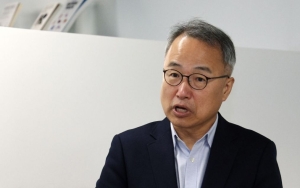
Kim Neungsik, Director of the Welfare Bureau of the province, emphasized, "We will reorganize the emergency welfare crisis counseling call center to discover and support welfare blind spots, and all of the province, cities, counties, and public-private institutions will cooperate. We will strive to find households in crisis in welfare blind spots and provide services that meet the welfare needs of residents."
© The Asia Business Daily(www.asiae.co.kr). All rights reserved.