Measures to Revitalize Rural Vacant House Maintenance
Increase Vacant House Maintenance and Usage Rates
Public-Private Joint Rural Vacant House Project and Enforcement of Demolition Penalties Planned
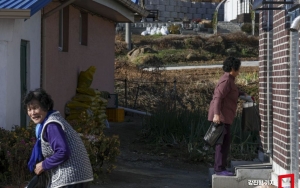
The government has decided to reduce the number of vacant houses in rural areas to 33,000 units by 2027, which is half of the current level. They plan to increase the scale of vacant house maintenance and usage rates, while also imposing enforcement fines if demolition orders for vacant houses are not followed.
On the 20th, the Ministry of Agriculture, Food and Rural Affairs announced the "Measures to Revitalize Rural Vacant House Maintenance" containing these details at a meeting of relevant ministers.
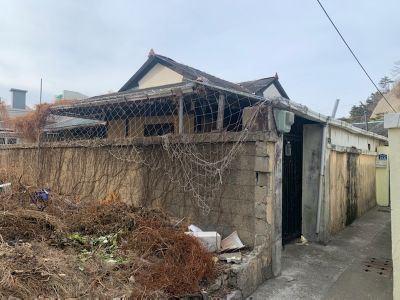
This measure aims to activate vacant house maintenance to resolve social issues such as environmental, hygiene, and safety problems caused by abandoned vacant houses in rural areas. Through the implementation of these measures, the goal is to reduce the current 66,000 rural vacant houses to 33,000 by 2027, thereby creating a pleasant and sustainable rural residential environment.
First, the Ministry of Agriculture, Food and Rural Affairs plans to set mid- to long-term goals so that local governments can promote vacant house maintenance based on five-year vacant house maintenance plans, as there had been no mid- to long-term plans for rural vacant house maintenance until now. They will also expand links with rural residential environment improvement policy projects to promote effective vacant house maintenance.
Additionally, the maintenance system, which so far has focused on point-based maintenance of individual houses with minimal effect on improving the residential environment, will be shifted to a spatial (village) unit.
According to the "Act on Rural Space Restructuring and Regeneration Support," enacted in March, rural residential environment improvement projects will be given priority support in villages designated as "Rural Village Protection Districts" by mayors and county governors. They are also reviewing plans to newly promote "Rural Residential Space Regeneration Projects," in which private companies participate by forming consortia with village maintenance associations.
Along with promoting these projects, the introduction of a dedicated policy finance system for vacant houses is also under consideration. They plan to reorganize the housing improvement loan fund currently operated under the rural housing improvement project to expand loan support such as group loans for village-level vacant house maintenance.
Starting from June this year, the government plans to expand private sector participation by promoting a "Public-Private Joint Vacant House Regeneration Project," in which vacant house owners, the government, and companies jointly participate, instead of the previously public-led vacant house maintenance projects. The purpose of this project is to remodel vacant houses to create rental housing for returnees to farming and rural areas, spaces for children and youth, and village hotels, thereby revitalizing rural communities. Haenam-gun, a representative depopulated area, was selected as the first project site, and vacant house regeneration is being promoted in cooperation with Emart and the Foundation for Cooperation between Large, Medium, and Small-scale Agriculture and Fisheries. The plan is to expand this nationwide in the future.
A Ministry of Agriculture, Food and Rural Affairs official explained, "Currently, about 7,500 vacant houses are maintained annually through various projects, but we plan to increase this to 10,000 units this year, 26,000 units in 2024-25, and 34,000 units in 2026-27, totaling 70,000 units over five years." He added, "Currently, maintenance is demolition-centered, with only about 10% utilization, but we plan to raise this utilization rate to 20%."
Along with this, the government plans to impose enforcement fines if vacant houses are not demolished. Under the current "Rural and Fishing Village Maintenance Act," local government heads can issue orders for demolition or reconstruction of vacant houses that harm regional safety or scenery. However, unlike cities, rural areas lack grounds to impose enforcement fines. Therefore, the government plans to amend the Rural and Fishing Village Maintenance Act to allow imposing enforcement fines of up to 5 million KRW on vacant house owners who do not comply with local government orders. The Ministry expects that once this amendment is implemented, it will encourage voluntary maintenance by owners of vacant houses that seriously infringe on public interests.
Information provision on vacant houses will also be strengthened. The Ministry of Agriculture, Food and Rural Affairs plans to establish a nationwide vacant house information platform (Vacant House Information Alert e) in cooperation with the Ministry of Land, Infrastructure and Transport and the Ministry of Oceans and Fisheries in the first half of this year to improve information accessibility for users. Once the platform is established, basic information on vacant houses nationwide and by city and county will be available.
In the future, the Ministry plans to link this platform with local real estate companies to provide one-stop services on vacant house information such as location, aging, price, and transportation, as well as related policy projects, to activate vacant house transactions.
Next year, the government plans to enact the "Special Act on Rural Vacant Houses" for comprehensive vacant house management, establishing roles between the central government and local governments regarding vacant house maintenance, simplifying procedures for rapid maintenance projects, and providing support grounds for systematic management of vacant houses, including special exemptions from building regulations.
© The Asia Business Daily(www.asiae.co.kr). All rights reserved.