Major Wealthy Districts in Korea Rank Top in National Tax Delinquency
Due to Large Corporations Concentrated, Absolute Delinquent Amounts Are High
Incheon, with Low Registration Fees, Emerges as a Supercar Hub
The area with the highest tax arrears in South Korea is Gangnam, the country's largest affluent district. Meanwhile, the city with the most registered luxury imported cars is Incheon. This means that the national tax arrears are largest in the representative wealthy neighborhoods, while expensive foreign cars are concentrated not in Seoul but in other regions. Why did such results come about?
Gangnam Tops National Tax Arrears... All 'Wealthy Neighborhoods' Rank at the Top
According to the 'National Tax Statistics' announced by the National Tax Service on the 31st, as of December 31 last year, the cumulative national tax arrears (the sum of arrears under settlement and arrears on hold) totaled 102.5 trillion won, an increase of 2.6% compared to the previous year (99.9 trillion won).
Among these, the place with the highest tax arrears was the Gangnam Tax Office, with cumulative arrears of 2.3042 trillion won. It was followed by Yongin Tax Office (2.2806 trillion won), Samsung Tax Office (2.25065 trillion won), Seocho Tax Office (2.2386 trillion won), and Yeoksam Tax Office (2.2286 trillion won). Notably, all four areas known as South Korea's largest affluent districts?Gangnam, Samsung, Seocho, and Yeoksam?were included among the top five in cumulative arrears.
The reason why tax arrears are large in tax offices known as 'wealthy neighborhoods' is due to their absolute economic scale. Gangnam, Samsung, Seocho, and others are home to the headquarters of South Korea's largest corporations such as Samsung Electronics and Hyundai Motor Group. Consequently, the amounts of corporate tax, income tax, and other national taxes to be collected are much larger than in other regions. Therefore, the absolute amount of arrears naturally ranks among the highest in the country.
Similarly, the bottom five in arrears were all local cities with inherently low tax revenues. They were Yeongju (93.9 billion won), Namwon (93.1 billion won), Hongcheon (92.9 billion won), Yeongwol (89.2 billion won), and Yeongdeok (53.4 billion won), in that order.
Incheon Surpasses Seoul to Become 'Supercar' Hub
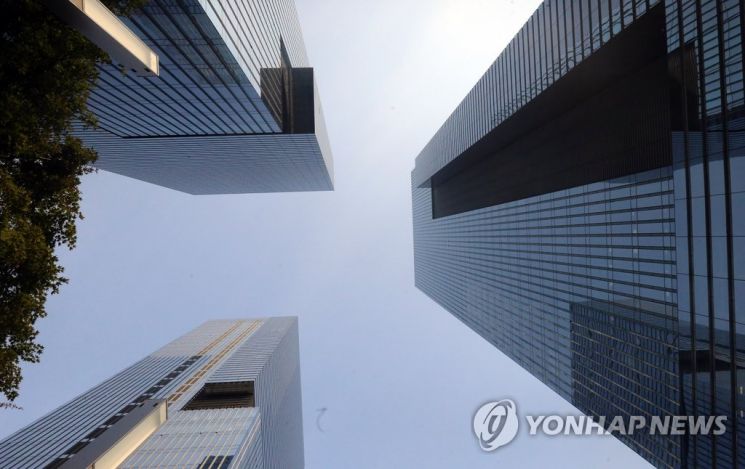 Samsung Town, Seocho-gu, Seoul. Corporate buildings of Samsung-related affiliates are gathered here.
 [Image source=Yonhap News]
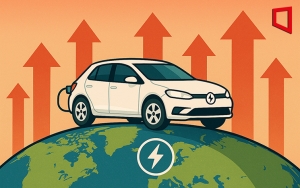
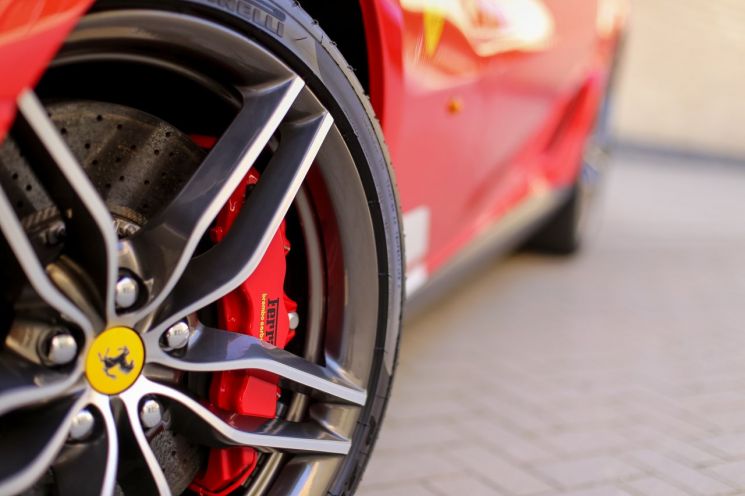
On the other hand, the hub for imported car registrations turned out to be Incheon, not Seoul. According to data released by the Korea Imported Automobile Dealers Association (KAIDA) on the 9th, 94.5% of Lamborghinis sold domestically were registered in Incheon. Of the 775 British supercar Bentleys sold, 48% (371 units) went to Incheon, while Seoul accounted for only 15.4% (119 units).
How did Incheon surpass Seoul, which has affluent districts like Gangnam and Seocho, to become a 'hub for imported cars'? The answer lies in registration costs. Incheon has been found to have lower vehicle registration fees compared to other local governments.
When purchasing a new car, various costs arise. Representative among these are registration tax, acquisition tax, and public bonds that must be paid during the name transfer process. Among these, the 'public bond' amount varies depending on the local government.
The term 'public bond' is short for 'public institution bond,' which in this case refers to local development bonds, urban railway bonds, and the like issued by each local government. In other words, car buyers are effectively required to purchase these bonds. The funds secured through bond issuance are used for the development of social overhead capital such as roads and railway networks.
Incheon’s rate for purchasing such public bonds is only 5% of the car price (based on engine displacement of 2000cc or more), which is among the lowest in the country. This is more than twice lower than Gyeonggi-do (12%) and only a quarter of Seoul’s rate (20%).
© The Asia Business Daily(www.asiae.co.kr). All rights reserved.