[Asia Economy Reporter Baek Jong-min] Samsung's counterattack has begun. Samsung Electronics has strengthened its collaboration with Qualcomm, a telecommunications semiconductor specialist, in the production of its flagship smartphone Galaxy S23. It excluded its self-produced application processor (AP) Exynos and used Qualcomm's Snapdragon 8 Gen 2. Qualcomm made the decisive decision to exclude Exynos, which had been continuously used since the launch of the Galaxy series, for the Galaxy S23. Moreover, the Snapdragon 8 Gen 2 was manufactured by Taiwan's TSMC. Attention is focused on the impact of Samsung's choice, made with determination amid Apple Silicon's rapid advance, on the semiconductor market.
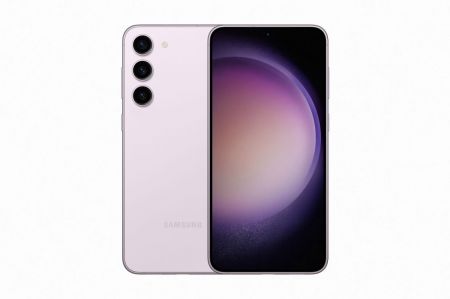
The Galaxy S23 reveals the strengthened strategic alliance between Samsung and Qualcomm aimed at defeating Apple. Qualcomm emphasized that this chip is special for Samsung, even giving it the name 'for galaxy.'
Samsung also made sacrifices to beat Apple. Although Qualcomm's Snapdragon 8, which was previously produced by Samsung, was manufactured by Taiwan's TSMC, Samsung used it in the Galaxy S23. While both companies have not officially disclosed that the Snapdragon 8 Gen 2 was produced by TSMC, overseas media such as 9to5Mac reported that Qualcomm supplied chips made by TSMC to Samsung. The scenario where Samsung Foundry manufactures the Snapdragon 8 Gen 2, which was raised by some ahead of the Galaxy S23 launch, did not occur.
The Snapdragon 8 Gen 1 manufactured by Samsung Foundry was a headache for both Samsung and Qualcomm due to overheating issues experienced with the Galaxy S21. Consequently, Qualcomm entrusted chip production entirely to TSMC. Although this is a blow to Samsung, which competes with TSMC in the latest 3nm foundry process, it is interpreted as an unavoidable choice to overturn the smartphone's disadvantage.
The Snapdragon 8 Gen 2, manufactured by TSMC and supplied by Qualcomm to Samsung, is estimated to have enhanced performance through overclocking. Overclocking refers to operating a chip above its standard speed. The operating speed of the Snapdragon 8 Gen 2 used in the Galaxy S23 is 3.36GHz, higher than the base version's 2.3GHz. As the operating speed increases, performance improves accordingly. However, this also results in increased heat generation and battery consumption. It is understood that optimization through Samsung and Qualcomm's collaboration has further enhanced the Snapdragon 8 Gen 2's performance. If Samsung uses this chip exclusively for the time being, it is expected to gain a performance advantage even within the Android camp.
An industry insider explained, "It would have been difficult for Qualcomm to return to Samsung shortly after moving production from Samsung to TSMC." 9to5Mac also evaluated that Samsung abandoning Exynos and using the Snapdragon 8 Gen 2 for Galaxy, specially made by Qualcomm, is a positive development for consumers. Given the poor results of the Snapdragon 8 Gen 1 produced by Samsung, using chips manufactured by TSMC is expected to receive favorable reviews from consumers.
Although the Galaxy S23 has secured performance comparable to the iPhone by using a superior AP, Samsung still faces significant challenges. The more the Galaxy S23 sells, the more the results of foundry competitor TSMC increase, and Samsung cannot sustain this situation for long. The next step is Samsung Foundry. Samsung must prove the excellence of its foundry process through Galaxy S models using chips manufactured by Samsung Foundry.
© The Asia Business Daily(www.asiae.co.kr). All rights reserved.