②Seoul Metropolitan Area and Major Cities Tremble Under the Redistricting Blade
[Asia Economy Reporter Park Hyun-joo]
The issue of electoral district disappearance is threatening major cities such as Seoul, Incheon, and Busan.
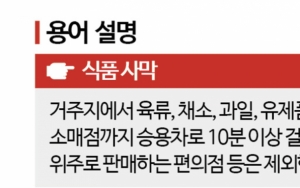
Electoral district delineation is determined based on population numbers to ensure that everyone’s vote has equal value. Therefore, the problem of disappearing districts has mainly been addressed as an issue of underrepresentation in rural, mountainous, and fishing villages. This is because the formation of large electoral districts (combining several cities or counties into one or two constituencies) is inevitable in areas with low population density. The Public Official Election Act also explicitly states that efforts must be made to reflect the representation of rural, mountainous, and fishing areas within the population range (Article 25, Paragraph 2).
Some areas in Yeongnam and Honam regions are facing the risk of electoral district mergers or abolitions. If the population falls below the lower limit, the number of seats will decrease or disappear. The population criteria for electoral districts set by the National Assembly Electoral District Delimitation Committee for the 21st general election were a lower limit of 139,027 and an upper limit of 277,912.
Assuming the same criteria are followed for the 22nd general election, cities such as Ansan in Gyeonggi Province (with 4 seats in Sangnok-gu Gap and Danwon-gu Gap and Eul), Iksan in Jeonbuk (Gap and Eul), and Yeosu in Jeonnam (Gap and Eul) may be subject to district mergers.
![[Constituency Extinction] Seoul, Busan, and Incheon Electoral Districts Face Direct Impact of Population Decline](https://cphoto.asiae.co.kr/listimglink/1/2023020314010713000_1675400468.jpg)
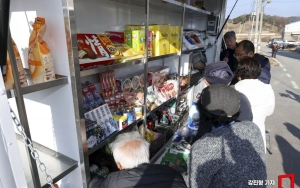
Four areas are highly likely to see their electoral districts disappear: ▲ Dongducheon-si and Yeoncheon-gun in Gyeonggi ▲ Namwon-si, Imsil-gun, and Sunchang-gun in Jeonnam ▲ Gimje-si and Buan-gun in Jeonbuk ▲ Gunwi-gun, Uiseong-gun, Cheongsong-gun, and Yeongdeok-gun in Gyeongbuk. As indicated by their district names, these are already large electoral districts due to low population. With accelerating population outflow from rural areas, the problem of underrepresentation caused by large electoral districts is expected to worsen.
Some districts’ fates will vary depending on the thresholds set by the 22nd general election delimitation committee. Gimcheon-si in Gyeongbuk (population 139,144) met the lower limit for the 21st general election, but if the population lower limit changes this time, the district may disappear.
However, the disappearance of electoral districts is not only a problem for rural, mountainous, and fishing areas. Seoul’s Jongno-gu, known as the 'political first district' (represented by Choi Jae-hyung of the People Power Party), is also at risk. The population of Jongno-gu decreased from 152,866 in January 2019 to 141,223 in January 2023. Given Jongno-gu’s characteristics as an office district where residential population growth is difficult, if this trend of population decline continues, the electoral district may disappear.
For the same reason, Seoul’s Gwangjin-gu, Dongdaemun-gu, Gangbuk-gu, Dobong-gu, and Seodaemun-gu, which were divided into Gap and Eul districts with two seats, and Nowon-gu, divided into Gap, Eul, and Byeong districts with three seats, may be merged into one or two districts if population changes occur.
Major cities are no exception. The population of Gyeyang-gu in Incheon, part of the metropolitan area, is 288,210. If the population decreases, it may fall below the electoral district delineation threshold and face district mergers. The old downtown Nam-gu in Busan (population 256,190) is also likely to see district consolidation. Currently, Nam-gu has two districts, Nam-gu Gap (represented by Park Soo-young of the People Power Party) and Nam-gu Eul (represented by Park Jae-ho of the Democratic Party), but they may be merged into a single district.
© The Asia Business Daily(www.asiae.co.kr). All rights reserved.