④ 2020 General Election, Unusual Scenes in Electoral District Delimitation by Ruling and Opposition Parties
SNS: "Shincheon High or whatever, an emergency has been declared"
Electoral districts still uncertain one month before the general election
[Asia Economy Reporter Lee Ji-eun]
"Forget about Shincheonji or anything else, it's an emergency. Facebook will go into hibernation for 24 hours."
On March 3, 2020, this was a post on social media by Lee Jun-seok, then Supreme Council Member of the United Future Party. At the time, he was harshly criticizing Mayor Park Won-soon, who was considering canceling the corporate registration of Shincheonji Church of Jesus, the Temple of the Tabernacle of the Testimony (Shincheonji). What could have been so 'emergency' that he said "Forget about Shincheonji or anything else"?
For ordinary people, it might be something that does not affect their livelihood even if they never pay attention to it in their lifetime. However, for lawmakers who make politics their livelihood or politicians aiming to become lawmakers, it is literally a matter of life and death. Even lawmakers who had been exchanging harsh words until the day before become like brothers in this matter.
It is the 'delineation of electoral districts.'
![[Constituency Disappearance] Why Did Lee Jun-seok's 24-Hour Facebook Go Dormant in 2020?](https://cphoto.asiae.co.kr/listimglink/1/2022082214441394655_1661147053.jpg)
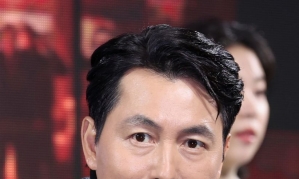
The constituency where former leader Lee Jun-seok’s nomination was confirmed was Nowon-byeong. However, on that day, the Electoral District Delimitation Commission announced that the Nowon area, which had been divided into Gap, Eul, and Byeong districts, was redefined into just two districts: Gap and Eul. The reason was the steady decline in Nowon’s population. Of course, Lee could have been nominated again in Nowon Gap or Nowon Eul or assigned to another district, but from a politician’s perspective, it was a headache either way.
Lee was not the only victim. According to the commission’s plan, Sokcho, Goseong, Cheorwon, Hwacheon, Yanggu, and Inje were merged, creating a 'dinosaur electoral district' six times the size of Seoul, spanning the Taebaek Mountains. The distance by car alone took three hours, yet it was grouped into one electoral district.
However, the commission cannot be solely blamed. Ideally, the delineation of electoral districts should have been completed 13 months before the 21st general election held on April 15, 2020. But even about 50 days before the election, the ruling and opposition parties had not reached an agreement.
The Electoral District Delimitation Commission, 46 days before the election, declared "We cannot wait any longer" and began reviewing its own plan. On February 29, 2020, Commission Chair Kim Se-hwan held a press conference stating, "Recognizing that we cannot wait for the National Assembly’s electoral district delineation standards, the commission will set the standards and prepare a plan to fulfill our responsibility to the public." As a result, some constituencies inevitably raised complaints.
The National Assembly hurriedly rejected the commission’s plan and prepared a revised plan, which was passed in the early hours of March 7. Because the revised plan was submitted late, the assembly declared an adjournment near midnight and reconvened after midnight, undergoing a 'session change.' The disappearance of Nowon-byeong, which surprised former leader Lee, was nullified, and the 'Gangwon electoral district crossing the Taebaek Mountains' also disappeared during this process.
However, this also caused controversy. The revised plan merged the Gunpo City electoral districts, which had previously been divided into Gap and Eul, into one. Incumbent lawmakers from Gunpo criticized this on social media as a typical case of "gerrymandering" (arbitrary redistricting for political advantage).
Whenever electoral district delineation plans are announced, accusations of 'gerrymandering' arise because the ruling and opposition parties set the upper and lower population limits for districts based on political advantage rather than concrete criteria. Initially, the commission’s original plan proposed a population lower limit of 136,565. However, the Democratic Party proposed Jeonbuk Gimje-Buan (139,470) as the lower limit, while the United Future Party proposed Gyeonggi Dongducheon-Yeoncheon (140,541).
Though the difference was only 1,071 people, this small numerical difference determined the political advantage for each party. At the time, the Democratic Party was operating the 4+1 negotiation group (Democratic Party, Bareunmirae Party, Justice Party, Party for Democracy and Peace + Alternative Party), and one member of this group, Kim Jong-hoe, represented Jeonbuk Gimje-Buan. Conversely, the United Future Party opposed this, arguing that the ruling party was trying to forcibly maintain constituencies in the Honam region while reducing seats in Gangnam and other metropolitan areas.
If electoral districts are finalized just one month before the general election, prospective candidates face difficulties in campaigning, and voters cannot obtain timely information to choose candidates. Arbitrary delineation of electoral districts can also undermine the democratic value of 'one person, one vote.'
This is why there are continuous calls to strengthen the independence of the Delimitation Commission ahead of next year’s general election. The National Assembly Research Service pointed out in its April 2020 report, "Characteristics and Improvement Tasks of the 21st General Election Electoral District Delineation," that "To complete the delineation of electoral districts at an appropriate time, conditions must be created to comply with the delineation deadline by enhancing the independence of the commission."
© The Asia Business Daily(www.asiae.co.kr). All rights reserved.