Urging the Introduction of Korean-Style 'White Collar Exemption'
Expand Discretionary Working Hours Tasks
and Broaden Reasons for Special Overtime Approval
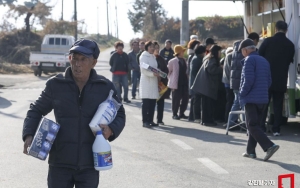
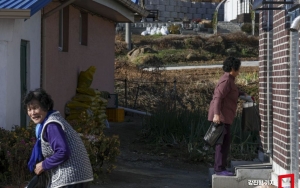
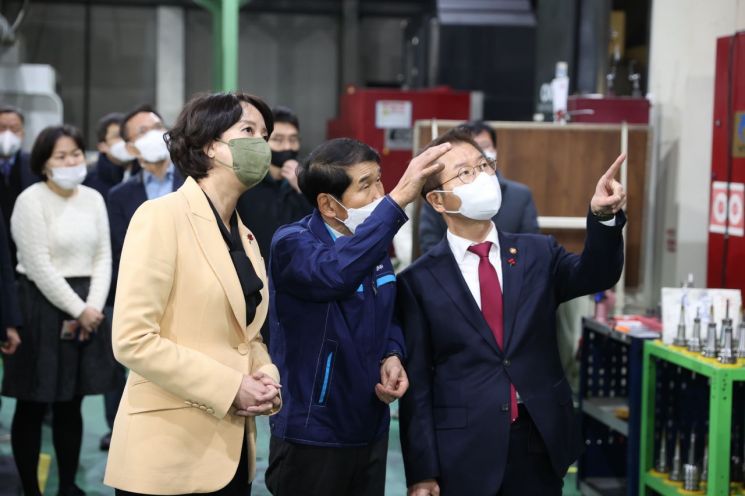 Minister Lee Young of the Ministry of SMEs and Startups (left) visited a small business located in Geumcheon-gu, Seoul, which is facing difficulties due to the sunset of the 8-hour additional overtime work system, along with Minister Lee Jeong-sik of the Ministry of Employment and Labor on the 2nd, and toured the workplace.
[Asia Economy Reporter Donghyun Choi] Startups are facing a double burden. With the investment market frozen and the 8-hour additional extended work system sunset at the end of last year, the enthusiasm for business has been dampened since the beginning of the year. The industry has raised its voice, calling for a more rational improvement of the current working hours system, represented by the 52-hour workweek, amid rapidly changing management and labor environments.
Since the implementation of the 52-hour workweek system in July 2018, the maximum allowable weekly overtime for workers in workplaces with 300 or more employees was limited to 12 hours. From July 2021, the 12-hour maximum was applied to workplaces with 5 to fewer than 50 employees. However, workplaces with fewer than 30 employees were temporarily allowed an additional 8 hours of overtime per week. This proviso was abolished due to sunset on December 31 last year. Starting this year, even early-stage startups with fewer than 30 employees will have to bear the full burden of the 52-hour workweek system.
The political sphere has been pushing for the re-legislation of the 8-hour additional extended work system since the beginning of the year. Related ministers, including Lee Young, Minister of SMEs and Startups, and Lee Jeong-sik, Minister of Employment and Labor, visited workplaces with fewer than 30 employees as their first schedule of the new year to urge the extension of the 8-hour system. However, the industry argues that not only a simple extension of the 8-hour system but also a fundamental change in labor-related systems tailored to the characteristics of the startup sector is necessary.
What the startup sector desires is the introduction of a Korean-style 'white collar exemption' system. The exemption system, first introduced in the United States, exempts professionals, managers, and high-income earners for whom evaluating work performance based on working hours is inappropriate from labor time regulations. Japan also adopted this system by introducing the 'Highly Professional System' in 2019, which exempts professionals earning an annual salary of 10.75 million yen (approximately 100 million KRW) or more from annual holiday and working hour regulations.
The industry shares a common opinion that the introduction of the exemption system is even more urgent for newly established startups less than two years old. These startups have a small number of employees and inevitably require long working hours to quickly establish their business models in the market and respond to global operations. It is also the time when early employees who received stock options have the strongest voluntary motivation to work for performance rewards. Hwang Kyung-jin, head of the Institutional Innovation Project at the Korea Institute of Startup & Entrepreneurship Development, said, "Uniform working hour regulations are the biggest obstacle to the survival and development of startups," adding, "The exemption system needs to be introduced at least for developers who received stock options, startups less than two years old, and technology-based startups."
There is also an opinion that the scope of work covered by the discretionary working hours system should be expanded. The discretionary working hours system allows workers to determine their work methods at their discretion, and the agreed-upon time between labor and management is recognized as working hours. However, under current law, discretionary work is limited to specialized tasks such as research and development (R&D), information processing systems, newspaper and broadcasting, and design work. Simple tasks such as management support are not covered. Unlike Korea, Japan broadly recognizes management support and even human resources and labor tasks under this system. A CEO of a domestic edutech startup said, "In the early stages of a startup, developers often have to handle management support tasks such as promotion and marketing, but in these cases, they do not receive benefits from the system because they are not covered by discretionary work." It is pointed out that the nature of work is changing and the boundaries of tasks are becoming blurred, but the law is not keeping up with the times.
There are also calls to expand the reasons for approval of special extended work. Special extended work is a system that allows workers to work beyond 12 hours of overtime per week with approval from the Ministry of Employment and Labor when 'special circumstances' occur. Special circumstances are specified in Article 9, Paragraph 1 of the Enforcement Rules of the Labor Standards Act and include disaster prevention and recovery, protection of human life and safety, emergencies, sudden increases in workload, and research and development to enhance national competitiveness. However, in the case of research and development, companies not belonging to the so-called materials, parts, and equipment (SoBuJang) industry practically cannot use the special extended work system. Hwang said, "If a startup is not related to SoBuJang or its work is not judged to be for enhancing national competitiveness, it cannot apply for special extended work approval," adding, "The system should be improved so that startups meeting venture company requirements can utilize it."
© The Asia Business Daily(www.asiae.co.kr). All rights reserved.