Natural Beauty Seoul, a City with Pristine Nature
Car-Free Seoul, Possible with Even Weekly Repetition
Seoul 100 Years Later, Approaching through Regeneration and Coexistence, Not Development
![[Seoul's Future] A City with Mountains, Rivers, and Hills... Preserving the Value of 'Gongjon'](https://cphoto.asiae.co.kr/listimglink/1/2023011709041285885_1673913852.jpg)
[Asia Economy Reporter Kim Jong-hwa] Professor Jeong Seok of the Department of Urban Engineering at the University of Seoul described Seoul as "a city like a natural beauty with a bare face." He explained that Seoul is a prosperous city endowed with things that even famous cities around the world such as New York, London, Paris, and Tokyo do not have. Professor Jeong said, "Seoul is a beautiful city in itself, born with everything from nature’s blessings like mountains, rivers, and hills to history and culture."
He stated, "A good city is one that has a solid foundation (citizen consciousness), good resilience, and freely expresses its own personality and charm." To achieve this, Professor Jeong’s principle is that "the diversity of the city must be recognized." Wealthy neighborhoods and poor neighborhoods, expensive houses and cheap houses, new houses and old houses?all such diversity must coexist. He emphasized, "Foreign tourists are moved when they visit the shabby back alleys of Insadong and see things that cannot be found in other countries, not by looking at tall buildings that exist everywhere."
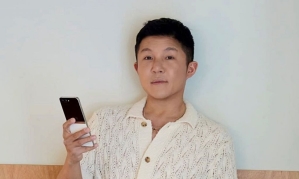
![[Seoul's Future] A City with Mountains, Rivers, and Hills... Preserving the Value of 'Gongjon'](https://cphoto.asiae.co.kr/listimglink/1/2023010216470171773_1672645621.jpg) Professor Jeongseok, Department of Urban Engineering, University of Seoul. / Photo by Hyunmin Kim kimhyun81@
Professor Jeongseok, Department of Urban Engineering, University of Seoul. / Photo by Hyunmin Kim kimhyun81@
On the 2nd, we met Professor Jeong at his research office at the University of Seoul in Jeonnong-dong, Dongdaemun-gu, Seoul. The following is a Q&A.
Our Unique Identity That Neither New York, Paris, Nor Tokyo Have
-What kind of city is a good city, and what conditions should it have?
▲A good city is one that has a solid foundation such as citizen consciousness, good resilience, and freely expresses its own personality and charm. Fundamentally, a city must be safe and robust against accidents, disasters, and calamities. When accidents, disasters, or calamities occur, resilience depends on the response capabilities of public officials as well as the actions and thoughts of citizens. This is why the level of citizens can be used to evaluate the level of the city. The unique charm that no other city has is its 'identity.' Instead of imitating others, a city must cultivate its differentiated charm. For that, citizens must be aware of the city’s charm.
-Is Seoul a good city?
▲Seoul is a remarkable city. It is like a natural beauty with a bare face. It has nature’s blessings such as mountains, rivers, and hills that no city in the world?including New York, London, Paris, and Tokyo?possesses. You can see mountains anywhere in the city, climb a mountain within 20 minutes if you wish, and look down on the city from the mountain. Rivers serve various functions, including acting as wind corridors in the city. The Han River has an average width of 1 km, incomparable to the Seine or the Thames. Hills are not exclusive to San Francisco; Gangnam is also a hilly area. There is no city worldwide that has such a comprehensive natural environment. Moreover, Seoul is a city that is beautiful in itself, born with history and culture inherited from ancestors. All these nature, history, and culture are valuable assets of Seoul.
Allowing Only Public Transportation in Some Sections Will Make Citizens’ Lives Much More Comfortable
-You have emphasized 'ecological city' and 'car-free city.' Could you elaborate?
▲Pontevedra in Spain is a small city with a population of 60,000 but had 26,000 registered cars, making it a 'car-filled desert.' In 1999, Mayor Miguel Lores was elected and transformed 90% of downtown roads and 70% of peripheral roads into car-free zones, limiting car speeds in the city to 30 km/h. Ten years later, in 2009, traffic accident deaths in Pontevedra dropped to zero, downtown traffic volume decreased by 77%, old town traffic by 99%, per capita carbon emissions by 70%, and air quality improved by 67%. Crime rates also fell, and the population increased by 15,000 as the city became known as a pleasant place to live. Downtown merchants who opposed the car ban fearing business losses became enthusiastic supporters as foot traffic surged beyond comparison. I believe that when Seoul returns its downtown to citizens instead of cars, citizens’ lives can become much richer.
-Is it possible for Seoul to become a 'car-free city'?
▲I believe it is entirely possible. Changes can be introduced gradually. 'Car-free streets' can be implemented once a week, for example, from Saturday morning to early afternoon, by blocking vehicle traffic on main roads. The key is to do this regularly and repeatedly. With regular events, children come to inline skate, citizens take walks, and tourists stroll around. Nearby shops see increased sales, pollution decreases, and citizens’ health improves. Bogot?, Colombia, holds weekly car-free days with a total length of 130 km?almost all city roads. According to Bogot?’s own research, citizens participating in car-free events are four times more active than those who do not. Increased physical activity improves health and reduces medical expenses. Public transportation can still operate on some sections. Becoming a car-free city will fundamentally change citizens’ lifestyles. I guarantee that citizens’ lives will become much more relaxed. The expansion of 'Daejabo' (public transportation, bicycles, walking) is very important. This is why advanced countries are promoting free public transportation.
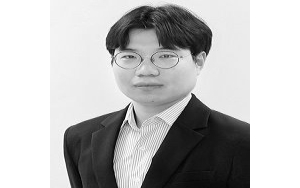
![[Seoul's Future] A City with Mountains, Rivers, and Hills... Preserving the Value of 'Gongjon'](https://cphoto.asiae.co.kr/listimglink/1/2023010216461771763_1672645577.jpg) Professor Jeongseok, Department of Urban Engineering, University of Seoul. / Photo by Hyunmin Kim kimhyun81@
Professor Jeongseok, Department of Urban Engineering, University of Seoul. / Photo by Hyunmin Kim kimhyun81@
Many Repairs Needed Due to Age, But Approach Should Be Regeneration and Coexistence, Not Development
-How do you evaluate Seoul’s urban planning and urban design?
▲Urban planning is the city’s dream and future. Seoul’s urban planning can be said to be drawing the city’s future. Urban design draws that future more concretely and meticulously. If urban planning arranges various spaces in Seoul and establishes corresponding systems, urban design determines the permissible building heights, which buildings to preserve, and which to demolish in those spaces. A shortcoming of Seoul’s urban planning is that it changes whenever the mayor changes. The core of San Francisco’s urban planning and design is 'a city on hills with a sea view.' To maintain this characteristic, buildings on hills and below hills are subject to height restrictions. Even if the mayor changes, San Francisco’s urban planning does not change.
-If you were to make an urban regeneration plan for Seoul 100 years from now?
▲We tend to approach regeneration like development. The development era’s method of discarding old traces and replacing them with new things still persists. We need to change from treating things like objects to treating them like living entities. Curitiba in Brazil suffered from rapid industrialization in the 1960s, with population growth and pollution. When Mayor Jaime Lerner took office, he implemented an 'urban acupuncture' policy, earning the city the nickname 'world ecological capital' and becoming a model eco-friendly city. Seoul is an old city. Because it is old, there are many things to fix. We must sustain the city’s life by demolishing and repairing small parts or remodeling. Future urban regeneration should shift from 'Kusin-jae' (large-scale new development) to 'Jakgochae' (small-scale repair and filling). This means moving from large-scale new development and redevelopment to small-scale repair and filling. Kusin-jae is a development approach, and Jakgochae is a regeneration approach.
Shabby Back Alleys of Insadong Are Precious; People Don’t Visit Korea to See High-Rise Buildings
-Stronger regulations are needed to discourage redevelopment and reconstruction, right?
▲Public regulations are essential to uphold urban planning and urban regeneration. This is to protect citizens’ safety, environment, history, culture, and public interest. While incorrect regulations should be lifted, regulations protecting public interest and vulnerable groups must be maintained and strengthened. The core of urban planning is public regulation. The U.S. 'Euclidean Zoning' can be a lesson. When factories operated in Euclidean zones causing pollution and residents complained, the city regulated factories from being built near residential areas. Factory owners sued, claiming infringement of private property rights, but courts ruled that while individual property rights must be respected, if exercising those rights seriously harms the public interest, property rights can be regulated. This established the authority of U.S. urban planning. Even if the mayor changes, the continuity of urban planning must be maintained, and within the Four Great Gates area, stronger regulations should preserve Seoul’s values. Foreign tourists are moved by the shabby back alleys of Insadong, seeing things not found elsewhere. They do not come to Korea to see buildings and apartments found everywhere.
-What kind of city should Seoul be in the future?
▲Seoul is a city with many real treasures and unique values. Seoul is the city with the most distinctive value in the world. The mayor must first realize this fact. Next is the citizens’ awareness. Seoul citizens must recognize Seoul’s value and take pride in saying, 'Yes, Seoul is such a city, and I live in this great city.' Instead of disparaging and erasing the old, we must honor and coexist with it. The city should be one where diverse things, old and new, coexist and thrive together.
Professor Jeong Seok of the Department of Urban Engineering at the University of Seoul is an urban design expert who has conducted major research projects for over 30 years across Seoul, including Bukchon Hanok Village, Insadong preservation, and Amsa-dong Seowon Village. He majored in urban engineering at Seoul National University and earned his master’s and doctoral degrees in urban design from the same university. He worked as a researcher at the Seoul Development Institute (now Seoul Institute) for 13 years and as an academic for 15 years, focusing on questions such as "What makes a good city?" and "What is a city?" His books include ,
© The Asia Business Daily(www.asiae.co.kr). All rights reserved.