Listening to Dr. Kim Si-deok, a Philologist
Regrettable Not to Go Further South
But the Move to Yongsan Itself Holds Great Significance
Seoul's Fate Fundamentally Tied to Security
Overcoming Gangnam Concentration Amid North Korea Conflict Is Not Easy
Yongsan, Mapo, and Yeouido Will Become New Axes
![[Seoul's Future] Kim Si-deok "Presidential Office Yongsan Relocation Marks the Start of Major Change"](https://cphoto.asiae.co.kr/listimglink/1/2023011011173179082_1673317051.jpg)
![[Seoul's Future] Kim Si-deok "Presidential Office Yongsan Relocation Marks the Start of Major Change"](https://cphoto.asiae.co.kr/listimglink/1/2023010210100470850_1672621898.jpg)
[Asia Economy Reporter Kiho Sung] The most significant recent change in Seoul undoubtedly began with the presidential office's relocation to Yongsan. Since the founding of the Joseon Dynasty, the Gwanghwamun area had been the most important place where power was concentrated on the Korean Peninsula for over 630 years. That center of power has now shifted to Yongsan.
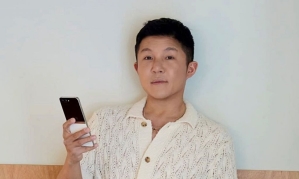
Philologist Dr. Kim Si-deok commented on the presidential office's move to Yongsan, saying, "It's regrettable that it didn't move further south, but it is still the beginning of a major change," adding, "Yongsan was considered a candidate for the capital during the Goryeo period, making it a significant location, so relocating the presidential office there carries great meaning."
Dr. Kim explained, "Our country has a unique security situation, and with the global situation returning to a new Cold War system, the concentration in Gangnam is natural." He continued, "Artificially restricting development has made Seoul an unharmonious city," emphasizing, "For Seoul's future, a 'Greater Seoul' plan that includes Gyeonggi Province is necessary."
To explore the future of Yongsan and Gangnam, the most notable areas in Seoul, I met Dr. Kim at a caf? in Yangjae-dong, Seoul, on the 2nd.
- How do you evaluate the presidential office's move to Yongsan?
▲ Honestly, I hoped it would move further south. However, moving to Yongsan also holds great significance. In fact, Yongsan was one of the candidates for the capital relocation at the end of the Goryeo period. There were three candidates: Yongsan, Nowon, and Dobong. At that time, Yongsan was a transportation hub directly connected by waterways to Gaeseong, the Goryeo capital. Thus, Yongsan and Gaeseong shared the 'Bugundang' faith. Due to floods in the late Goryeo and early Joseon periods, the sandbank of the Han River collapsed, making Yongsan practically the last area accessible by waterway. Consequently, Mapo and Yongsan became important.
- Are you suggesting the presidential office should move further south?
▲ South Korea has a unique security situation because Seoul is too close to North Korea. The development of Gangnam also originated from this. People tend to forget this premise nowadays, but it must not be overlooked. During President Park Chung-hee's era, there was a plan to relocate the capital. The criteria for the new capital site were that it had to be far from the Demilitarized Zone (DMZ) to avoid North Korean attacks and at least 30 km inland from the west coast to be safe from missile strikes. According to these criteria, Gyeryong was the most suitable, but the site was too small to serve as a capital, so Sejong City was selected as the candidate.
![[Seoul's Future] Kim Si-deok "Presidential Office Yongsan Relocation Marks the Start of Major Change"](https://cphoto.asiae.co.kr/listimglink/1/2023010219223171897_1672654951.jpg)
- So Seoul's fate was decided by security concerns?
▲ Yes. President Park Chung-hee's plan to relocate the capital was due to the Vietnam War. As the Cold War intensified globally, war with North Korea could not be ignored. However, after President Park's death, the Sejong relocation plan was scrapped, and instead, Gangnam, which is slightly farther from North Korea, began to be developed. People tend to be conservative about the capital, so they did not expect the capital to move all the way to Sejong City. They hoped the presidential office would at least move to Gwacheon, south of the Han River, but that did not happen, which is regrettable. However, in the long term, once the National Assembly and the presidential office's Sejong branch are established, government power will shift to Sejong, and Seoul will become a symbolic city.
- You mentioned Gangnam was created for security reasons. Do you think the concentration in Gangnam will continue?
▲ After the Cold War ended, we gained confidence regarding North Korea. That led to the construction of Incheon Airport, close to North Korea, and the Ilsan New Town. However, as seen in the current Ukraine war, the world is returning to a bipolar system, and relations with North Korea are worsening. Under these circumstances, overcoming the concentration in Gangnam will be difficult.
- Then how should balanced development in Seoul be achieved?
▲ I think it would be better to lift regulations on Gangnam. The 35-story height limit should be completely removed. (At the time of the interview, the '2040 Seoul Urban Basic Plan,' which abolishes the 35-story height restriction in Seoul, had not yet been announced.) Rather than artificial restrictions, everything should be opened up to allow private development to lead.
- So you are saying Gangnam should be developed further?
▲ Although the concentration in Gangnam is problematic, there is still capacity to accommodate more people. This can be seen in housing prices. Because transportation and convenience facilities can still support more population, housing prices continue to soar. Therefore, Seoul should become a high-density city like 18th-century Paris. Nowadays, French people consider 18th-century Paris beautiful and do not develop it further, but back then, Paris was the highest-density city with many tall buildings worldwide. That is why artists like Van Gogh and Gauguin could live there?they could afford housing. Currently, it is difficult for poor artists to live in Seoul, mainly due to housing prices.
![[Seoul's Future] Kim Si-deok "Presidential Office Yongsan Relocation Marks the Start of Major Change"](https://cphoto.asiae.co.kr/listimglink/1/2023010219221471894_1672654934.jpg)
- Are you suggesting tall buildings should be built in Gangnam?
▲ Everyone prefers places that are easy to access, close to workplaces, schools, and convenience facilities. I think tall buildings over 35 stories should be built above Gangnam subway stations, allowing wealthy people to live there, while areas within 10 to 15 minutes from the subway stations should provide affordable housing for ordinary people. This way, different social classes can live harmoniously within the same living area. If residential areas are divided by class, social conflicts will increase. However, in a high-density city, people mix. A prime example is New York City in the United States.
- Does this mean Gangnam's concentration will accelerate further?
▲ Not necessarily. Personally, I believe Yongsan, Mapo, and Yeouido will form a new axis and become a new center of Seoul. It will not be just the level of the 'Gangnam 4 districts' but an entirely new central axis. These areas are centrally located in Seoul, with excellent accessibility. Many facilities have already been established, and many more are planned. For example, Yongsan has Yongsan Park, plans for redeveloping the electronics market, and remaining land from the railway maintenance depot. This area is bound to develop.
- Are you saying Yongsan Park should also be developed?
▲ I think it is better to have several small parks rather than one large park. Considering Namsan and others, Yongsan Park will be an unprecedentedly large park worldwide. I believe some parts can be developed. This could serve as an experiment for the high-density city concept I mentioned earlier. Otherwise, only people living near the park will enjoy Yongsan Park. I think tall buildings for wealthy people and large-scale rental housing built by the Seoul city government are necessary. Of course, integration will not be easy. But if the number of people increases through small-scale rental housing, they will gain voting power, which can naturally address problems. The idea is to have diverse social classes living around the vast park within tall buildings and rental housing. It is rare to have such a large site in Seoul. This is an essential experiment for Seoul's future.
Dr. Kim Si-deok is an urban explorer and philologist who focuses on the lives of ordinary people rather than mainstream history, traveling nationwide to photograph and document. After completing his bachelor's and master's degrees in Japanese Language and Literature at Korea University, he earned his doctorate at the National Institute of Japanese Literature (Graduate University for Advanced Studies) in Japan. He served as an HK research professor at Korea University's Japan Research Center and an HK professor at Seoul National University's Kyujanggak Institute for Korean Studies. Regarding Seoul, he has examined history intertwined with life through his books 'Seoul Declaration,' 'Conflict City,' and 'The Road to Greater Seoul.' He also introduced various perspectives on the Imjin War through his book 'The Imjin War as Seen by Them,' written from a Japanese viewpoint.
© The Asia Business Daily(www.asiae.co.kr). All rights reserved.