Listening to Dr. Kim Si-deok, a Philologist
What Seoul's Future Needs Most Is Understanding
Seoul Citizens Need to Show Interest in Gyeonggi-do
Together We Must Develop to Realize the Dream of 'Greater Seoul'
![[Seoul's Future] Kim Si-deok "We Must Think of Gyeonggi Residents Waiting for Buses in the Rain at Gangnam Station"](https://cphoto.asiae.co.kr/listimglink/1/2023020811135217193_1675822432.jpg)
[Asia Economy Reporter Kiho Sung] "I am also a Seoul resident, but more attention is needed for Gyeonggi-do. Gyeonggi-do is sacrificing too much for the comfortable life of Seoul. Moreover, most of the commercial districts in southern Seoul are sustained because of the residents of Gyeonggi-do. It is time to seek ways for Seoul and Gyeonggi-do to develop together."
What is most needed right now for the future of Seoul? Philologist Dr. Kim Si-deok unexpectedly emphasized coexistence with Gyeonggi-do. As Seoul’s jurisdiction is practically expanding, reducing conflicts and fostering cooperation with Gyeonggi-do is essential to envision a more progressive future.
Dr. Kim pointed out that Seoul needs to focus more on the residents of Gyeonggi-do. He said, "Gangnam Station, Yangjae Station, Sadang Station, where metropolitan buses are concentrated, are used by Seoul citizens but mostly by Gyeonggi-do residents. In fact, these areas maintain their commercial districts because of Gyeonggi-do residents."
He continued, "However, the metropolitan bus stops in these areas lack proper facilities, causing hardships for Gyeonggi-do residents on rainy or snowy days. From Seoul’s perspective, since these places are mainly used by Gyeonggi-do residents, it might be difficult to decide on facility investments easily. But considering that these commercial districts are maintained because of Gyeonggi-do residents, there is a need to be more proactive in reinforcing bus stop facilities," he emphasized.
Dr. Kim conveyed that Seoul’s future should not be limited to Seoul alone but should include the development of nearby Gyeonggi-do. This, he said, is the starting point for envisioning a ‘Greater Seoul.’
![[Seoul's Future] Kim Si-deok "We Must Think of Gyeonggi Residents Waiting for Buses in the Rain at Gangnam Station"](https://cphoto.asiae.co.kr/listimglink/1/2023010219214371887_1672654903.jpg)
He explained, "Seoul is sacrificing Gyeonggi-do too much for its development. For example, the oil reserve base in Mapo disappeared and became the Culture Reserve Base, but the actual facility moved to the southern oil depot in Yongin." He added, "The Information Service site in Seocho-dong eventually moved to Anyang, but Seoul residents only focus on Seocho’s development. Anyang’s military units increased from six to seven. Anyang sacrificed for Seoul’s development," he said.
He particularly pointed out the problem that all transportation in Gyeonggi-do is focused solely on Seoul due to the concentration in Seoul. Dr. Kim said, "All transportation in Gyeonggi-do is focused on moving from cities within Gyeonggi-do to Seoul. However, it is difficult to move between cities within Gyeonggi-do, which hinders Gyeonggi-do’s development."
What is the solution? Dr. Kim argued that policymakers in Seoul and Gyeonggi-do need to cooperate more closely. He said, "Gyeonggi Province Governor Kim Dong-yeon started his campaign for local elections in Sadang-dong, Dongjak-gu, Seoul, because the living area of southern Gyeonggi residents is concentrated around Sadang Station. Policymakers need a broader perspective that includes both Seoul and Gyeonggi-do," he stated.
Dr. Kim added, "Schools, workplaces, and living areas are all in Seoul, but just because people sleep in Gyeonggi-do, can we strictly define them as Gyeonggi-do residents? We should also consider giving Gyeonggi-do residents some voting rights in Seoul," he said.
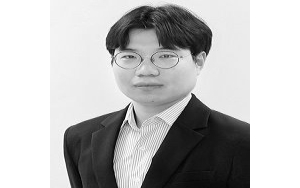
Dr. Kim Si-deok is an urban explorer and urban philologist who focuses on the lives of ordinary people rather than mainstream history, traveling nationwide to conduct filming and documentation. After completing his bachelor's and master's degrees in Japanese Language and Literature at Korea University, he earned his doctorate at the National Institute of Japanese Literature (Graduate University for Advanced Studies) in Japan. He served as an HK research professor at Korea University’s Japan Research Center and at Seoul National University’s Kyujanggak Institute for Korean Studies. Regarding Seoul, he examined history intertwined with life through his books ‘Seoul Declaration,’ ‘Conflict City,’ and ‘The Road to Greater Seoul.’ He also introduced various perspectives on the Imjin War by writing ‘The Imjin War as Seen by the Japanese,’ offering a Japanese viewpoint on the conflict.
© The Asia Business Daily(www.asiae.co.kr). All rights reserved.